Porsche 911 Carrera RS 2.7 – the year of the ducktail
The racing plan that became one of the road’s great sports car classics.
Porsche needed a lighter, faster 911 for the circuit. The result was the 1973-model-year Carrera RS 2.7: a homologation model with a larger engine, a pared-back interior and a rear spoiler that looked alien at first – then became immortal.
 By Lars EkströmEditor-in-chief · Veteran cars and motoring history
Translated from Swedish with the help of AI.
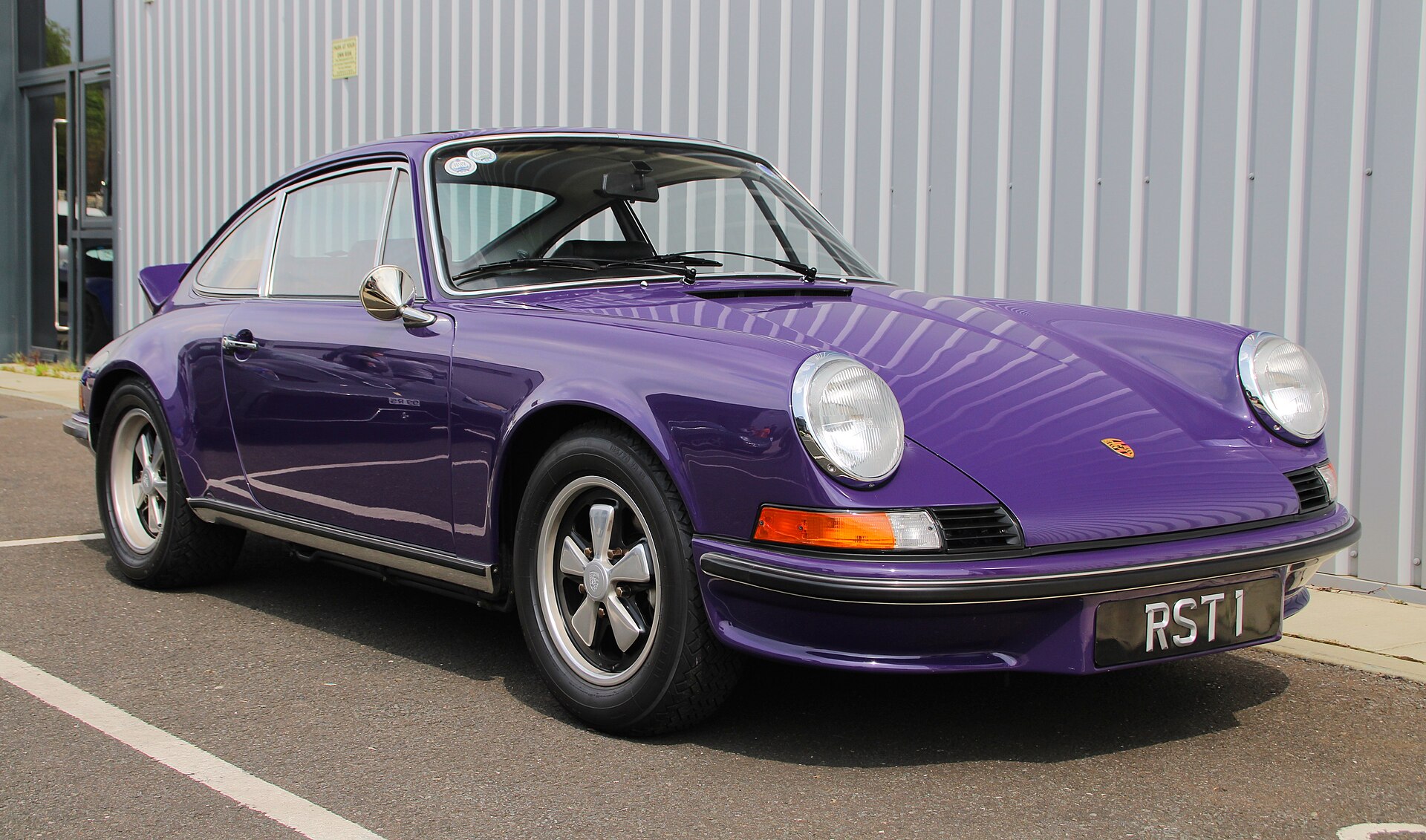
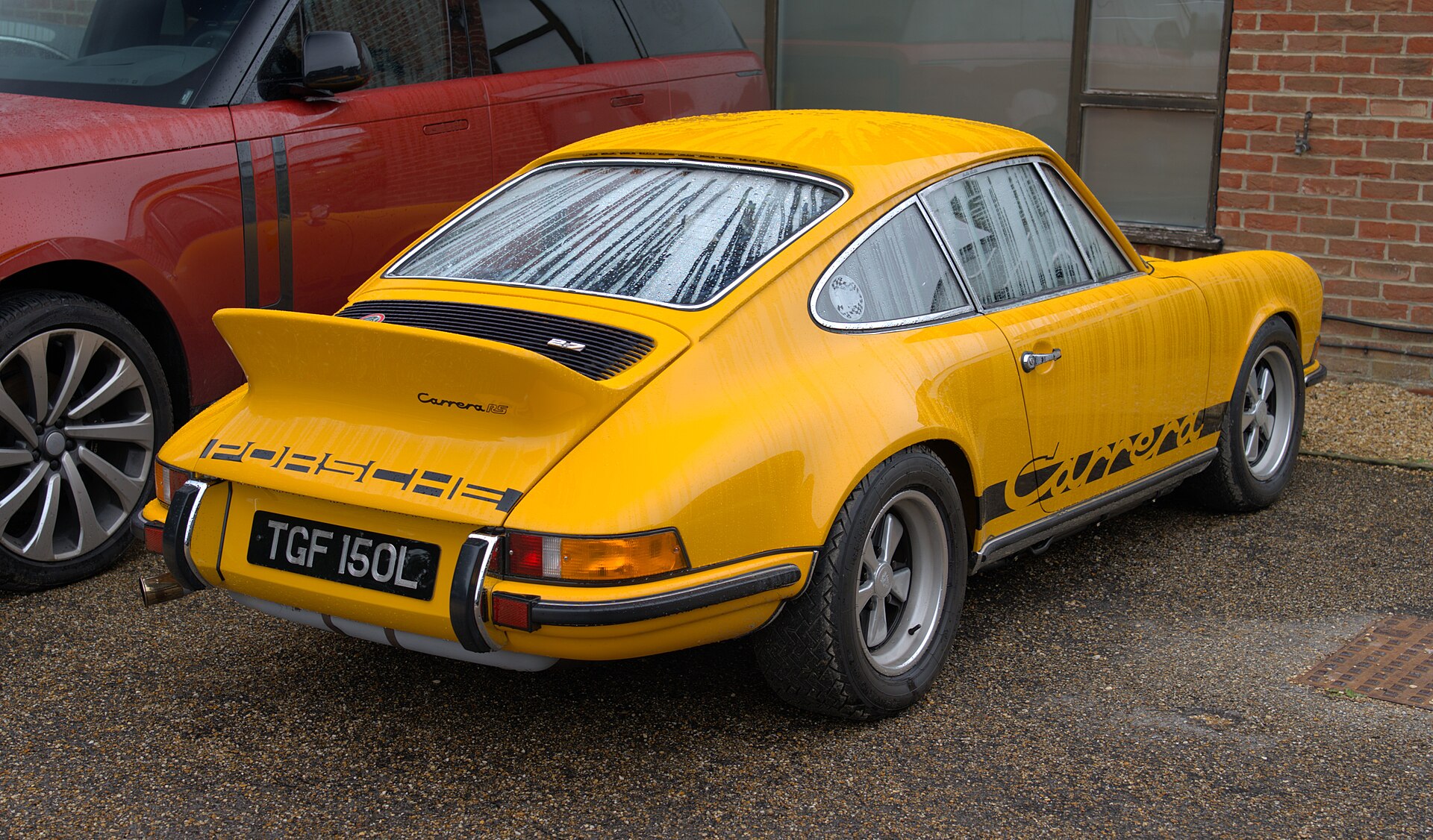
At the Paris motor show in October 1972 stood a Porsche with an unusual finish to its engine lid. The body was familiar, but it had grown over the rear wheels, and the Carrera name ran along its flanks in large letters. The small upturned lip at the back would soon acquire a nickname that outlived both the motor show and the racing season: the ducktail.
The car was the Porsche 911 Carrera RS 2.7, model year 1973, a series-production sports car from Porsche in Stuttgart-Zuffenhausen. RS stood for Rennsport. Here, the racing connection was more than a selling point: the model was to give Porsche a homologated basis for continuing to race the 911.
Five hundred cars became more
The starting point was the requirement to build at least 500 examples for Group 4 homologation. Porsche initially planned a production run of precisely that size. Customers, however, responded faster than the cautious sales forecasts had anticipated. The first 500 had already sold by autumn 1972, and according to Porsche’s historical records, production ended at 1 580 cars.
Among those behind the work were development engineer Peter Falk and engine chief Hans Mezger. The task was to make the 911 more powerful without losing the advantage of a small, light car. The air-cooled flat-six gained a larger bore and grew to 2,7 litres. Mechanical fuel injection remained part of the recipe.
The Carrera name linked back to Porsche’s earlier racing successes in the Carrera Panamericana. But the RS was no nostalgic special edition. It was a working tool for the next chapter, and the project also spawned the considerably more race-focused Carrera RSR.
Thinner metal, fewer creature comforts
The most uncompromising road-going version was called Sport and carried equipment code M471. Today it is often called the Lightweight. Among the items removed were the rear seats, clock, armrests and some sound insulation. Simple door panels and lighter seats made the cabin feel more workshop than drawing room.
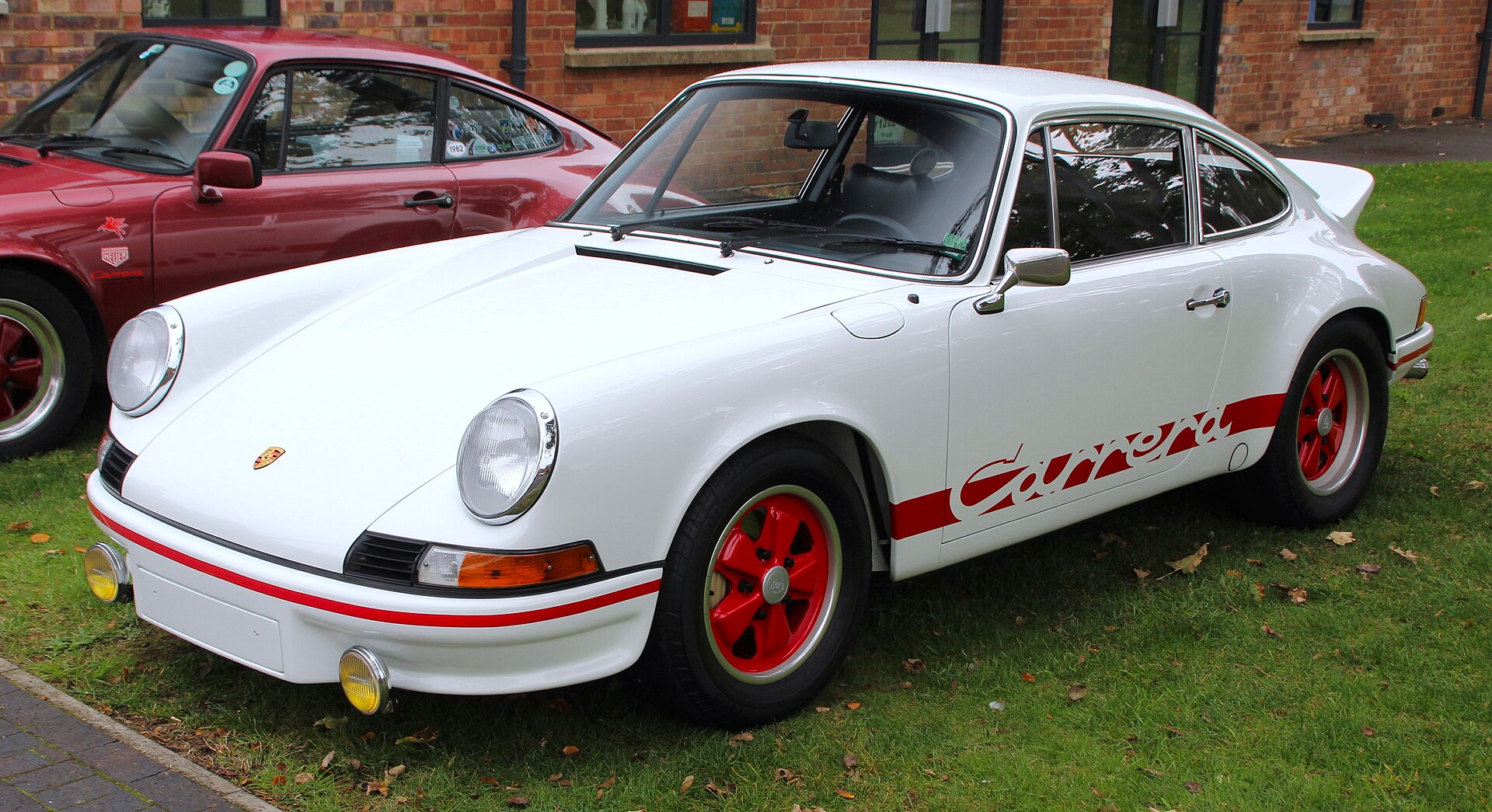
The Touring, M472, restored much of the trim and comfort customers knew from the 911 S. It became the more popular choice. The distinction matters when discussing an RS: two cars with the same engine and the same characteristic profile can differ markedly in weight and specification.
The quest to save weight also extended to thinner materials in parts of the body and thinner glass. For those building the cars, the lightweight engineering was not about a single dramatic invention, but many small savings that together made a difference.
The ducktail, by contrast, was impossible to miss. Hermann Burst and Tilman Brodbeck were among the engineers behind the aerodynamic work. The spoiler reduced rear-end lift while also helping the airflow for engine cooling. Together with the front spoiler, it made the car better equipped for high speeds. The wider rear wings also provided room for wider rear wheels: form followed a specific need.
Speed demanded respect
In a contemporary test in auto motor und sport, issue 5 of 1973, the lightweight RS version accelerated to 100 km/h in 5,8 seconds and reached 245 km/h. These were remarkable results for a road car that still looked like a fairly compact 911. The magazine also highlighted the unusual combination of racing capability and usability on ordinary roads.
That should not be mistaken for the design having become forgiving in every situation. The engine still sat behind the rear axle. The load over the rear wheels helped traction, but the weight distribution made the driver’s throttle inputs important in corners. In his technical history of the 911, Paul Frère describes how chassis development, tyres and aerodynamics progressively improved the model’s handling without erasing its fundamental character.
Ventilated disc brakes all round were part of the package. The RS was therefore not simply a more powerful engine in a stripped-out body, but a balance between acceleration, braking ability, grip and stability. The editorial team has not driven the car; the account of its driving characteristics here is based on published tests and technical histories.
The collector’s car behind the decals
Today, a genuine Carrera RS 2.7 is an internationally sought-after collector’s car. Its price depends heavily on specification, documentation, originality and restoration history. A converted standard 911 can look convincingly similar, but does not share its origins.
For the buyer, the chassis number, factory records and correspondence between the engine, body and as-delivered specification therefore carry considerable weight. Even a beautifully restored car needs scrutiny beneath the paint: lightweight components and original details are an essential part of the story.
Perhaps that is why the ducktail still stirs the emotions. It is not just a recognisable silhouette, but the mark of an engineering effort in which every kilo and every airflow had a job to do.
Sources
- Porsche AG, 50 years of the Porsche 911 Carrera RS 2.7 – ‘Germany’s fastest sports car’ (2022)
- Paul Frère, Porsche 911 Story (2006)
- auto motor und sport, auto motor und sport, nr 5/1973 (1973)
Ask questions about “Porsche 911 Carrera RS 2.7 – the year of the ducktail”. Answers are based on the magazine's own articles.