Mercedes Vision EQXX: how one charge lasted over a thousand kilometres
Aerodynamic drag, battery packaging and two headline-grabbing long-distance drives
The Mercedes-Benz Vision EQXX covered over 1 000 kilometres without a charging stop back in 2022. But the concept car’s results are not a range promise for a production Mercedes. Here is the technology behind those drives – and the caveats that need to accompany the figures.
 By Amir HaddadTechnology editor · Future cars and modern cars
Translated from Swedish with the help of AI.
A concept car with a measurable mission
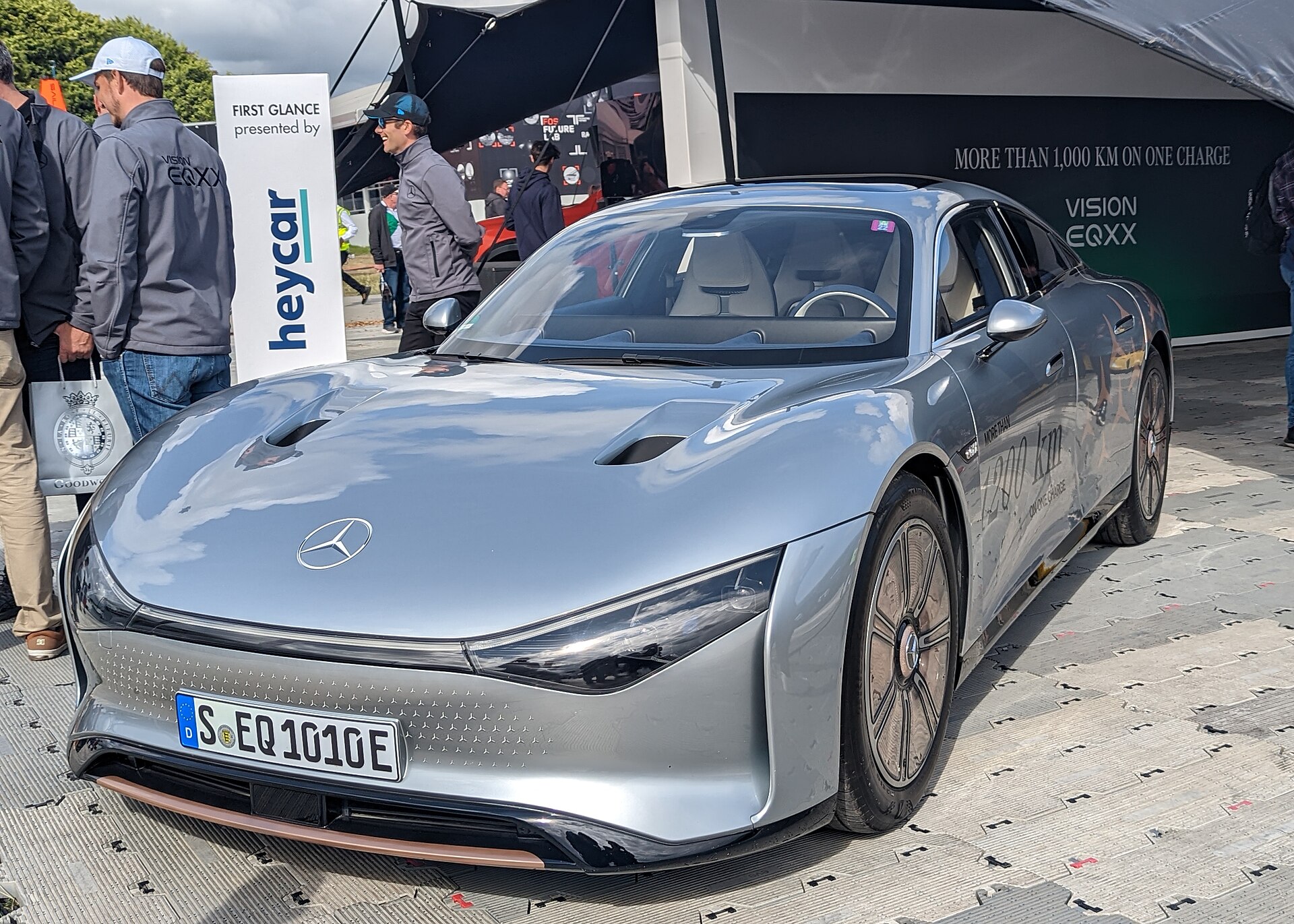
The Mercedes-Benz Vision EQXX, unveiled in January 2022, is a driveable concept car and technology demonstrator, not a production model with a conventional model year. Its mission was clear: to cover more than a thousand kilometres on a single charge in real-world traffic conditions. The solution was not simply to be a bigger battery, but a car that needed less energy for every kilometre.
That makes the EQXX interesting beyond the range headlines. Mercedes treated the bodywork, drivetrain, tyres and electronics as parts of the same system. Losses in one area have to be offset by more energy in another. If those losses are reduced instead, the battery can be kept more compact, which in turn makes packaging and weight management easier.
The car was also developed with help from Mercedes’ motorsport expertise in the UK. Here, the focus was not primarily on maximum acceleration, but on extracting as much useful work as possible from the stored energy. The EQXX is therefore more of a rolling development laboratory than a sports car in disguise.
Two long-distance drives – but no standardised range figure
In April 2022, the EQXX was driven from Sindelfingen in Germany to Cassis in southern France. It covered 1 008 kilometres without charging en route. Mercedes reported average consumption of 8,7 kWh per 100 kilometres and around 15 per cent battery charge remaining on arrival, equivalent to roughly 140 kilometres of additional estimated range.
The journey took in several types of road and varying weather conditions. The stated average speed was 87,4 km/h. That is an important detail: a thousand kilometres in slow urban traffic and a thousand kilometres at high motorway speeds are entirely different engineering challenges. Aerodynamic drag becomes dramatically more significant as speed rises.
A longer drive from Stuttgart to Silverstone in the UK followed in June of the same year. This time, Mercedes reported 1 202 kilometres on a single charge and 8,3 kWh per 100 kilometres. After arriving, the car was also driven around Silverstone, which was included in the reported total distance.
The results show what this particular demonstrator achieved under those particular conditions. They are not, however, a WLTP rating or a promise of what a customer car would always deliver. The figures come from Mercedes, and our editorial team has not independently verified the drives. Route profile, temperature, speed and the use of comfort features all affect the result. The word record should therefore be read as a description of the project’s achievements, not as a universal comparison between all electric cars.
The shape does much of the work
The EQXX’s low nose, narrow cabin and elongated tail share a common purpose: to let air pass with as little disturbance as possible. Mercedes quotes a drag coefficient of 0,17. But the coefficient alone does not tell the whole story; the car’s frontal area also determines how much aerodynamic drag it generates.
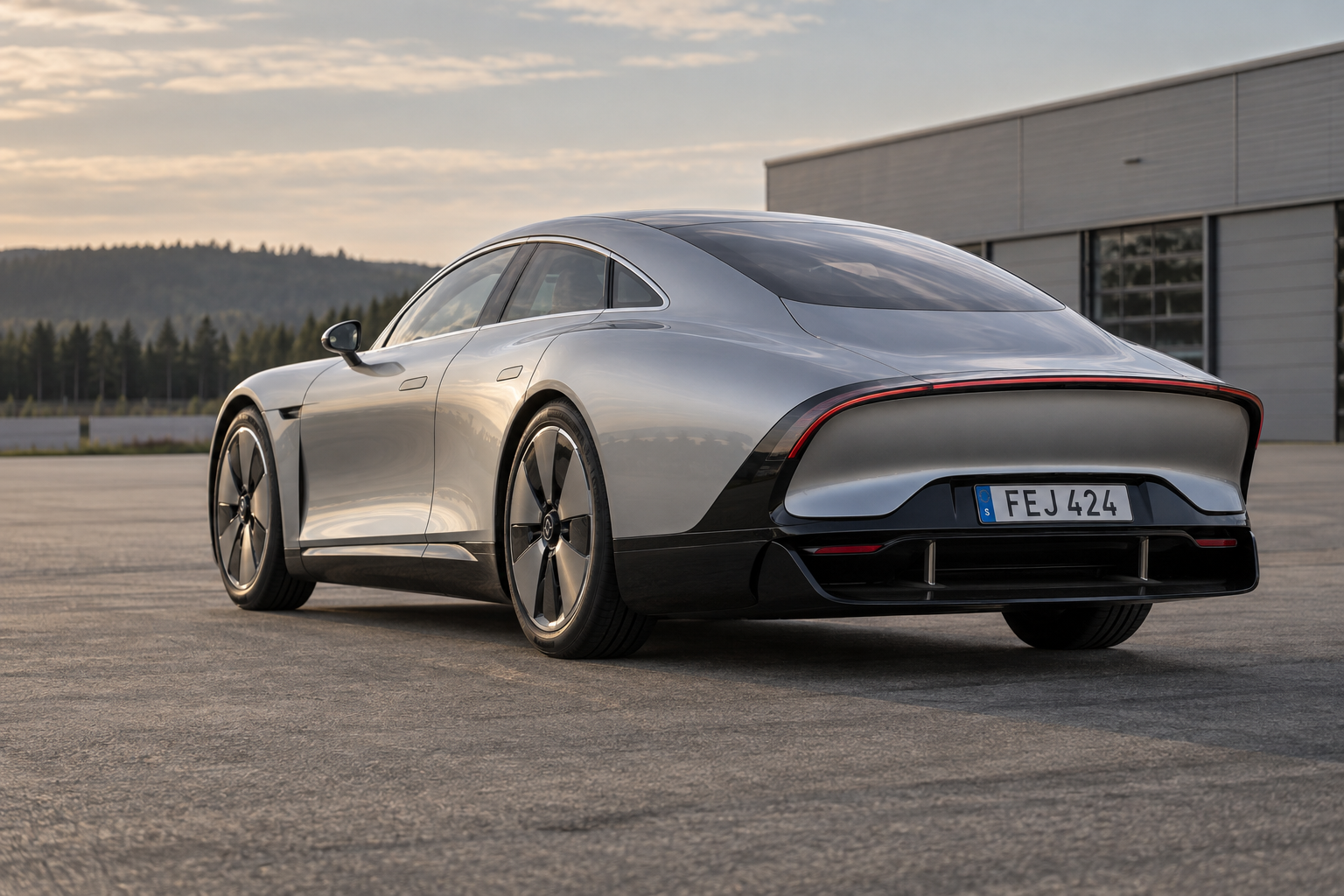
At the rear, the airflow needs to leave the body as cleanly as possible. The extendable rear diffuser helps shape that flow without the car having to remain the same length in every situation. The wheel design and specially developed tyres also help limit aerodynamic drag and rolling resistance.
Cooling also influences the shape. Air channelled through cooling apertures creates drag. The EQXX therefore uses, among other measures, an underbody cooling plate to dissipate heat and reduce the need for airflow through the body. More active cooling can be used when the load demands it. It is a trade-off, not free cooling in all conditions.
The battery stores just under 100 kWh of usable energy. Mercedes stated that the pack was considerably smaller and lighter than the battery in the EQS of the time. The comparison concerns the battery pack itself, not a claim that the EQXX offers the same cabin space, equipment or scope of use as the luxury saloon.
What can a buyer actually get?
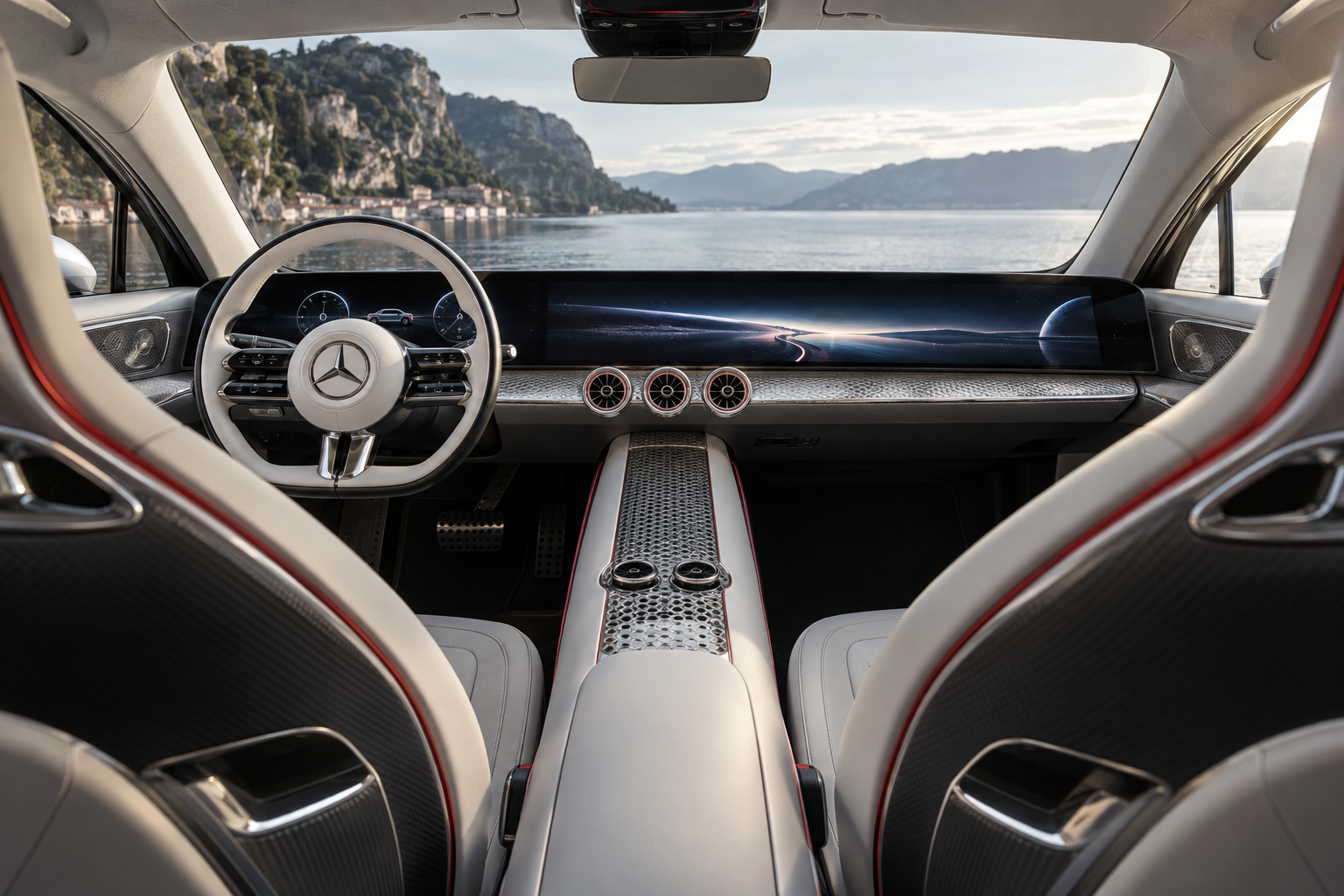
The cabin has four seats and a wide, continuous display. Among other things, the interface visualises energy flows and how driving affects consumption. Here, the technology becomes a teaching tool: the driver can see the relationship between speed, road and energy demand, rather than simply watching a remaining-range figure.
We have not driven the car. Its clearest role is development and demonstration, not everyday ownership. The low bodywork and bespoke solutions must also be weighed against the demands of series production in terms of space, manufacturing, servicing and cost.
The EQXX was not launched as a model available to order and had no customer price. Mercedes described the project as a technological pointer for future cars. That is a stated ambition; the idea that a future Mercedes will automatically have the same range is, however, speculation. The confirmed achievement is narrower in scope, but still impressive: a driveable concept car passed the thousand-kilometre mark on real roads.
Sources
- Mercedes-Benz, VISION EQXX (2022)
- Autocar, Mercedes-Benz Vision EQXX review (2022)
- Top Gear, Mercedes-Benz Vision EQXX review (2022)
Ask questions about “Mercedes Vision EQXX: how one charge lasted over a thousand kilometres”. Answers are based on the magazine's own articles.