Jaguar E-Type – the most beautiful car?
Malcolm Sayer’s masterpiece combined racing technology with a surprising price.
When the Jaguar E-Type was unveiled in Geneva in 1961, it looked as though it had come from another world. Yet beneath that long bonnet lay well-proven racing technology. It is this meeting of design, engineering and accessibility that still makes the original E-Type so captivating.
 By Cecilia WahlReporter · Luxury cars and car design
Translated from Swedish with the help of AI.
Geneva had something to talk about
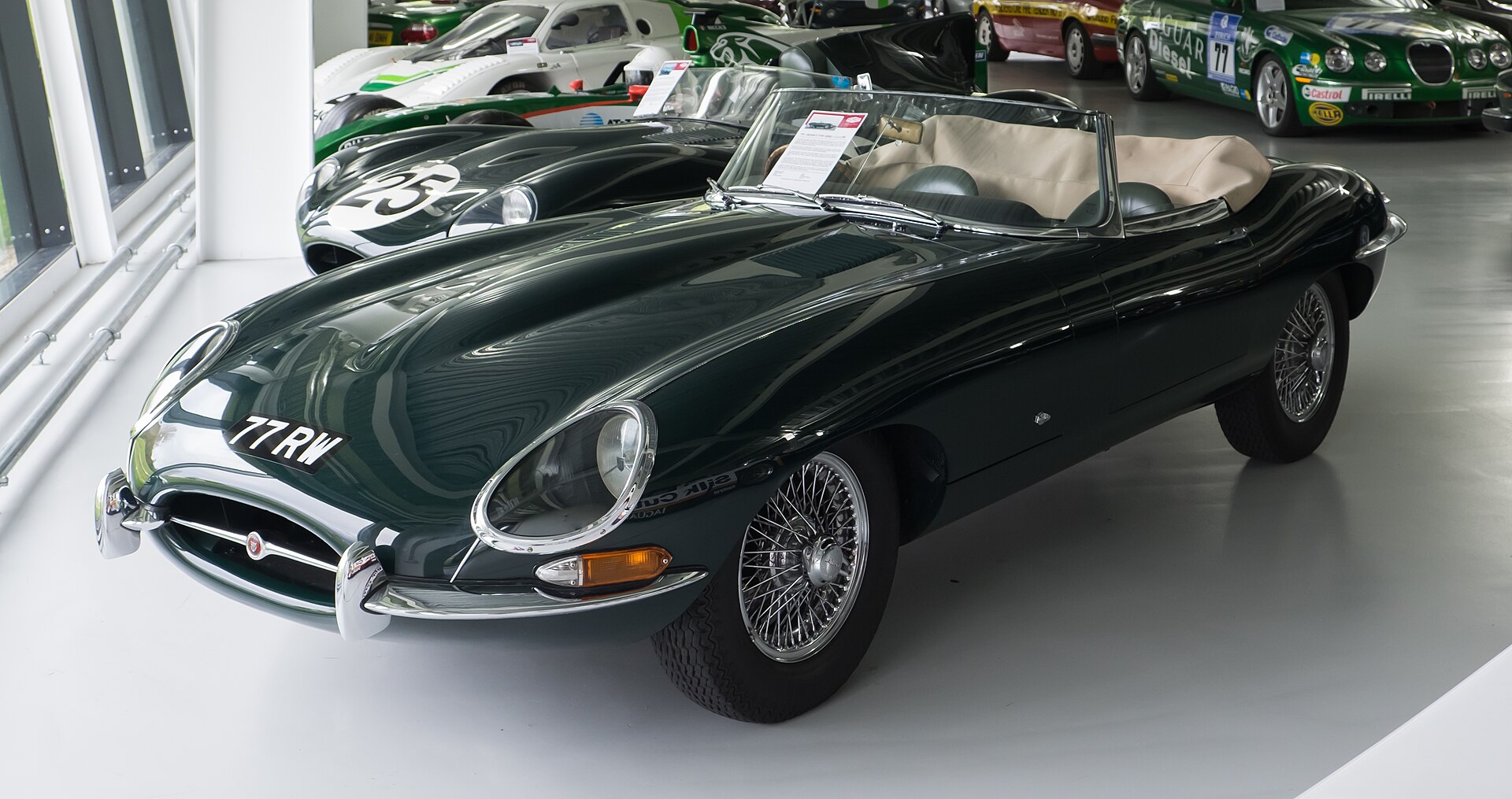
The 1961 Jaguar E-Type 3.8, from the first series later designated Series 1, is a classic whose fame can easily overshadow the car itself. Look at it without the legend: the small oval grille opening, the glass-covered headlights and the bonnet that seems to occupy half the body. Behind the wheel, you sit almost over the rear wheels. The proportions are bold, but the details tie the whole thing together.
At its unveiling in Geneva in March 1961, two body styles were offered: an open two-seater roadster and an enclosed Fixed Head Coupé. Both were built by Jaguar, without an outside coachbuilder. The coupé registered 9600 HP played a central role in the launch. When another demonstration car was needed, Jaguar test driver Norman Dewis drove the roadster 77 RW from England to Geneva overnight.
The E-Type replaced the XK150 and introduced a new design language to Jaguar’s sports cars. The marque’s successes at Le Mans had already given the name considerable standing. Now a customer could buy something with a clear kinship to the racing cars, but with a windscreen, luggage space and the ambition to work on ordinary roads.
Sayer’s design was more than a beautiful line
Malcolm Sayer had worked in the aircraft industry before joining Jaguar. He approached body design through aerodynamics and geometric calculations rather than simply the strokes of a pencil on a sketchpad. Experience gained with the C-Type and D-Type fed into the E-Type, while company boss William Lyons had a decisive influence on the final result.
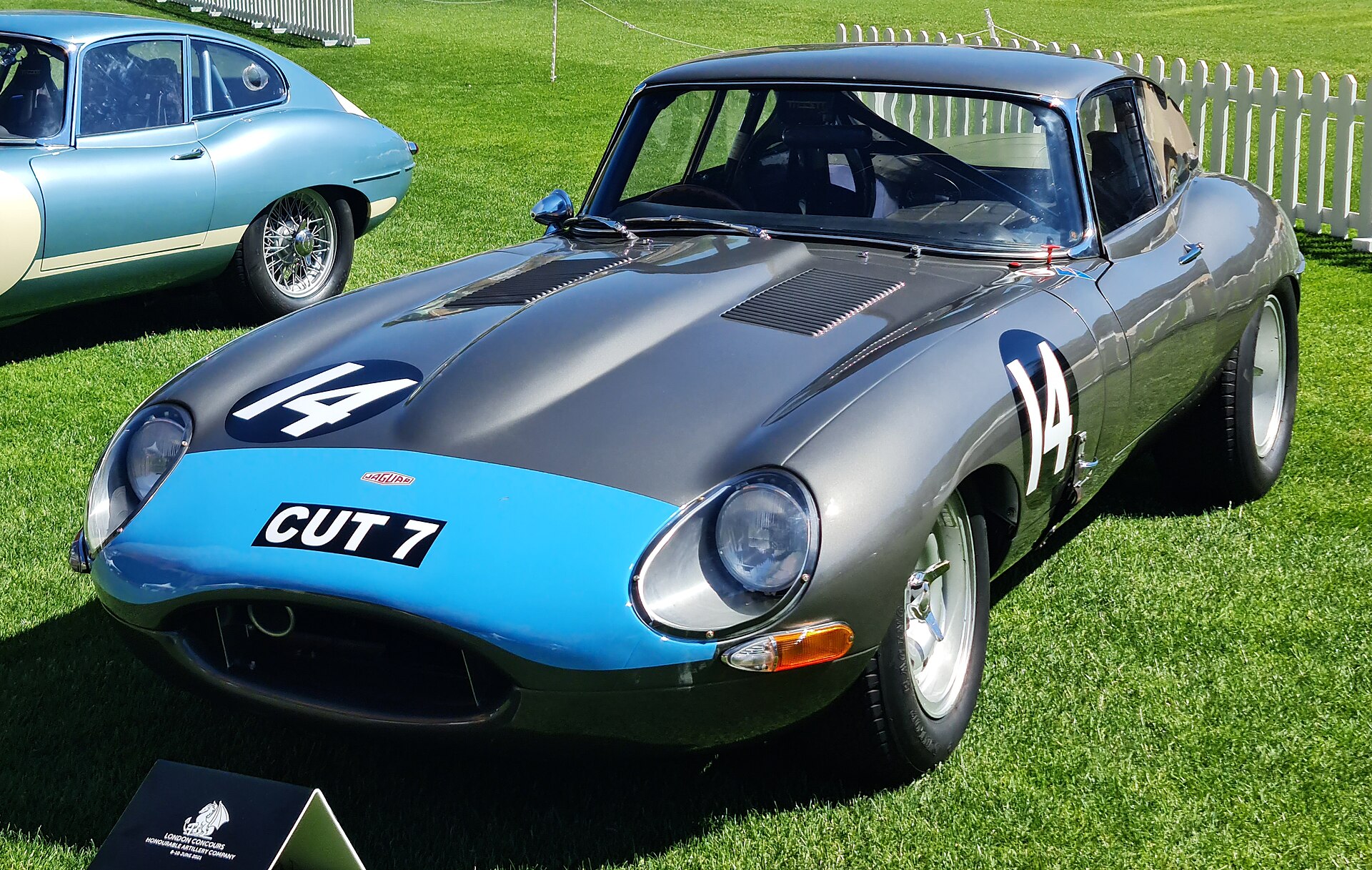
The low nose flows into curved front wings that give the driver a sense of where the wheels are. On the coupé, the roof slopes down towards a tapered, rounded tail, with a side-hinged tailgate. The roadster gives the same basic shape a lighter finish. Which is more beautiful depends very much on whether you prefer the coupé’s unbroken silhouette or the open car’s clean waistline.
The cabin is less drawing room than leather-trimmed precision workshop. The large instruments sit ahead of the driver, with smaller gauges and toggle switches grouped in the centre. Embossed aluminium on the centre of the dashboard and the centre console gives the early cars a distinctive lustre. The slim wooden steering wheel frames the view over the bonnet.
The first examples had a flat cabin floor, which restricted legroom. Early cars may also have external bonnet catches. Such details are important to collectors today, but do not appear on every car from 1961. Production date and chassis number must guide any assessment, not simply the year of registration.
Racing heritage beneath the skin
The E-Type was not simply a spectacular body draped over old mechanicals. The cabin’s load-bearing centre section was combined with a tubular front structure carrying the engine and front suspension. The entire large front section could be tilted forwards, giving unusually good access to the engine and suspension.
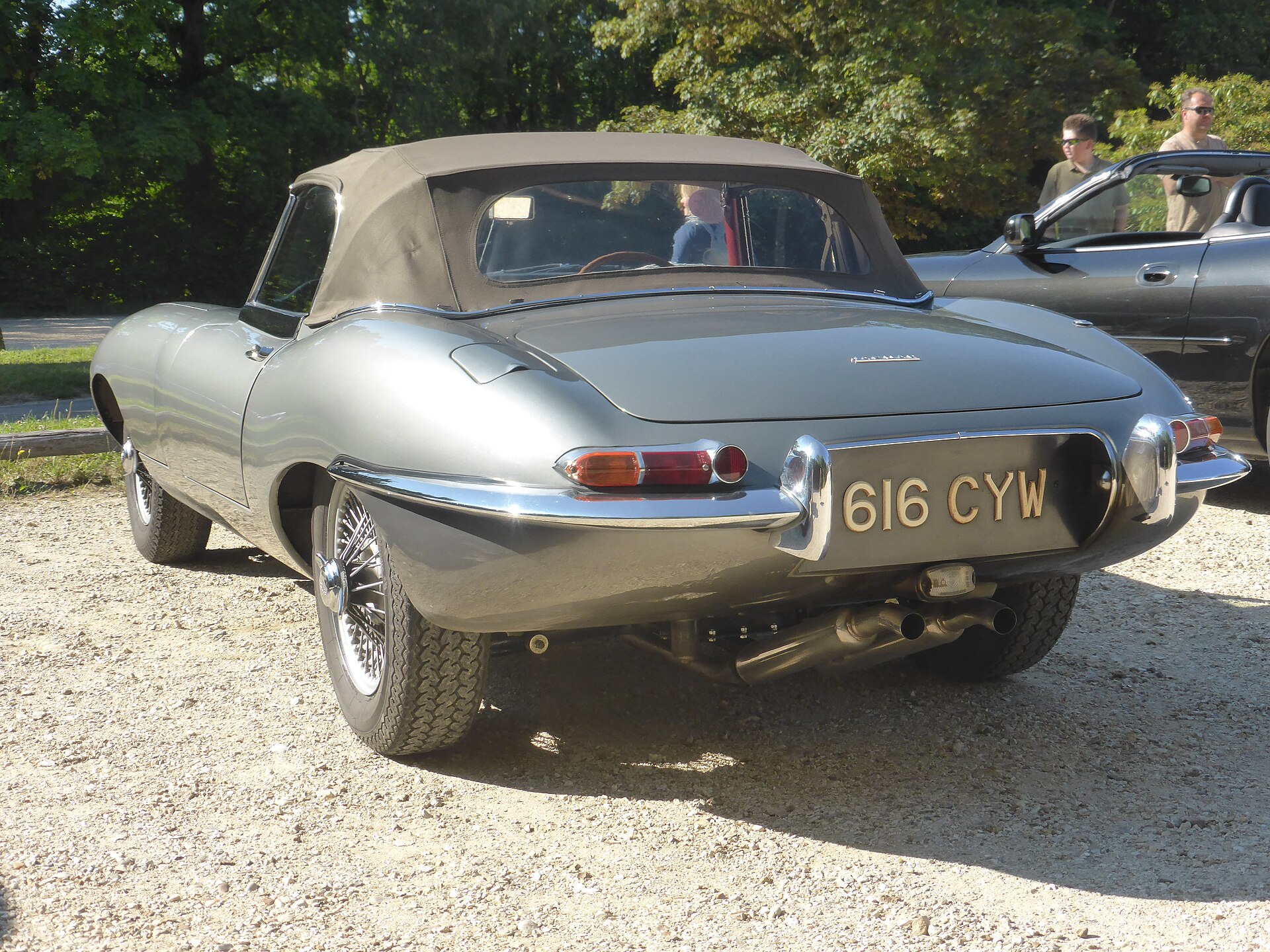
The XK straight-six had twin overhead camshafts and three SU carburettors. The design was established, but pairing it with disc brakes all round and independent rear suspension gave the E-Type a compelling technical package. The rear brakes were mounted beside the differential, a solution that reduced unsprung mass but could later make workshop jobs more involved.
The car was intended for fast open-road driving and long journeys, not just brief displays. At the same time, the early Moss gearbox calls for a considered approach: first gear has no synchromesh. A buyer today should also try the driving position thoroughly. The low roofline and early floor are part of the original experience, not ergonomic advantages. The editorial team has not test-driven the car.
A bargain then, a collector’s car now
At launch, the roadster cost around 2 097 pounds and the coupé 2 196 pounds on the British market, including the purchase tax of the day. That was a great deal of money for a household, but remarkably little for such a fast and striking sports car. Its exclusivity lay above all in the experience, not in Jaguar restricting production to a small circle of customers.
As a rough guide to today’s budget, an early 3.8-litre Series 1 can range from around 800 000 to over two million kronor. This is an estimated range, not a verified current valuation or a guarantee. Exceptionally early examples, documented history and first-class restoration can push the price considerably higher.
Check for rust, body geometry, engine identity and restoration documentation before being swayed by the shine of the paintwork. Correct details matter a great deal, but originality must be distinguished from a later return to original specification.
The most beautiful? That cannot be proved. The E-Type’s strongest argument is that its shape still feels entirely right once you understand the engineering behind it.
Sources
- Philip Porter, Original Jaguar E-Type (1990)
- Philip Porter, Jaguar E-Type: The Definitive History
- The Museum of Modern Art, Jaguar E-Type Roadster
- Hagerty, Hagerty Valuation Tools
Ask questions about “Jaguar E-Type – the most beautiful car?”. Answers are based on the magazine's own articles.