Ferrari 512 S Modulo – the future under one roof
Paolo Martin’s extreme Pininfarina study turned a racing car into a rolling design manifesto.
When the Ferrari 512 S Modulo was unveiled in Geneva in 1970, it looked nothing like anything visitors could order from a car dealer. Beneath the white, almost floating bodywork lay racing technology – but the truly radical element was the way Paolo Martin redrew the relationship between wheels, cabin and body.
 By Cecilia WahlReporter · Luxury cars and car design
Translated from Swedish with the help of AI.
A Ferrari like no other
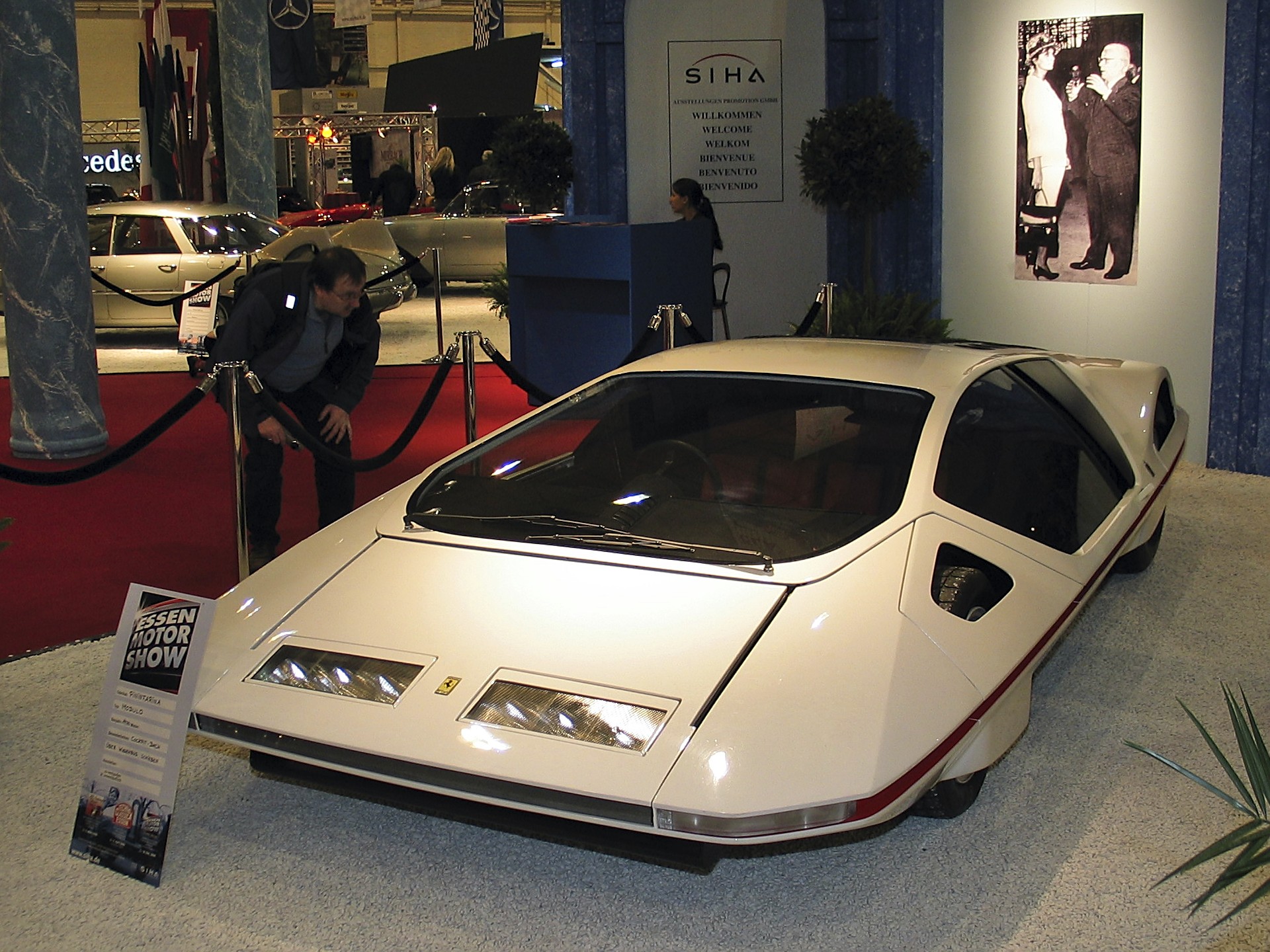
The 1970 Ferrari 512 S Modulo is a concept car, designed by Paolo Martin at Pininfarina and built by the Italian design and coachbuilding company on Ferrari racing underpinnings. It was unveiled at the Geneva motor show that same year. Series production was never the point: Modulo was intended to show how far a car’s form could be pushed when everyday demands were set aside.
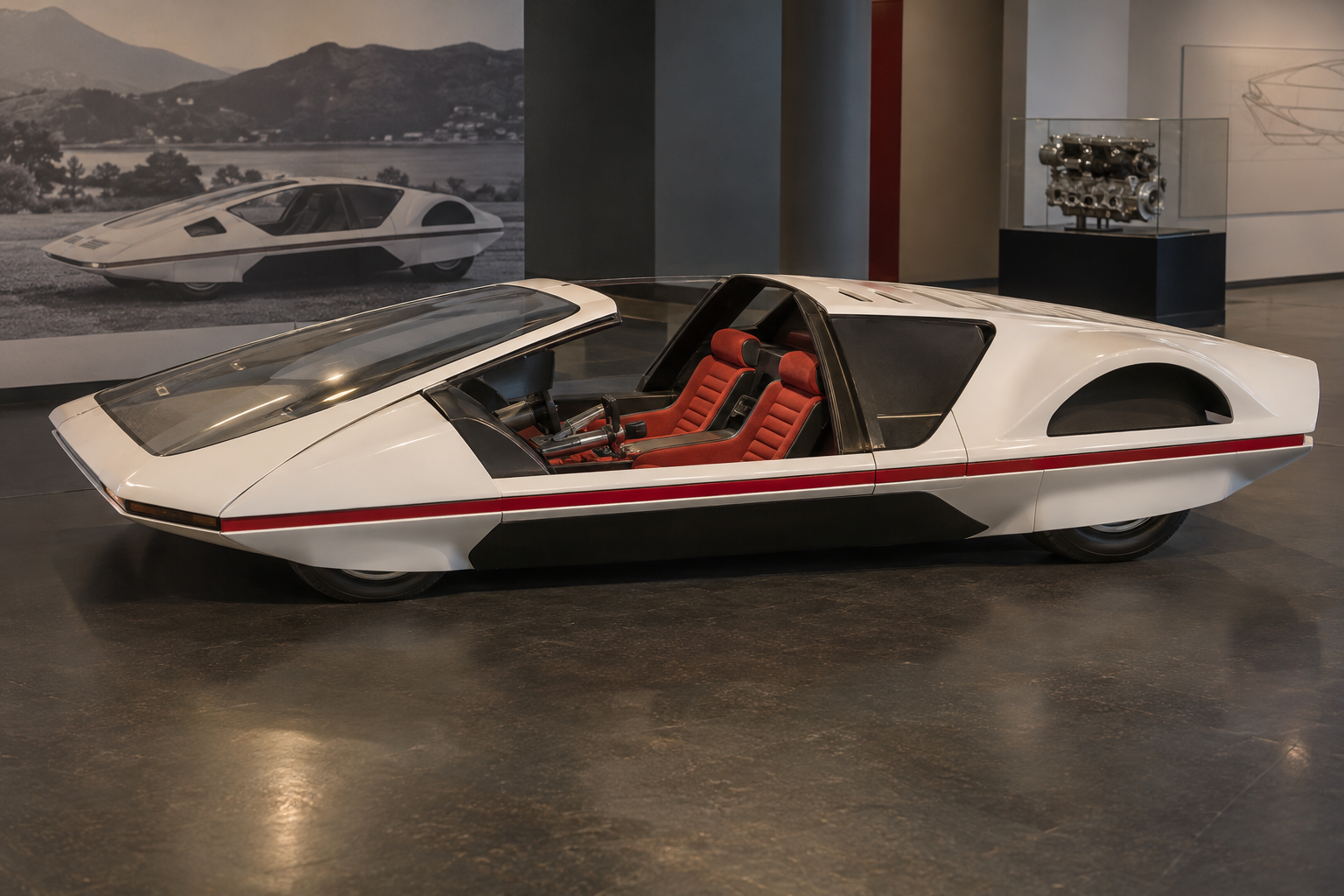
The starting point was the Ferrari 512 S, the sports prototype created for endurance racing and the battle against rivals including the Porsche 917. That makes Modulo more than a sculpture wearing a famous badge. Its proportions stem from a low-slung racing machine with its engine behind the cabin, not from a passenger car clothed in futuristic panels.
The timing matters. Italian design houses were then exploring wedge shapes, sharp creases and new ways of arranging cabins and access. Modulo took the experiment further than most. It was not a proposal for the next Ferrari in the showroom, but a concentrated expression of Pininfarina’s ability to think beyond established solutions.
Bodywork that encloses the wheels
The first thing the eye searches for is the wheels. They are there, but largely hidden behind the sides of the body. This removes one of the sports car’s most familiar visual features: clearly defined wheelarches. Instead, Modulo reads as two slim volumes, separated by a dark horizontal line running around the car.
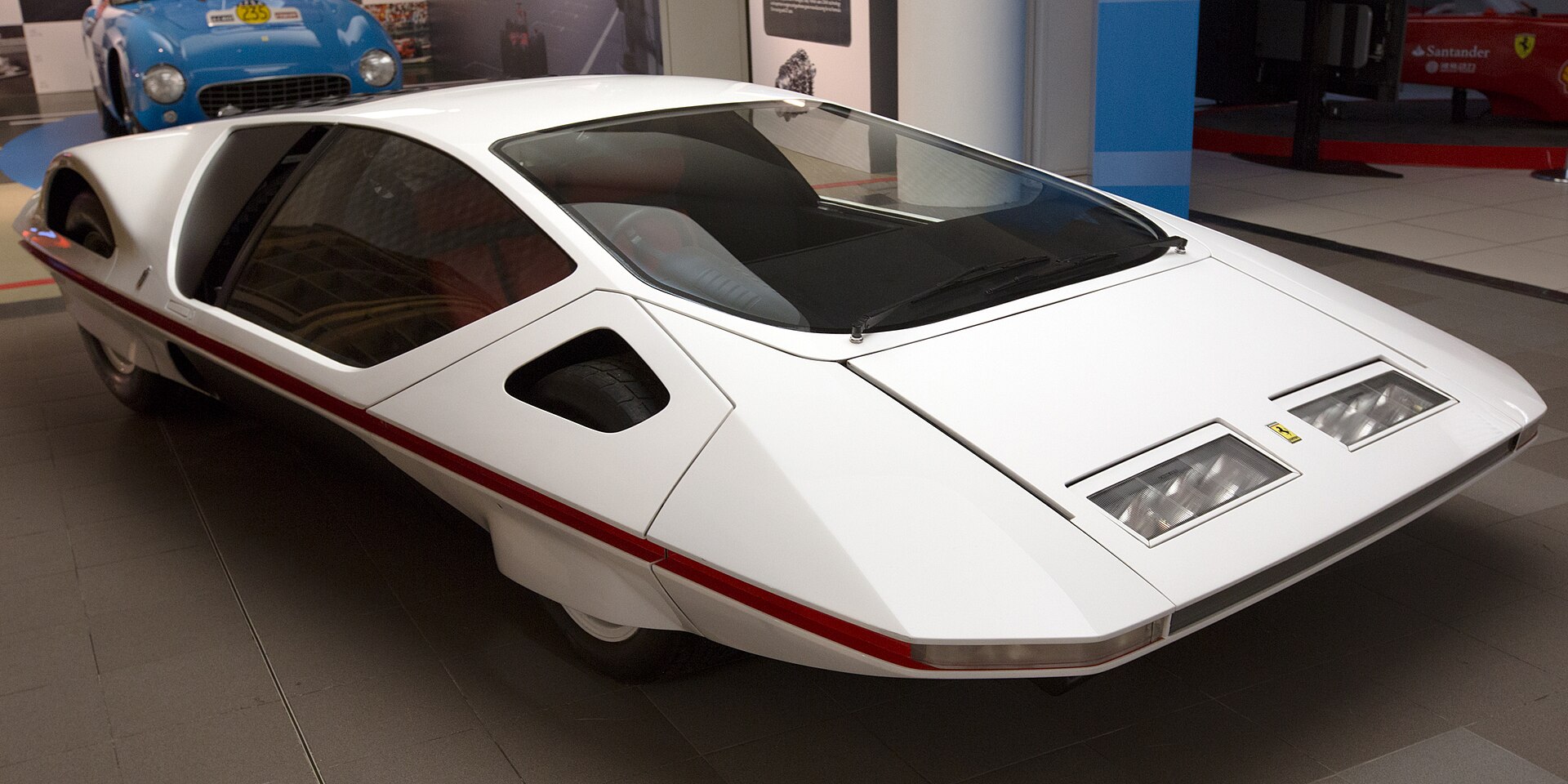
The familiar white paintwork reinforces the impression of an object sculpted from a single piece. At its debut, however, the car wore a dark finish; the white colour scheme came later. The distinction is worth remembering when comparing photographs from shows. Even such a carefully composed design icon has had more than one visual life.
A low, glazed canopy sits over the cabin. It slides forwards to provide access to the two seats, rather than conventional side doors opening. The arrangement makes getting in part of the spectacle itself. At the same time, it reveals the distance from series production’s demands for easy access, weather sealing and usability in tight parking spaces.
Behind the cabin, the engine cover has 24 circular openings. Their regular pattern contrasts with the large, smooth surfaces and offers glimpses of the mechanical components. It is one of the car’s most distinctive details: a functional feature that also becomes ornament, without chrome strips or traditional decoration.
The cabin follows the same experimental thinking. The two seats sit close together beneath the glass, and dedicated control units group the controls around the occupants. Here, exclusivity is not primarily a matter of wood varieties or the quantity of leather. It lies in every part being subordinated to an idea that no ordinary production car needed to realise.
Racing mechanicals, but no ordinary road test
The Ferrari designation anchors the car in a tangible engineering world. Its underpinnings belong to the family with a five-litre V12 engine and a mid-engined layout. But it is important to distinguish the racing car’s specification from Modulo’s history as an exhibition piece. Engine output and theoretical performance do not automatically tell us what the concept car could achieve at its debut.
Modulo was originally shown as a design study, not as a fully developed road car. This article is not based on a road test of our own. Its intended role was primarily to attract attention at motor shows and demonstrate Pininfarina’s design expertise.
The enclosed wheels and very low upper bodywork also make the compromises visible. A production car must allow for steering lock, suspension travel, visibility and servicing. Modulo instead allows the overall visual effect to dominate. That is precisely why it still feels more uncompromising than many later concept cars.
One example, several lives
In 2014, Modulo was bought from Pininfarina by the American collector and car manufacturer James Glickenhaus. Under his ownership, work followed to make the car driveable. This gave it a new chapter: from preserved motor show star to a historic creation that could also be displayed in motion.
For a collector, originality here becomes a more complicated question than the correct paint code and matching upholstery. It also concerns the relationship between its debut specification, later colour scheme and mechanical changes. Modulo’s history needs to be read as a succession of documented states, not as an untouched time capsule.
No publicly verified purchase price for the 2014 transaction is given here. Only one example of the car was built, so there is no normal market of comparable sales. Its exclusivity lies as much in its creator’s idea and Pininfarina’s craftsmanship as in the Ferrari mechanicals: a car that made form itself the main event.
Sources
- Pininfarina, Modulo
- Ferrari, Ferrari 512 S
- Leonardo Acerbi, Ferrari: All the Cars (2006)
Ask questions about “Ferrari 512 S Modulo – the future under one roof”. Answers are based on the magazine's own articles.