Duesenberg Model J – a racing heart in formal dress
The 1929 model combined racing engine technology with the grandest ambitions of the American luxury car.
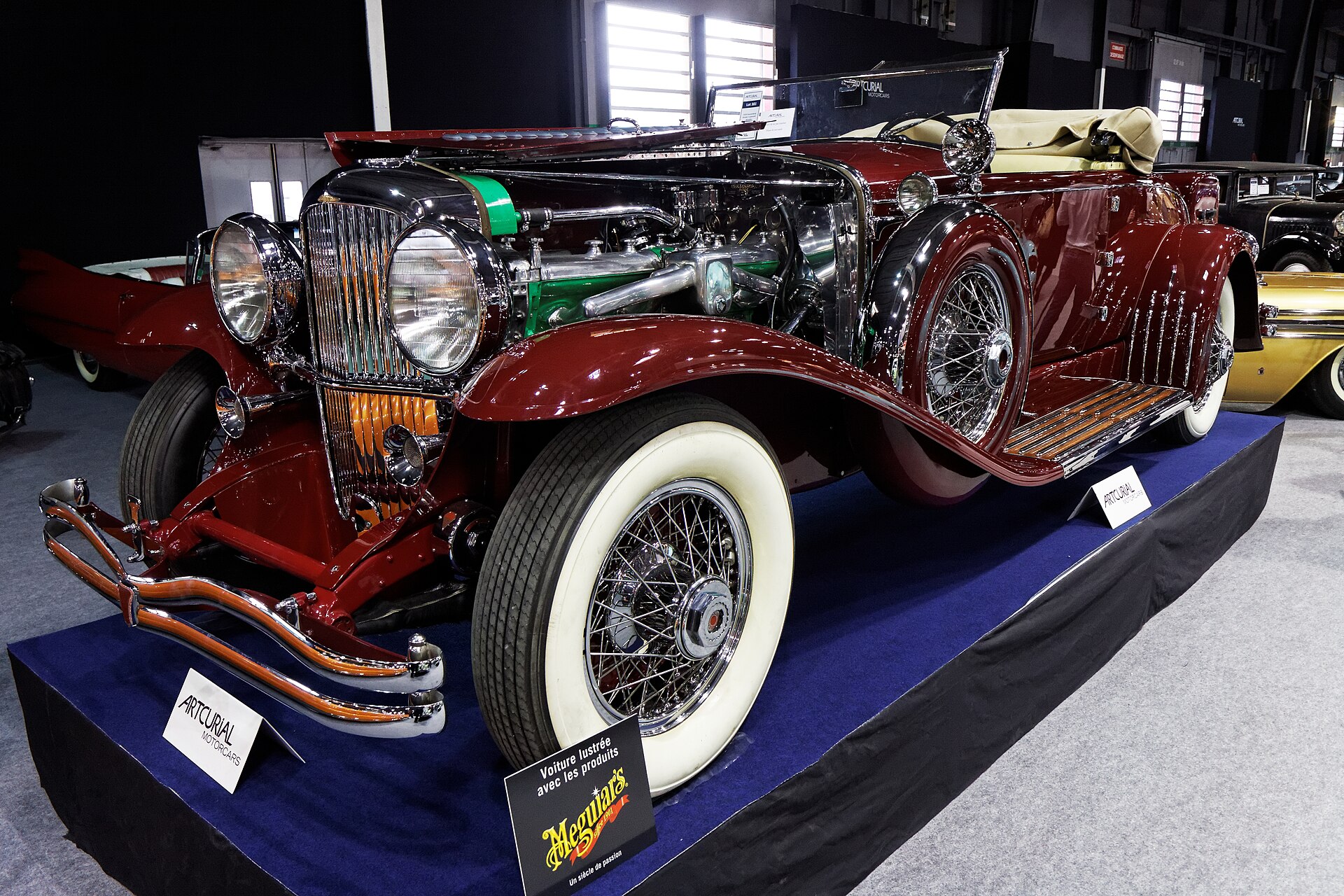
Beneath the long bonnet worked a straight-eight with twin overhead camshafts and 32 valves. Around it, the customer could commission almost any splendour imaginable. The Duesenberg Model J brought together the Duesenberg brothers’ racing expertise, E.L. Cord’s business ambition and the coachbuilders’ craftsmanship.
 By Lars EkströmEditor-in-chief · Veteran cars and motoring history
Translated from Swedish with the help of AI.
A luxury car with memories of the pits
At the New York motor show in December 1928, Duesenberg’s new Model J faced a public that had yet to experience the stock market crash. Here was a car built for people who could have their lives made to measure. But behind the radiator’s austere upright stance lay something more than money: experience gained on racing circuits where durability and precision determined the result.
The 1929 Duesenberg Model J was an American luxury car, manufactured in Indianapolis and usually supplied as a chassis for bespoke coachwork. There is therefore no single body style that defines the model. This feature covers the basic, naturally aspirated model, not a particular surviving example; coachbuilder, chassis number and restoration history must be established for each individual car.
Fred and August Duesenberg had made their name through racing engines and racing cars. Jimmy Murphy’s victory in the 1921 French Grand Prix and the marque’s successes at Indianapolis gave the name a standing that advertising could not buy. The brothers’ work combined practical workshop expertise with a willingness to try advanced solutions.
When E.L. Cord took control of the company in 1926, he wanted to make Duesenberg the benchmark for American luxury cars. Fred took the central role in developing the Model J, while August remained closely associated with the racing operation. The brief was not to build something cheap or simple, but to surpass the established prestige cars.
An engine far removed from the everyday
The engine was the car’s technical centrepiece: a large straight-eight with twin overhead camshafts and four valves per cylinder. At a time when many passenger cars had side valves, this was a strikingly advanced design. The valve arrangement offered ample scope for filling and emptying the cylinders, an important prerequisite for high power output.
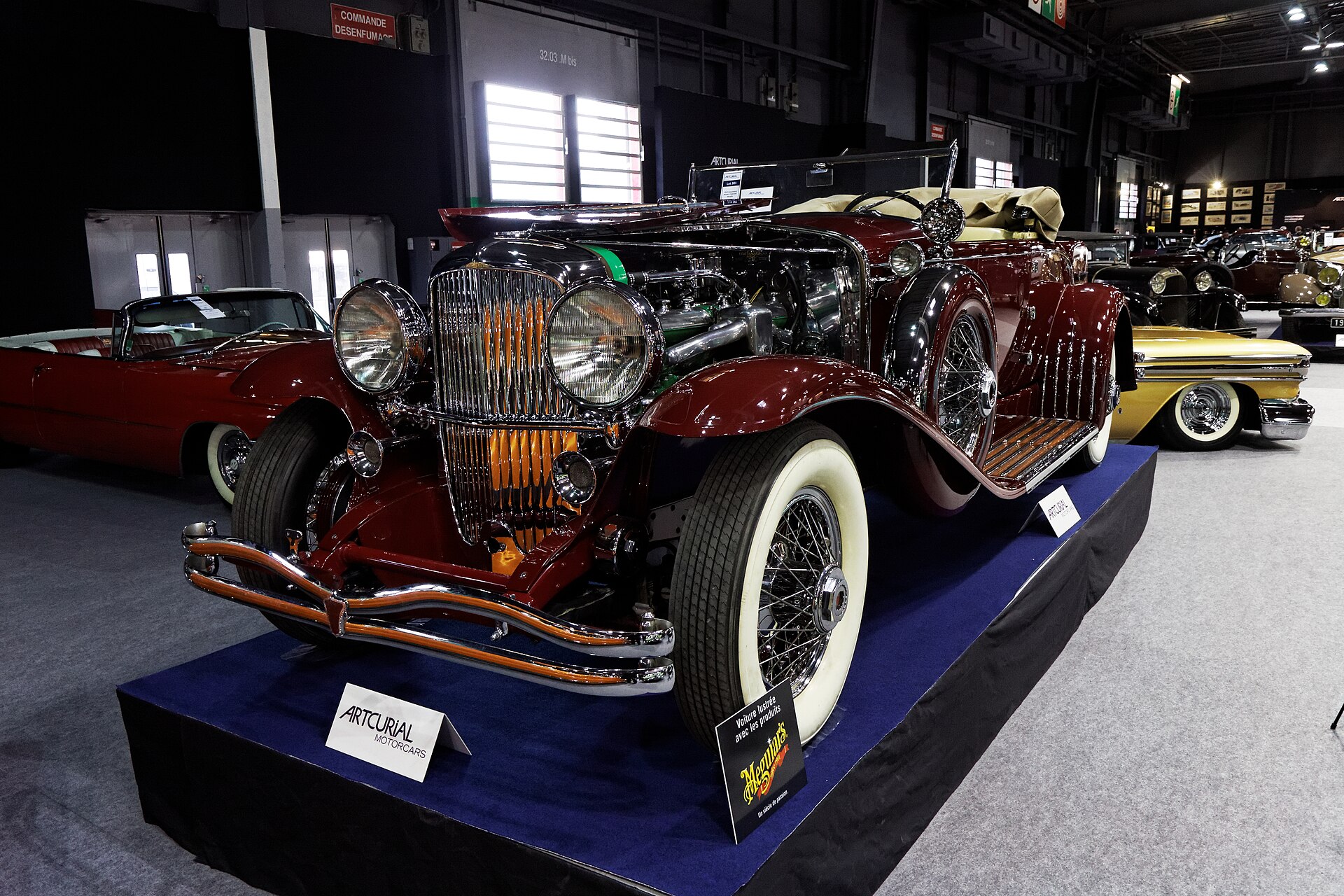
Duesenberg’s design was manufactured by Lycoming, which was also part of Cord’s group of companies. The racing heritage lay not in transplanting a ready-made racing engine into a limousine, but in the design principles and the level of ambition. The engine had to deliver performance while also propelling a heavy, lavishly appointed car with dignity.
The advertised power output was impressive, but should be read as a contemporary manufacturer’s claim, not as a modern comparative test result. The body’s weight and aerodynamic drag also affected what the finished car could actually achieve. A lighter open car and a large formal limousine presented different tasks for the same basic design.
Power reached the rear wheels through a three-speed manual gearbox. Hydraulic brakes on all four wheels were part of the specification, while a separate chassis frame, beam axles and leaf springs gave the car a more traditional foundation. It is precisely this combination that fascinates: highly advanced engine technology in a large car that still demanded skill from its driver.
An important distinction must be made here. The 1929 Model J was not supercharged. The supercharged variant commonly known as the SJ did not arrive until 1932. Nor are the famous external exhaust pipes enough to identify one with certainty; these could also appear on cars without a supercharger.
Coachwork tailored to the customer’s life
Duesenberg supplied the foundation, but coachbuilders such as Murphy, LeBaron and Rollston gave the car its final character. The customer could choose an open car to drive themselves or an enclosed body in which chauffeur and owner occupied separate worlds. Proportions, roofline and interior became elements of a bespoke commission.
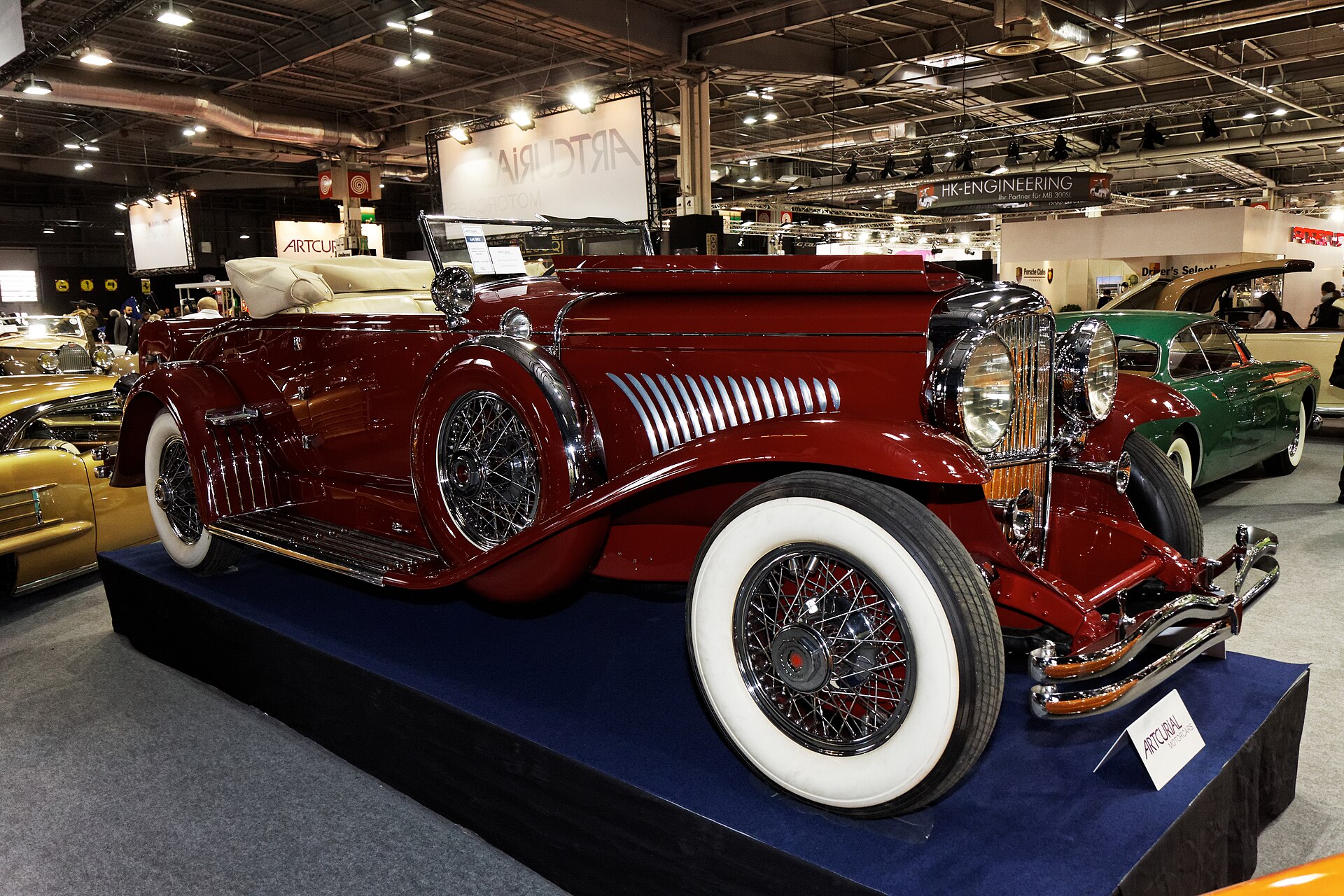
Behind the splendour were the hands that shaped panels, fitted doors and stitched upholstery. Depending on the body and the commission, the cabin could be finished in fine wood, leather or exclusive fabrics. The long bonnet, however, remained a shared hallmark: the engine took up space and was also allowed to dominate the car’s appearance.
This portrait is not based on a test drive of our own. Yet the car’s intended use tells us a great deal. The Model J was meant to serve both as a prestigious touring car for its driver and as a formal drawing room for its passenger. Comfort came from space, interior appointments and coachwork rather than today’s electronically controlled chassis technology.
Expensive before it even had a body
At launch, the chassis alone cost around 8 500 dollar on the American market. The bespoke body cost extra. The customer was therefore buying not just a car, but also an extensive piece of craftsmanship. After the stock market crash of 1929, the already limited clientele became even harder to reach.
For today’s collectors, documentation is crucial. Original coachwork, identifiable components and a traceable ownership history must be distinguished from later rebodying and restoration. A beautiful car is not automatically a car preserved in original condition. The Model J’s appeal still lies in the same contrast: beneath the upper classes’ tailored clothes is a machine designed by people who knew what a racing engine demanded.
Sources
- Fred Roe, Duesenberg: The Pursuit of Perfection (1982)
- J. L. Elbert, Duesenberg: The Mightiest American Motor Car (1964)
- Dennis Adler, Duesenberg (2004)
Ask questions about “Duesenberg Model J – a racing heart in formal dress”. Answers are based on the magazine's own articles.