Tatra 87 – a V8 in its tail and the world ahead
Ledwinka’s streamlined long-distance car became a Czechoslovak travelling companion far beyond Europe’s roads.
Three headlights, a dorsal fin and an air-cooled V8 behind the rear axle. The Tatra 87 combined bold styling with a technical philosophy all its own. But the story of this large long-distance car is also about weight distribution, workshop expertise and two travellers who turned it into a cultural icon.
 By Lars EkströmEditor-in-chief · Veteran cars and motoring history
Translated from Swedish with the help of AI.
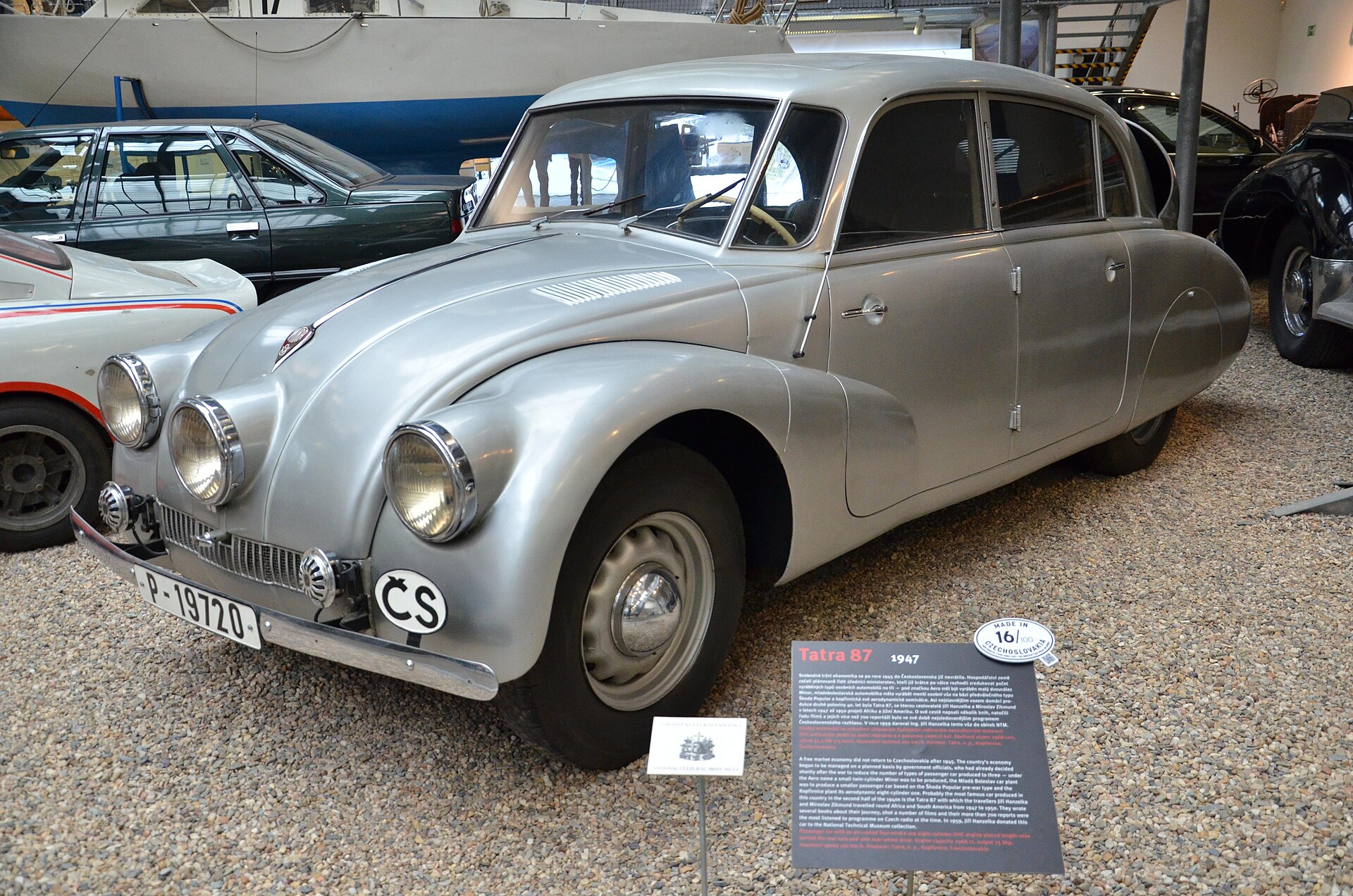
In 1947, Jiří Hanzelka and Miroslav Zikmund left Czechoslovakia in a silver Tatra 87. Ahead lay a journey through Africa and Latin America that would last until 1950. The car was both a means of transport and an ambassador for their homeland’s industry. With three headlights in its nose and a fin running along its tail, it hardly needed an introduction.
The Tatra 87, unveiled in 1936 and built until 1950, was a large Czechoslovak long-distance car with a four-door body and an air-cooled V8 behind the rear axle. Both its engineering and bodywork came from Tatra in Kopřivnice. This was no experimental car for an exhibition hall, but a production model for customers who wanted to travel far and fast, with an engineering approach markedly different from the most common formula of its day.
Ledwinka’s road to the long-distance car
The car was the product of Hans Ledwinka’s engineering work, developed alongside Erich Übelacker and others. Tatra had already tried the streamlined concept with the larger Tatra 77. With the 87, the idea became lighter, more compact and better suited to series production.
Ledwinka did not regard the body, engine and chassis as separate elements. The rear-mounted engine provided a short path for power to reach the driven wheels and freed the nose from a large radiator. Air cooling also did away with the radiator, hoses and risk of freezing associated with water cooling. It did, however, require carefully directed cooling air and a working fan: air-cooled did not mean the engine could simply rely on the airflow generated by the car’s movement.
The backbone chassis was another part of Tatra’s engineering tradition. A substantial longitudinal tube formed the backbone of the chassis, providing a rigid foundation for the suspension and powertrain. Together with independent suspension, it laid the groundwork for comfortable travel on roads that rarely matched today’s smooth tarmac.
Form that did a job
The Tatra 87 still looks like the future seen through a 1930s window. Its curved roofline sweeps back towards the engine compartment, and the fin divides the long tail. The air intakes at the rear are part of the engineering, not decoration. The three headlights give the front its distinctive face, while the split windscreen recalls the manufacturing capabilities of the time.
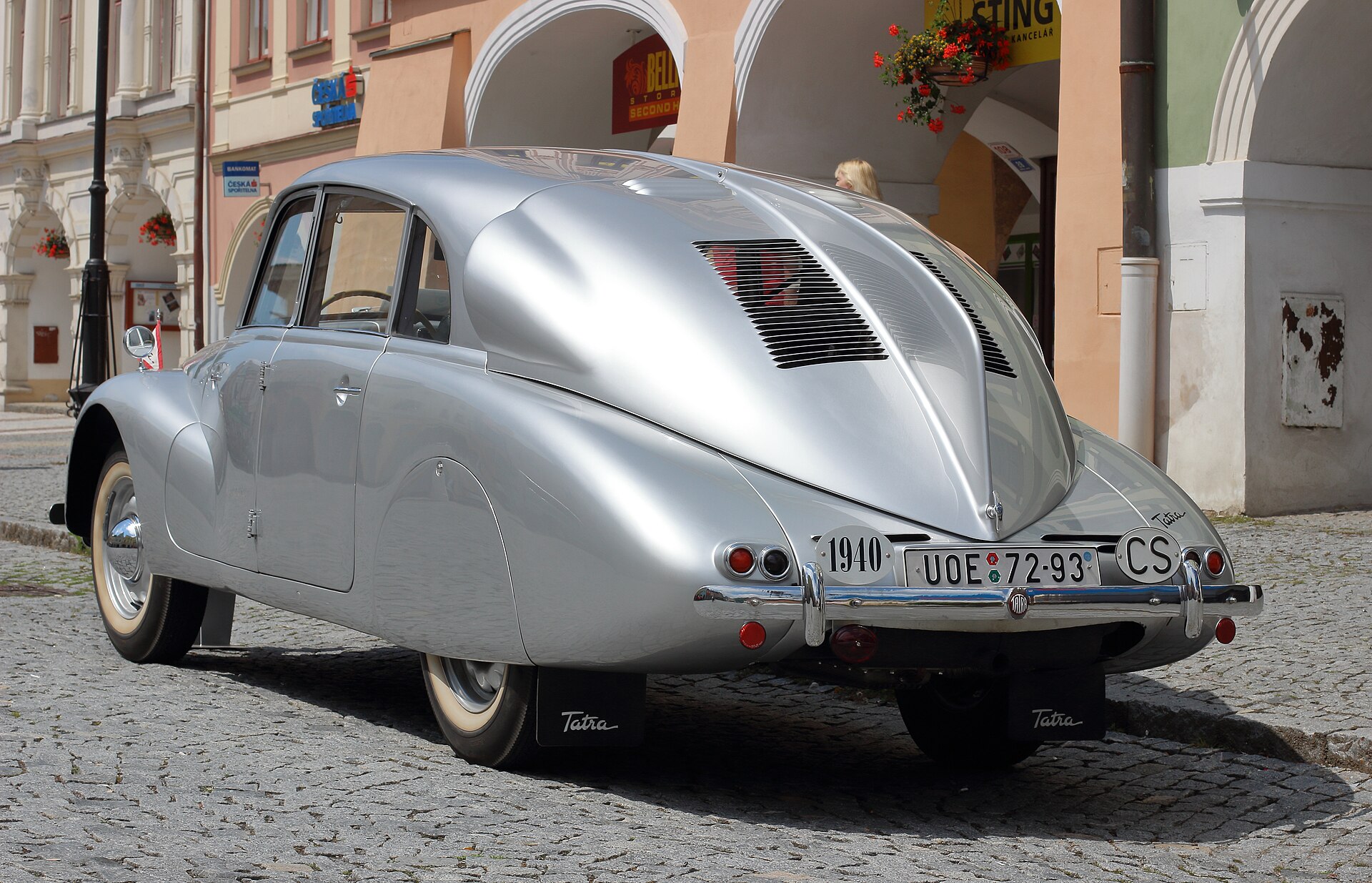
The streamlined shape had a practical purpose: to limit aerodynamic drag so that a relatively modest power output could deliver a high cruising speed. The fin was part of the effort to provide directional stability, but it could not cancel out the car’s fundamental weight distribution.
The cabin was intended for travelling rather than sporting showmanship. There was room for passengers and luggage, with the engine isolated at the very back. Placing the passengers ahead of the powertrain gave the car a distinctive sense of space. At the same time, the rounded body and its many unusual details placed considerable demands on those who built it and would later repair it.
Comfort with particular conditions
The rear-mounted V8 put plenty of weight over the driven wheels, but also placed a great deal of mass far from the centre of the car. Combined with the swing-axle rear suspension, this meant the handling demanded respect. Large suspension movements alter the camber of the wheels, and an abrupt manoeuvre can have different consequences from those in a more nose-heavy car.
It is therefore misleading to describe the Tatra 87 simply as either brilliant or dangerous. Its design combined long-distance comfort and high-speed capability with characteristics the driver needed to understand. The dorsal fin was no insurance against oversteer. Tyre condition, correct pressures and properly refurbished suspension are particularly important when the car is used today.
Hanzelka and Zikmund’s journey shows another side of its use. During the trip, the Tatra became a working tool for documenting their travels and meeting people, but also a car that needed servicing and repairs far from the factory. Their books, photographs and films made the silver car familiar to a wide audience back home in Czechoslovakia.
Preserving an individual idea
For today’s collectors, the Tatra 87 is a rare classic for which documentation matters a great deal. Its specification changed during production; a late example should not automatically be judged against a pre-war photograph. The engine, instruments, lighting and body details need to be checked against the car’s actual year of manufacture and history.
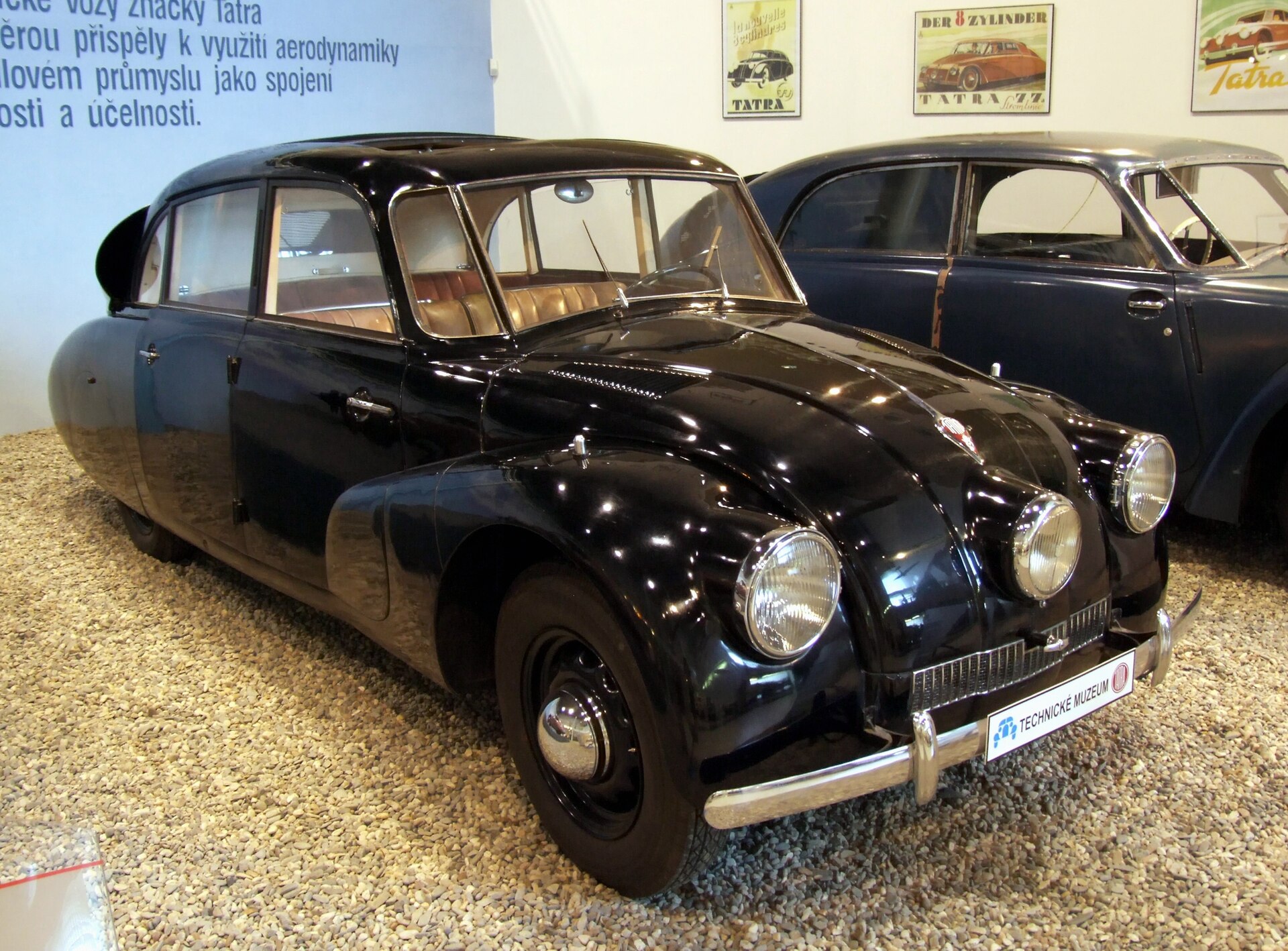
Restoration also requires knowledge of both the backbone chassis and the air-cooled engine’s cooling system. Incorrect replacement parts can affect more than appearance. It is difficult to give a consistent price level for such a small market: originality, condition and documented work carry considerable weight. Its lasting value also lies in the experience of the design itself – a car in which every glance towards the rear reveals how different the future might have been.
Sources
- Ivan Margolius och John G. Henry, Tatra: The Legacy of Hans Ledwinka (2015)
- Technické muzeum Tatra, Tatra 87
- Jiří Hanzelka och Miroslav Zikmund, Afrika snů a skutečnosti (1952)
Ask questions about “Tatra 87 – a V8 in its tail and the world ahead”. Answers are based on the magazine's own articles.