BMW 2002 Turbo – boost with attitude
The little two-door that gave BMW’s turbocharged future a raw opening chapter.
Wheelarch extensions, a front spoiler and 170 horsepower made the BMW 2002 Turbo anything but a discreet sports saloon. But behind the attitude lay a demanding technical pioneer – and today, sound metalwork and original parts matter at least as much as boost pressure.
 By Lars EkströmEditor-in-chief · Veteran cars and motoring history
Translated from Swedish with the help of AI.
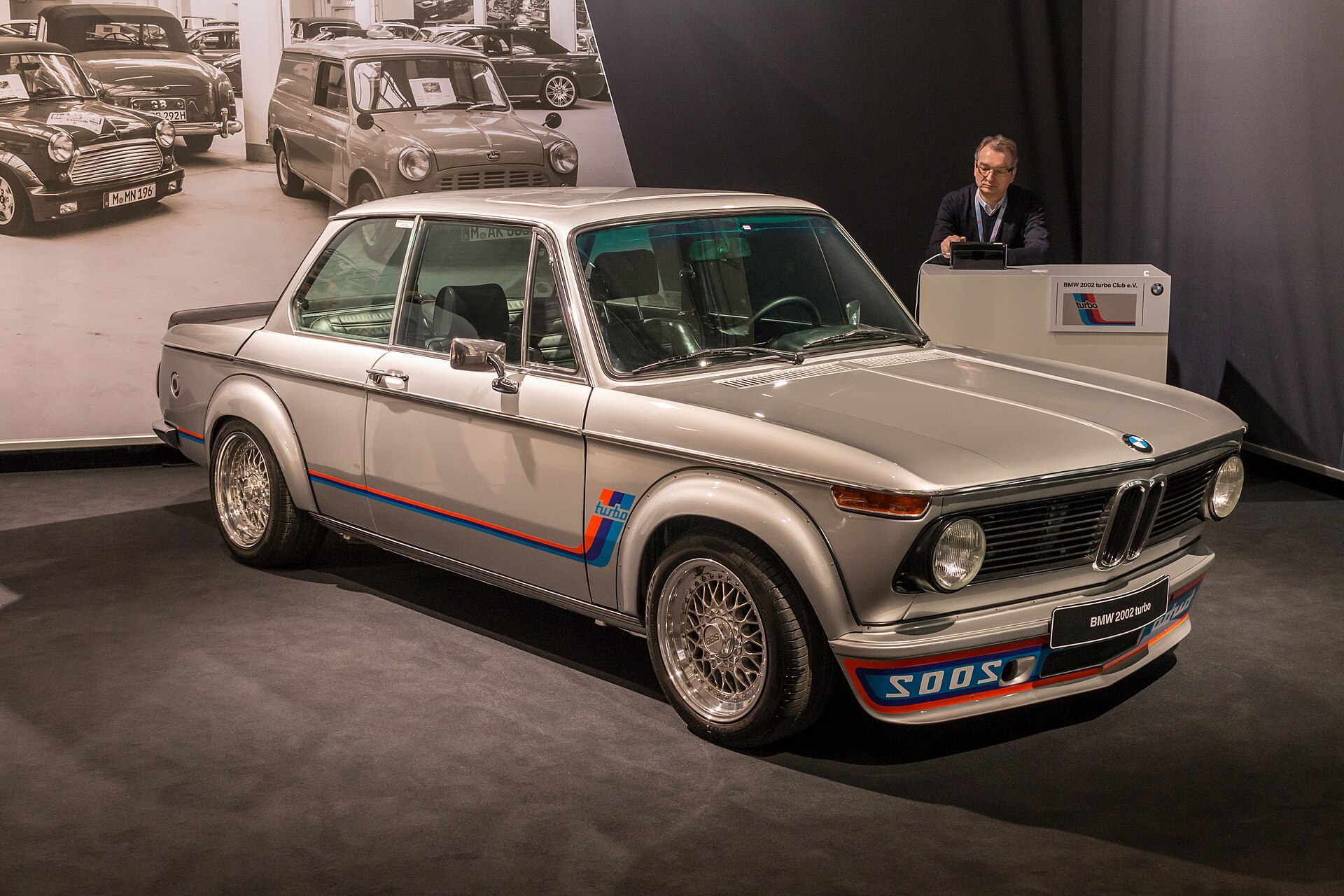
At the Frankfurt motor show in autumn 1973 stood a small BMW that was hardly apologetic. The body was familiar: a tall cabin, slender roof pillars and two doors. But the wheelarches had gained bolt-on extensions, and beneath the nose sat a front spoiler with the look of a racing car. The BMW 2002 Turbo had arrived, and the marque’s compact family car had taken on a new role.
This was the turbocharged flagship of BMW’s 02 Series, unveiled in 1973 and built during 1973–1974. The body was built as part of BMW’s regular production, not by an independent coachbuilder. Total production came to 1,672 examples. That alone goes some way towards explaining why a genuine Turbo is now regarded as considerably more than a fast 2002.
From everyday sportiness to forced induction
The 02 Series had shown that a relatively light, practical car could deliver driving pleasure without six cylinders or expensive bespoke bodywork. With the 2002 tii, BMW had already paired the two-litre engine with mechanical Kugelfischer injection. The Turbo took that same basic idea a substantial step further.
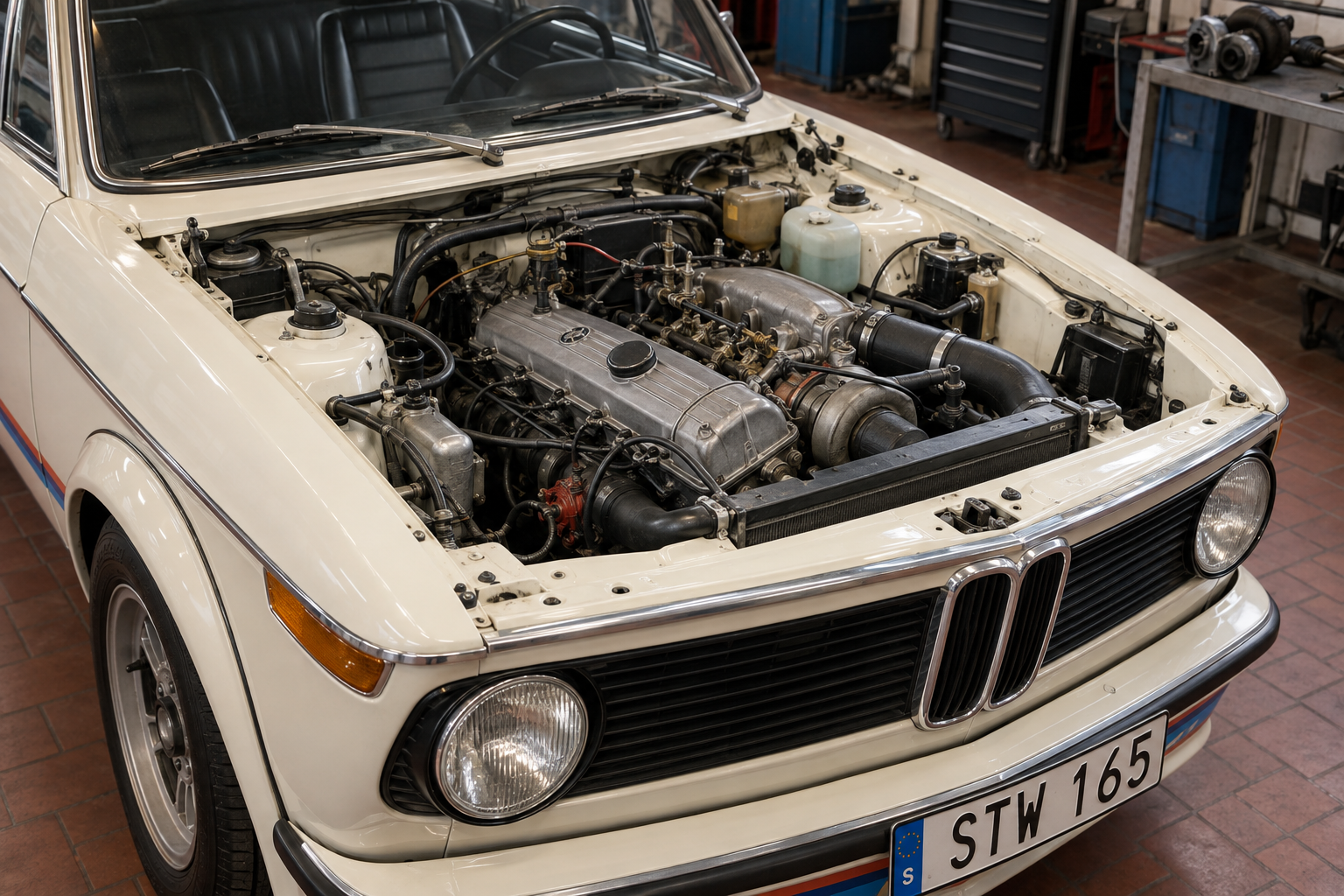
BMW also had experience of turbocharging from racing the 2002. The road car was no racing engine with number plates, but the shared thinking was clear: more air through the engine offered the potential for greater power without increasing displacement.
Under the bonnet was a two-litre four-cylinder engine from the M10 family, whose basic design is associated with BMW engine engineer Alexander von Falkenhausen. The Kugelfischer system metered the fuel mechanically, while an exhaust-driven KKK turbocharger forced in the air. The compression ratio was lowered so that the engine could withstand the boost. The result was 170 hk, against 130 in the 2002 tii.
It was also BMW’s first series-production turbocharged car. Much later, the technology would become commonplace at the marque, but here it was still a distinctive feature that influenced both the engineering and the way the car was used.
Form followed speed
The arch extensions were not merely decorative. They made room for wider wheels and reinforced the connection with the 02 racers. The front spoiler gave the nose a lower, more purposeful shape, while the small spoiler on the boot lid completed the silhouette. Without a front bumper, the car looked unusually bare for a road car of the period.
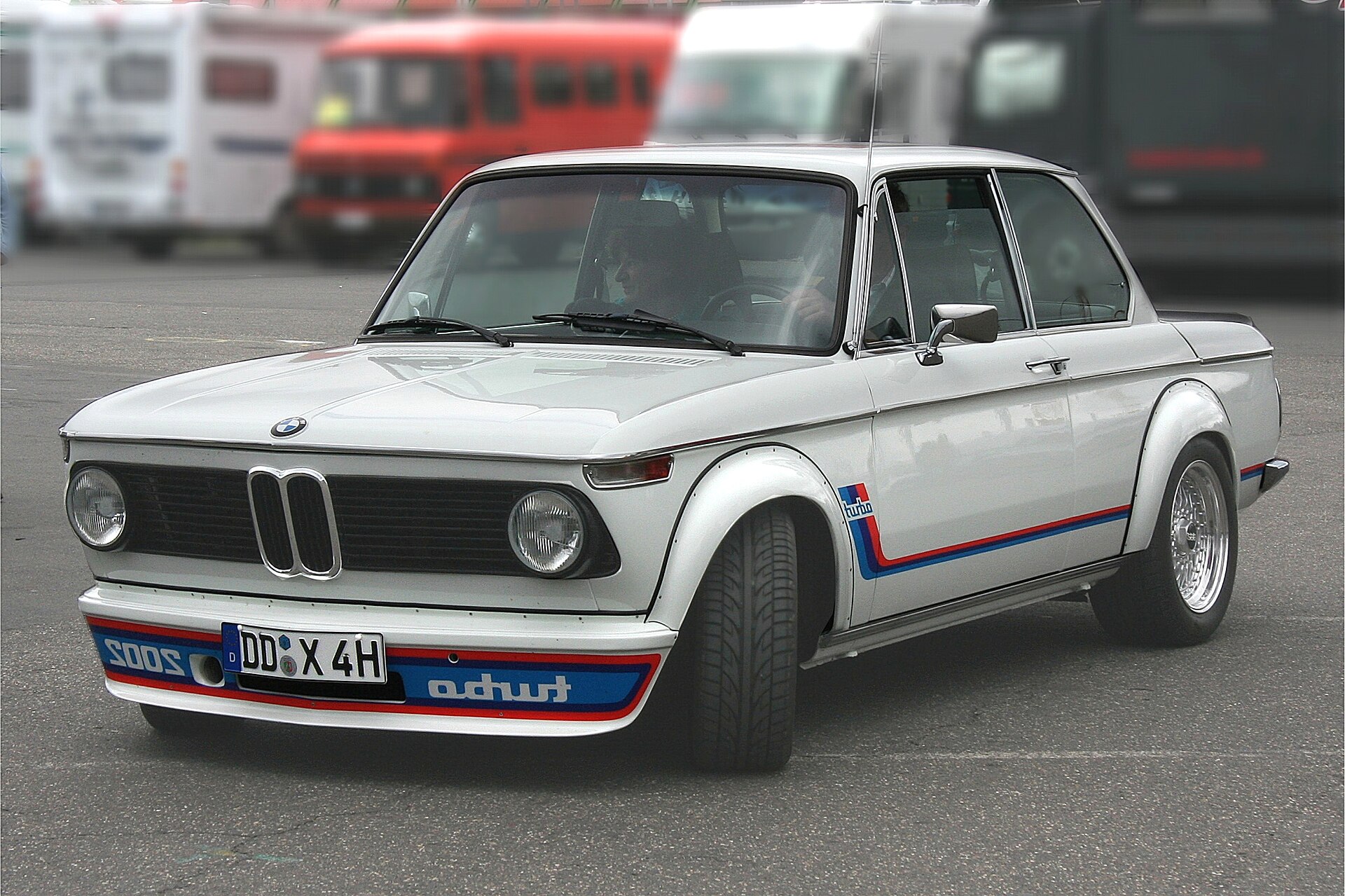
The familiar blue and red stripes made the car easy to recognise. Early presentation cars also featured mirror-image Turbo lettering at the front, intended to be read in the rear-view mirror of the car ahead. It became a controversial detail. For that very reason, the decal should not be treated as reliable proof of any individual car’s original specification.
The cabin retained much of the standard car’s airy, easy-to-read character. Sportier seats, a distinctive instrument surround and the boost gauge marked it out. There were still usable rear seats and a proper boot: the turbocharged engine sat in a compact saloon, not a dedicated two-seater sports car.
When the boost arrived
The editorial team has not driven the car. Its most talked-about characteristic can, however, be explained by its design: the delay between pressing the accelerator and full boost building. The exhaust gases first had to get the turbine spinning, and at low engine speeds the promised power did not arrive immediately.
Once there was sufficient flow, the engine’s delivery changed markedly. The driver therefore needed to plan gear selection and throttle inputs, particularly before overtaking or through a bend. It is this contrast between waiting and power that has shaped the model’s reputation, rather than simply the figure in the power column.
The rear axle’s limited-slip differential helped distribute the driving force, but rear-wheel drive, a short wheelbase and the tyres of the day still demanded sound judgement. Ventilated front disc brakes were part of the upgrades to match the performance; at the rear were drums. The Turbo shows how far BMW could develop a familiar basic design, but also how differently a fast road car behaved before today’s electronic driver aids.
A collector’s car that demands the right details
For today’s buyer, the work starts with establishing the car’s identity. An ordinary 2002 can be modified with arch extensions and stripes, so the chassis number, production records and documented history must all tally. Next comes the body: sills, floors, wheelarches and strut mounting points deserve careful inspection. Fresh paint says little about the metal beneath.
Also check the turbocharger, injection system, manifolds and the model-specific interior and body details. Missing original parts can be both difficult and costly to replace. A documented restoration therefore carries more weight than a gleaming engine-bay photograph.
There is no single collector value. Originality, rust damage and the quality of the work count for a great deal. The best car is not necessarily the shiniest, but the one whose history and specification stand up to scrutiny.
Sources
- BMW Group Classic, BMW 2002 turbo
- BMW M, BMW 2002 turbo
- Mike Macartney, BMW '02 Restoration Guide
Ask questions about “BMW 2002 Turbo – boost with attitude”. Answers are based on the magazine's own articles.