Honda NSX 1990 – the supercar that worked on Monday too
Aluminium, VTEC and Senna’s sharp insight in an unusually well-thought-out package.
The Honda NSX did more than challenge Ferrari on technology and performance. It questioned the very idea that an exotic sports car had to be difficult to live with. The original 1990 model combined a mid-engined layout and aluminium structure with good visibility, clear controls and the ambition to work every day.
 By Nora LindqvistReporter · Sports cars and motorsport
Translated from Swedish with the help of AI.
A different kind of supercar
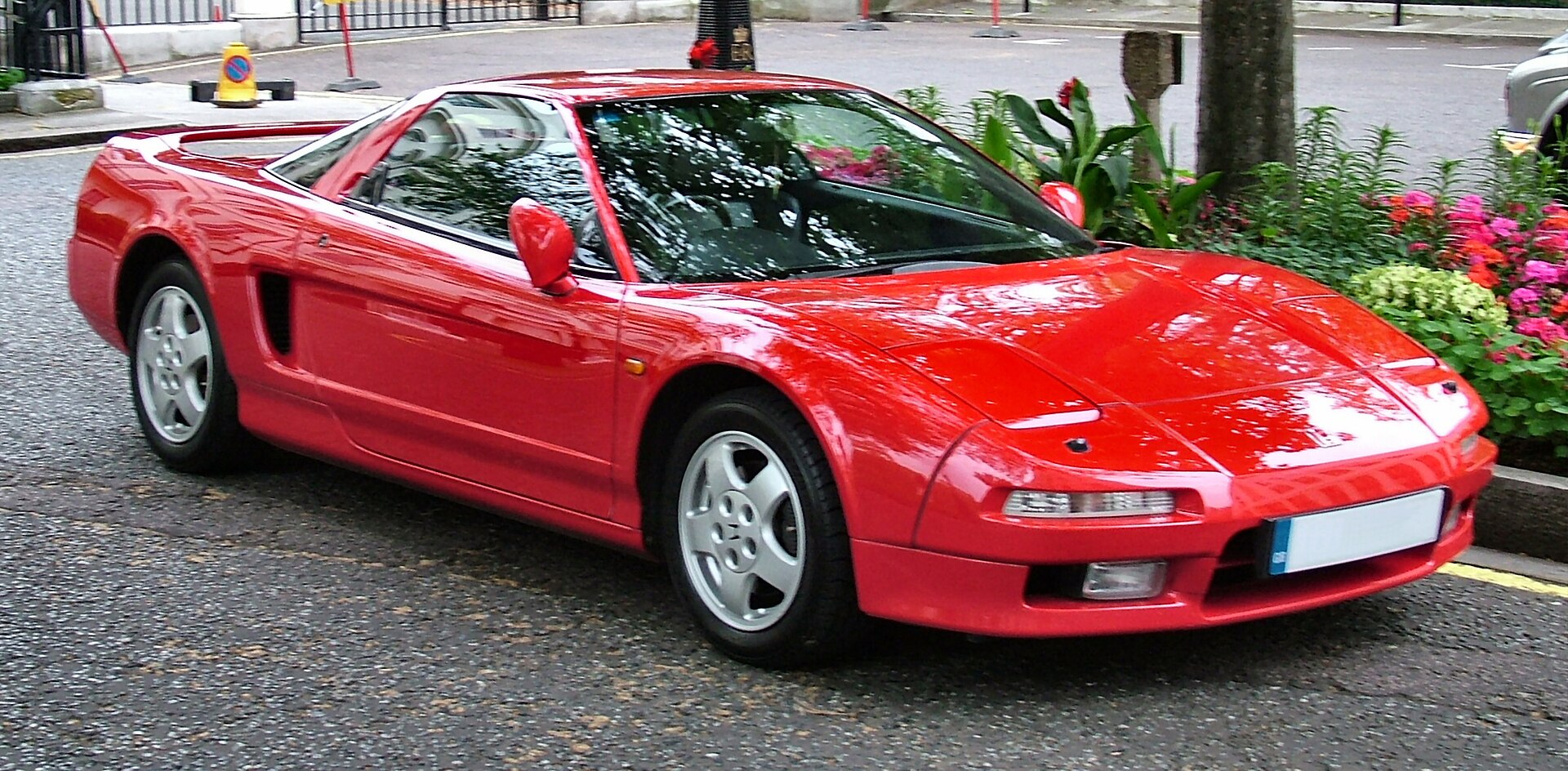
A low nose, pop-up headlights and a cockpit set well forward between the wheelarches. The Honda NSX looks like a car that demands sacrifices. But behind the black roof hoop lies a different idea: drivers should be able to use its performance without first learning to live with poor visibility and baffling controls.
The first-generation Honda NSX, with the chassis code NA1, was launched in Japan in 1990. The focus here is on the original version with a three-litre engine and five-speed manual gearbox. The prototype had been shown at the Chicago motor show in 1989 under the name Acura NS-X. The production car wore a Honda badge in its home market and Europe, and an Acura badge in North America.
This was a new series-production sports car, not a racing project with number plates. Honda wanted to combine a mid-engined car’s balance and performance with the consistency of operation that customers expected from the marque’s everyday cars. The Ferrari 328 and later 348 were natural benchmarks. The challenge was as much about usability as engine power.
Aluminium with a clear purpose
The NSX became the first series-production car with an all-aluminium monocoque. This was more than a change of material for the outer panels: the load-bearing structure was also built around the lightweight metal. Production was based at Honda’s dedicated Tochigi plant, where the design required specially adapted manufacturing and joining methods.
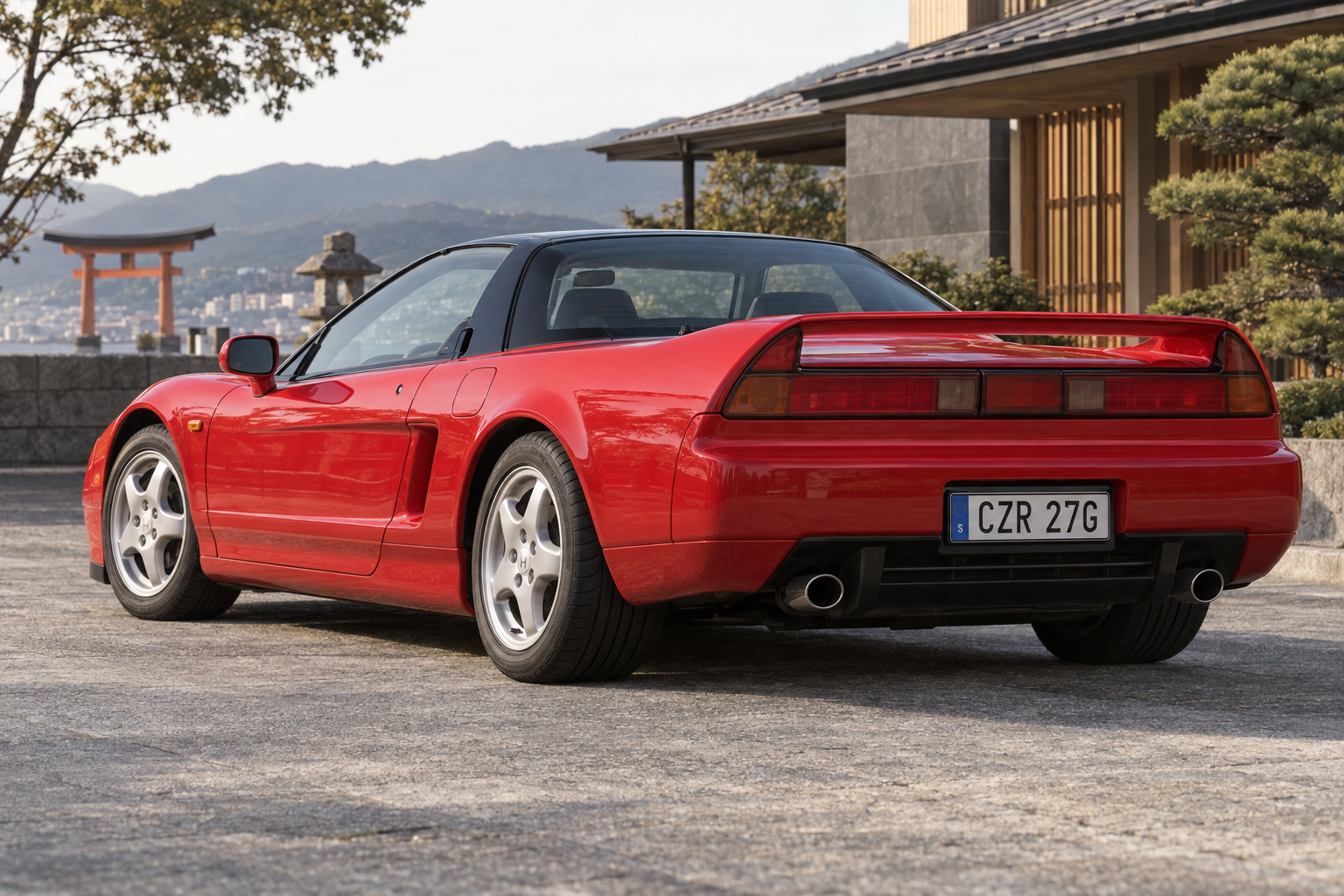
The lighter structure gave the engineers scope for both equipment and a sophisticated chassis. Double wishbones at all four wheels provided control over wheel movement throughout the suspension travel. Aluminium was also used in the suspension, where lower unsprung mass helps the wheels follow the road surface.
The shape was equally purposeful. The low front end and elongated rear were developed to manage drag and lift. The rear wing was integrated into the body rather than looking like a racing accessory fitted afterwards. Air intakes behind the doors fed the engine bay without dominating the clean lines of the flanks.
The position of the cabin and its glazing were central to the design. Honda drew inspiration from the F-16 fighter aircraft’s approach to visibility, but the result was practical rather than theatrical. The driver had an unusually open view ahead for this type of car. The instruments were grouped ahead of the steering wheel, the climate control had clear controls, and there was a separate luggage compartment behind the engine. An exotic layout did not have to mean exotic daily routines.
VTEC, balance and Senna’s objection
Behind the seats sat the C30A, a transversely mounted three-litre V6 with an aluminium block, double overhead camshafts and four valves per cylinder. The original Japanese manual version was rated at 280 PS. Forged titanium connecting rods helped keep reciprocating mass low and enabled the engine to operate at high revs.
VTEC switched between different cam profiles for valve lift and opening duration. At lower revs, the engine could prioritise flexibility; higher up, it adopted more aggressive valve timing for better cylinder filling. The technology helped Honda combine everyday running with the peak power demanded by the sports car’s brief, without a turbo.
Ayrton Senna’s role was significant, but that should not be confused with his having designed the chassis single-handedly. During a test at Suzuka in 1989, he judged the prototype’s structure to be too flexible. His feedback helped prompt the development team to continue working on stiffness. Testing at venues including the Nürburgring formed another part of the refinement process.
A stiffer body gives the suspension a more stable platform to work from: fewer unwanted movements in the structure disturb the intended geometry. Ventilated disc brakes all round and anti-lock braking complemented the chassis. The original manual version had no power steering, while the automatic received electric assistance. Everyday usability did not, then, mean that every manoeuvre would be effortless.
The everyday idea that became a collector’s draw
The editorial team has not test-driven the car. Its intended use is, however, clear from its design: climate control, a carefully considered driving environment and luggage space were part of the same package as the mid-mounted engine and high-revving technology. Honda was not trying to make the NSX less special, but to reduce the inconvenience that came with being special.
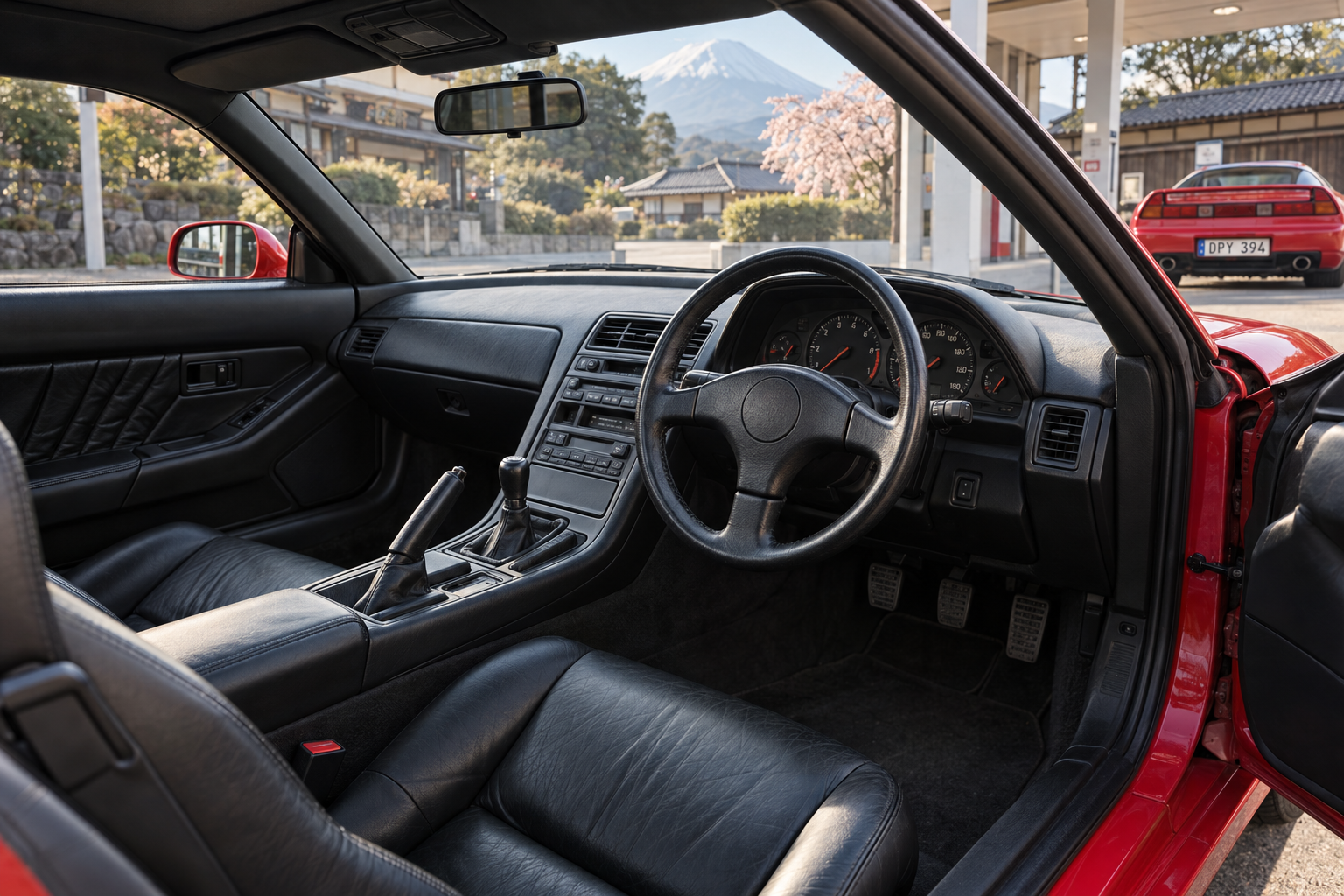
Today, the original model is a collector’s car for which originality and documentation carry considerable weight. A buyer should scrutinise the service history, recorded cambelt changes and any accident repairs. The aluminium structure requires the right repair expertise; gleaming paintwork says little about the work beneath the surface. Market specification and gearbox must also be identified before comparing power figures or valuations.
The NSX’s lasting significance therefore lies not in a single performance figure. It showed that a supercar could be painstakingly engineered even in areas a stopwatch could not measure: the view through the windscreen, the positioning of a control and the ability to actually use the car.
Sources
- Honda Motor Co., Ltd., Fact Book, NSX (1990)
- Honda Motor Co., Ltd., The NSX / 1990
- Brian Long, Honda/Acura NSX (2005)
Ask questions about “Honda NSX 1990 – the supercar that worked on Monday too”. Answers are based on the magazine's own articles.