Tesla Roadster: What Is the Car—and What Is Still a Promise?
The technology behind the sports car demands a clear distinction between prototype, target, and verified capability.
Tesla unveiled its second Roadster as a prototype back in 2017. But reports of a later debut, new versions, and airborne demonstrations need supporting evidence. Here, we separate the documented car from technical possibilities and unconfirmed claims.
 By Amir HaddadTechnology editor · Future cars and modern cars
Translated from Swedish with the help of AI.
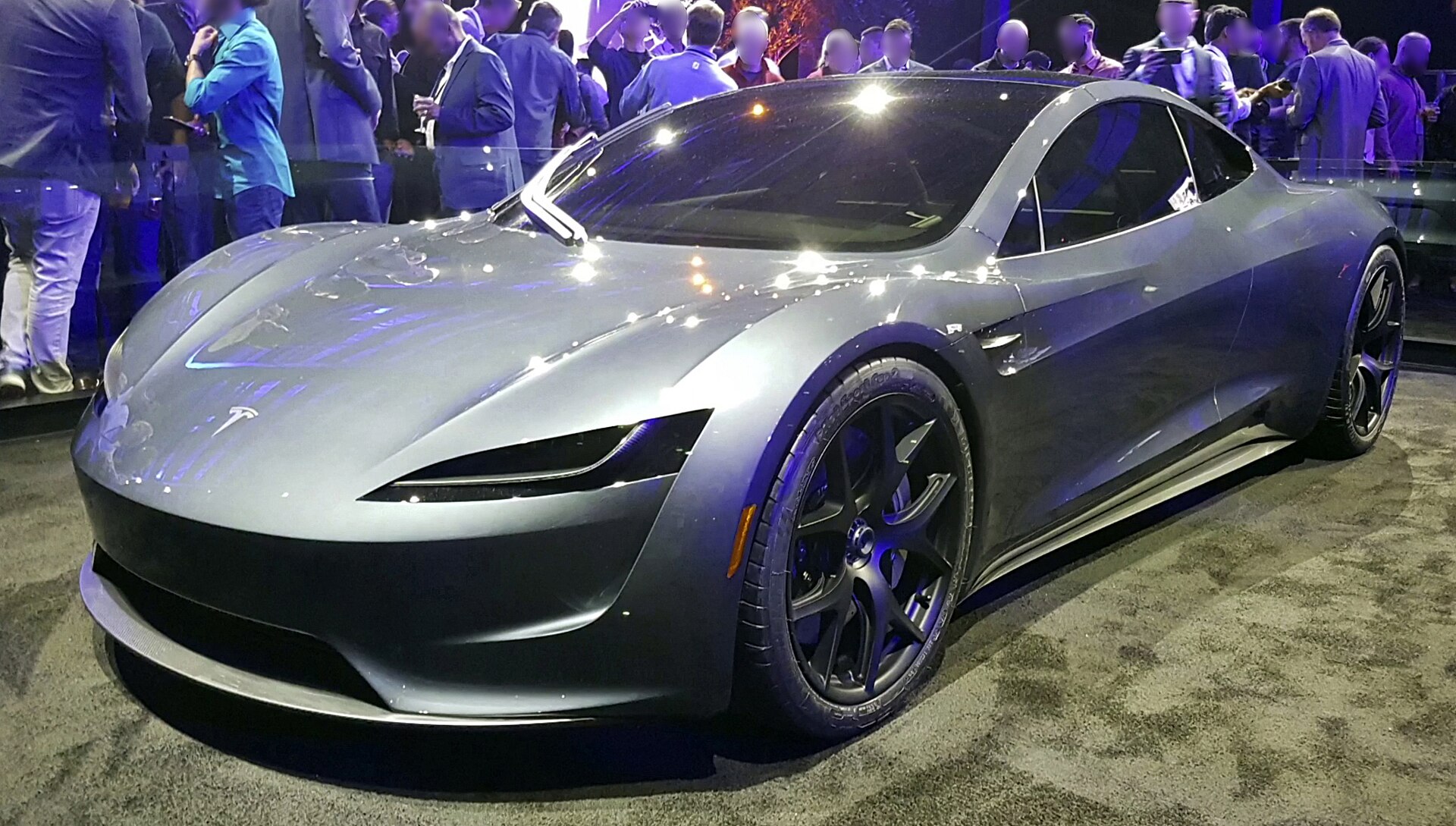
The second-generation Tesla Roadster is an electric sports car prototype unveiled in November 2017, not a finished production car with an established model year. It drew attention for Tesla’s extreme performance targets and its combination of a removable glass roof, four seats, and all-wheel drive. The interest lies as much in the engineering challenges as in the numbers: how do you turn a spectacular promise into repeatable acceleration, braking, and cornering?
The material supplied for this article also describes a presentation on October 15–16, 2026, and Thrust, Performance, and Rocket versions. These details cannot be verified using the sources on which this text is based. The same applies to the demonstration attributed to SVT and a production start in 2028. They are therefore not treated as confirmed news.
Background: The Prototype Is the Starting Point
The first Tesla Roadster was the brand’s introduction to the automotive world. Its successor, unveiled in 2017, had a different mission: to put Tesla among the very fastest sports cars. Despite their shared name, the generations should not be confused. The new prototype was presented with a different body and an entirely different level of claimed performance.
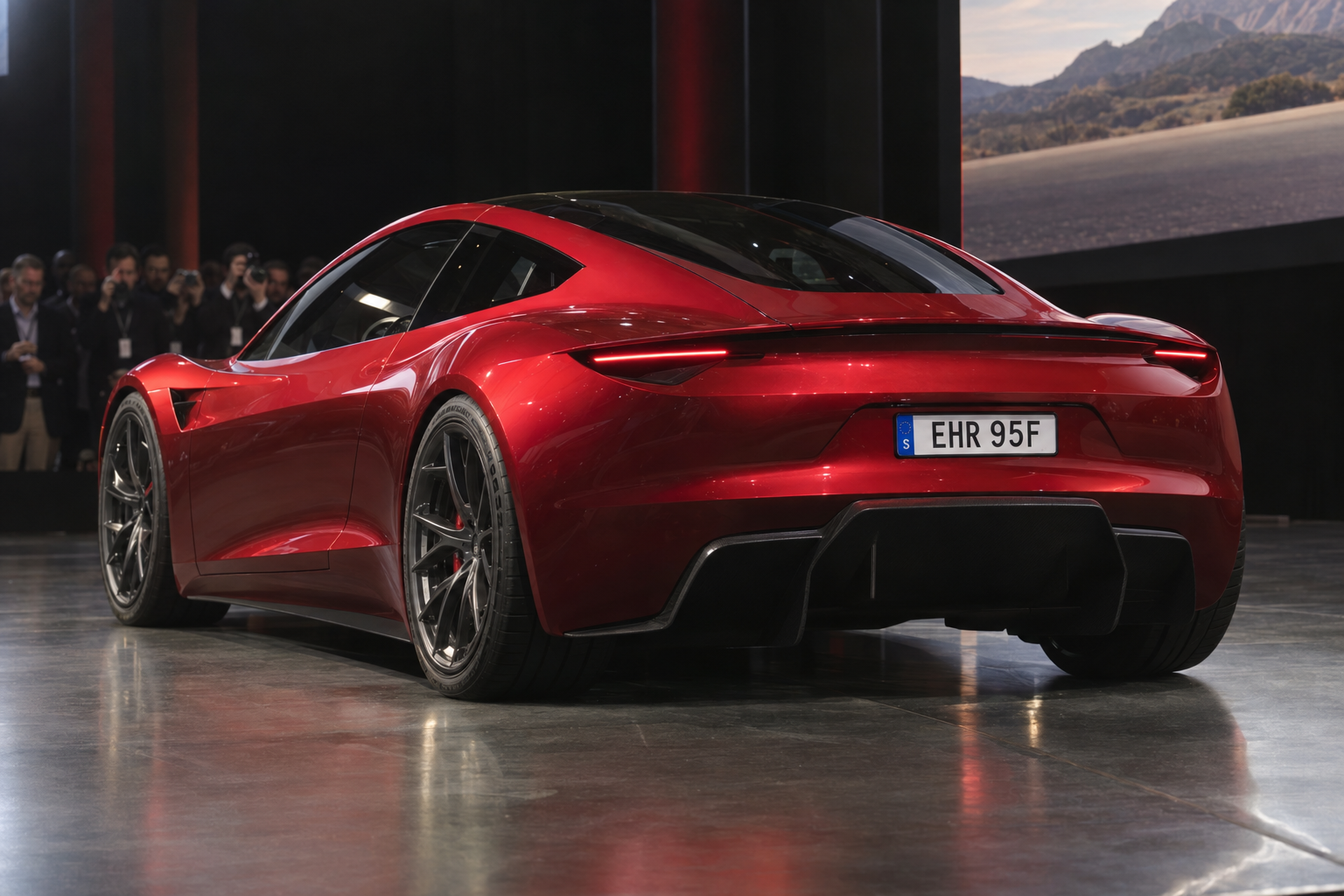
Tesla described the car as a four-seater, although the rear seats were small. The claim that a later base model would be a two-seater therefore requires new, dated product documentation. A change during development is possible, but it cannot be established by layering unconfirmed version names onto the original presentation.
Word choice matters here, too. The manufacturer’s published acceleration figures are targets or its own claims, not automatically independent test results. A drivable demonstration car shows that a project has taken physical form. It does not show that a car ready for delivery can achieve the same performance under all relevant conditions.
Technology: Tire Grip First, Air Forces Second
In a conventional electric sports car, power flows from the battery through the power electronics to the motors and then to the wheels. At launch, tire grip is a crucial limiting factor. More motor power does not deliver endlessly faster acceleration when the tires are already near their grip limit. All-wheel drive helps the car make use of the contact between all four tires and the road.
Elon Musk has publicly discussed a SpaceX package with cold-gas thrusters for the Roadster. The principle involves releasing stored gas under pressure to create a reaction force in the opposite direction. That is different from having the motors drive the wheels harder. But a statement about the idea confirms neither a production-ready system nor specific performance figures.
The system would need pressure vessels, valves, controls, and safety features. The available quantity of gas limits its use, and the vessels take up space and add weight. Key questions include how long the force can be applied, how the system is replenished, and how it operates near other road users.
A fan system beneath the car relies on a different principle: lower pressure beneath the floor can increase the force pressing the tires against the ground. Seals can help limit air leakage. The principle is familiar in automotive engineering, but that does not confirm that the Roadster has such a system. The same applies to reports of steer-by-wire and specific lightweight materials.
Design and Use: More Than a Launch Exercise
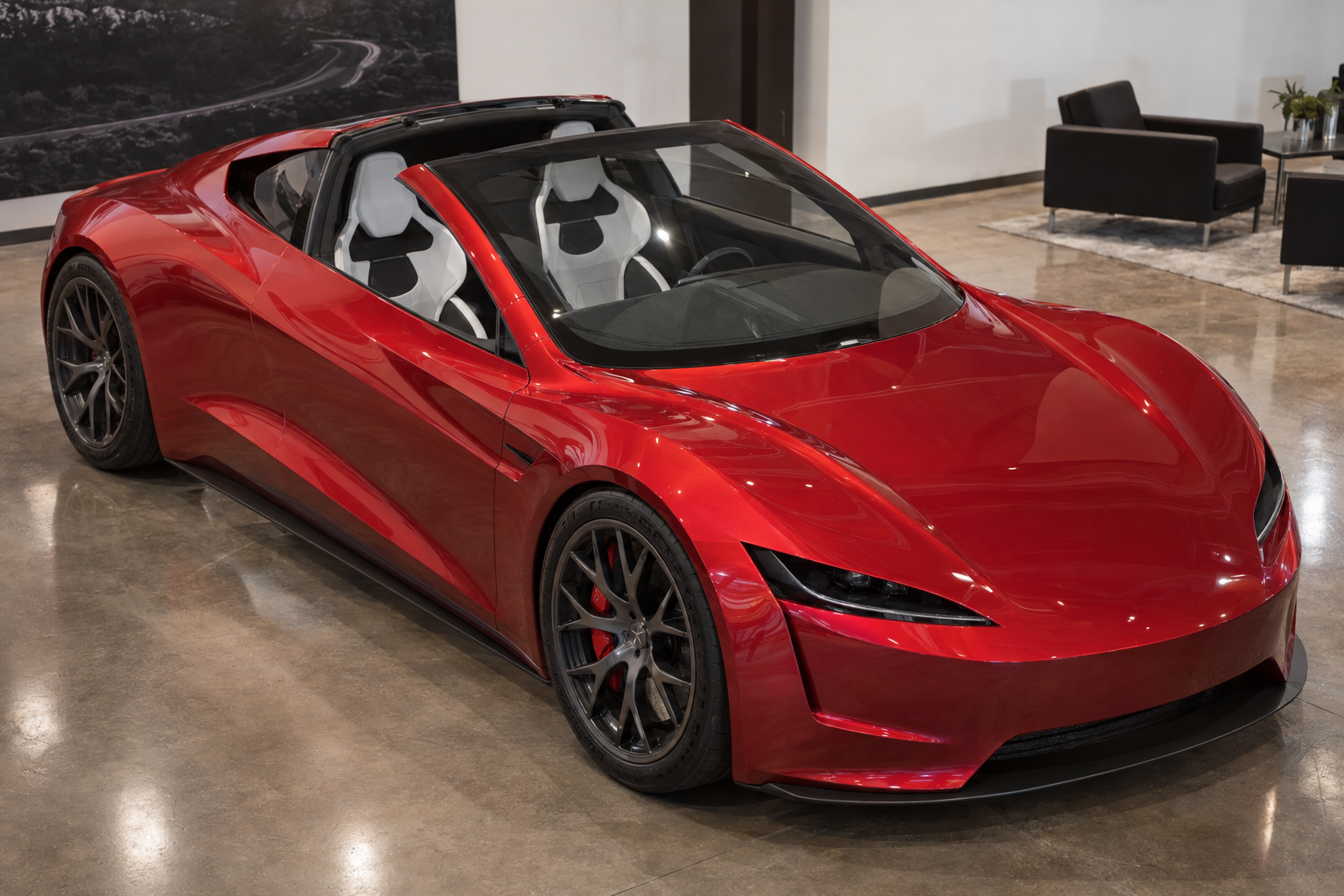
The prototype’s low body and removable glass roof gave it a clear sports car identity, while the rear seat suggested some everyday usability. Any compressed-air system would have to share space with passengers, luggage, and other hardware. That makes the final packaging at least as interesting as an acceleration figure.
Our editorial team has not driven the car. We therefore have no firsthand driving impressions to report. For track driving, an assessment needs to cover brakes, thermal management, tire wear, and how consistently the car behaves after several hard laps. A claimed Track Mode does not, on its own, tell us how well these elements work together.
Claims of jumping and rotating in the air also require substantially stronger documentation than an ordinary product description. Even a verified demonstration would need to be distinguished from an approved feature in a customer car. The fact that something can be demonstrated under controlled conditions does not mean it may be used on public roads.
A Reservation Is Not a Delivery Commitment
Tesla’s U.S. reservation arrangement has specified 5,000 dollars at reservation and another 45,000 dollars within ten days. That is a reservation payment, not the car’s full price. Nor should these amounts be treated as a current Swedish offer without checking market-specific terms.
For a buyer, the fundamental questions therefore remain: what specification is being agreed upon, what refund terms apply, and when will there be a binding delivery commitment? A production start in 2028 cannot be established here. The Roadster remains an interesting project, but technical promises must be kept separate from the documented attributes of a delivered car.
Sources
- Tesla, Roadster
- Tesla, Roadster Reservation Agreement
- Joe Rogan, Joe Rogan Experience #1169 - Elon Musk (2018)
Ask questions about “Tesla Roadster: What Is the Car—and What Is Still a Promise?”. Answers are based on the magazine's own articles.