Ferrari Purosangue – family size with twelve cylinders
Four doors, four individual seats, and a luxury car that refuses to give up its sports-car proportions.
The Purosangue gave Ferrari something the brand had never offered in series production: four doors and four full-size seats. But beneath the long hood is no tentative compromise, just a naturally aspirated twelve-cylinder engine. On the used market, the question is how much this unusual combination is worth.
 By Cecilia WahlReporter · Luxury cars and car design
Translated from Swedish with the help of AI.
A new kind of Ferrari
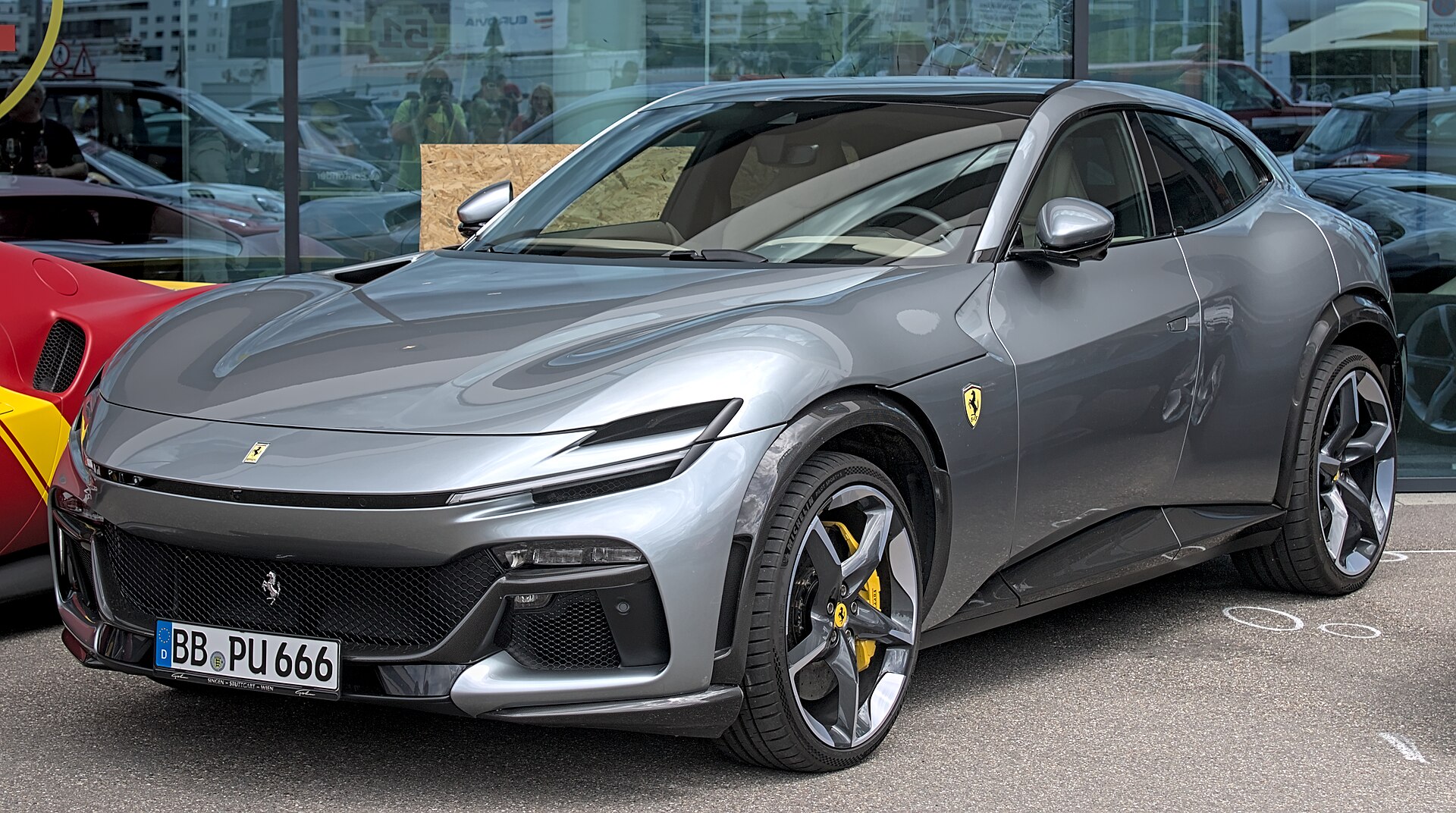
The Ferrari Purosangue was unveiled in September 2022, with the first European deliveries scheduled for 2023. It is a series-production luxury car with four doors, four individual seats, and a front-mounted V12 without turbocharging. For a brand whose identity was shaped by low-slung sports cars, the door count was almost as striking as the engine.
The starting point here is a Purosangue listing on Blocket. The listing's contents could not be verified, so the particular car's model year, price, mileage, and equipment are not given. The distinction matters: the model's engineering can be described, but valuing an individual car requires documentation and an actual inspection.
Purosangue roughly means thoroughbred. The name sums up Ferrari's ambition: to offer greater usability without reducing the car to merely a high seating position and a roomy cargo area. Its predecessors in the role of practical Ferrari, the FF and GTC4Lusso, had already combined four seats with all-wheel drive. Above all, the Purosangue adds dedicated doors for rear-seat passengers and a taller body.
The doors reshape the car
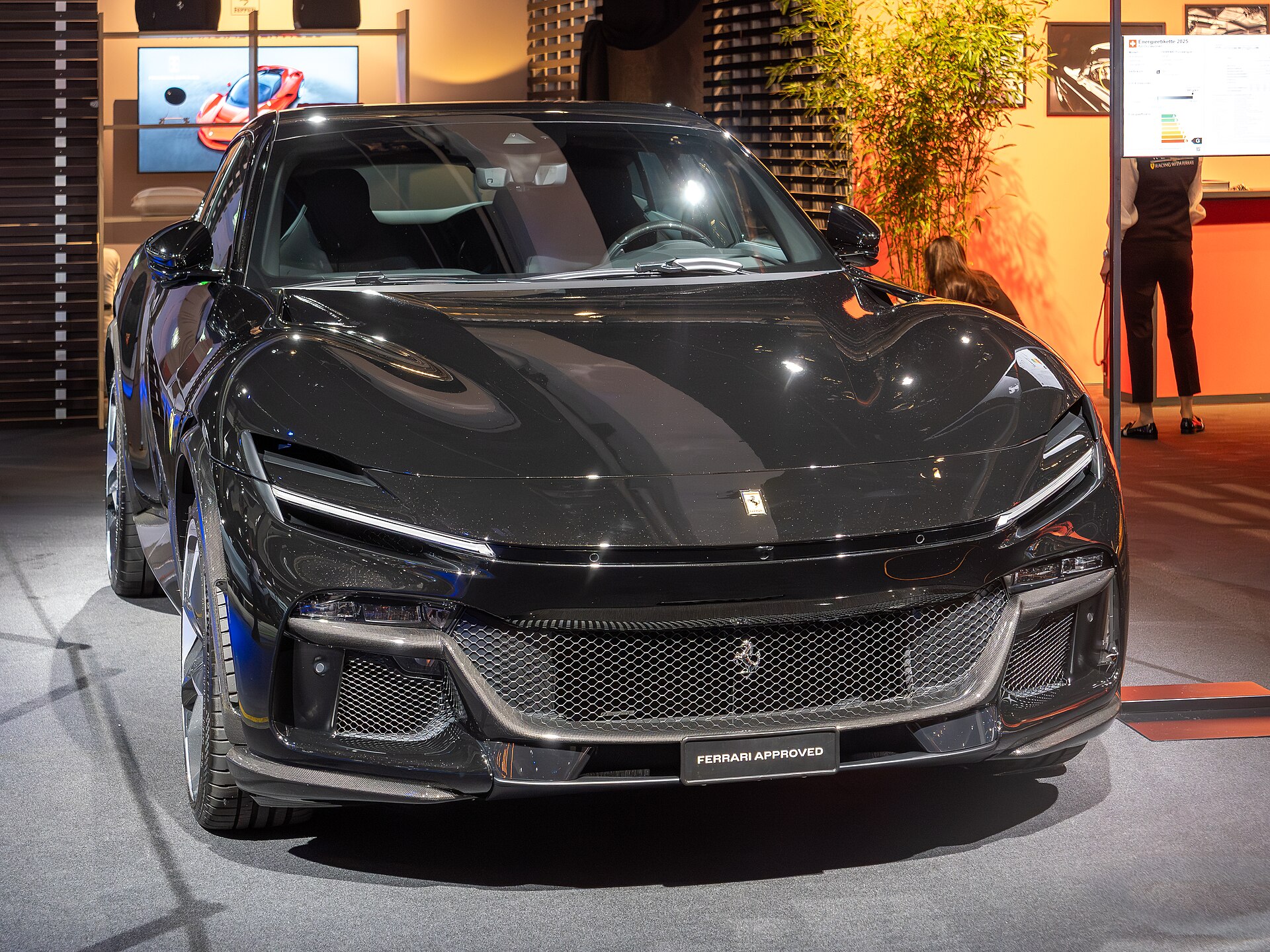
The design comes from the Ferrari Styling Centre under Flavio Manzoni's direction. Much of the body's character comes from contrasts: a long, sculpted hood, a cabin that appears set well back, and dark lower sections that visually separate the painted body from the wheels. The result is less upright than many traditional luxury SUVs.
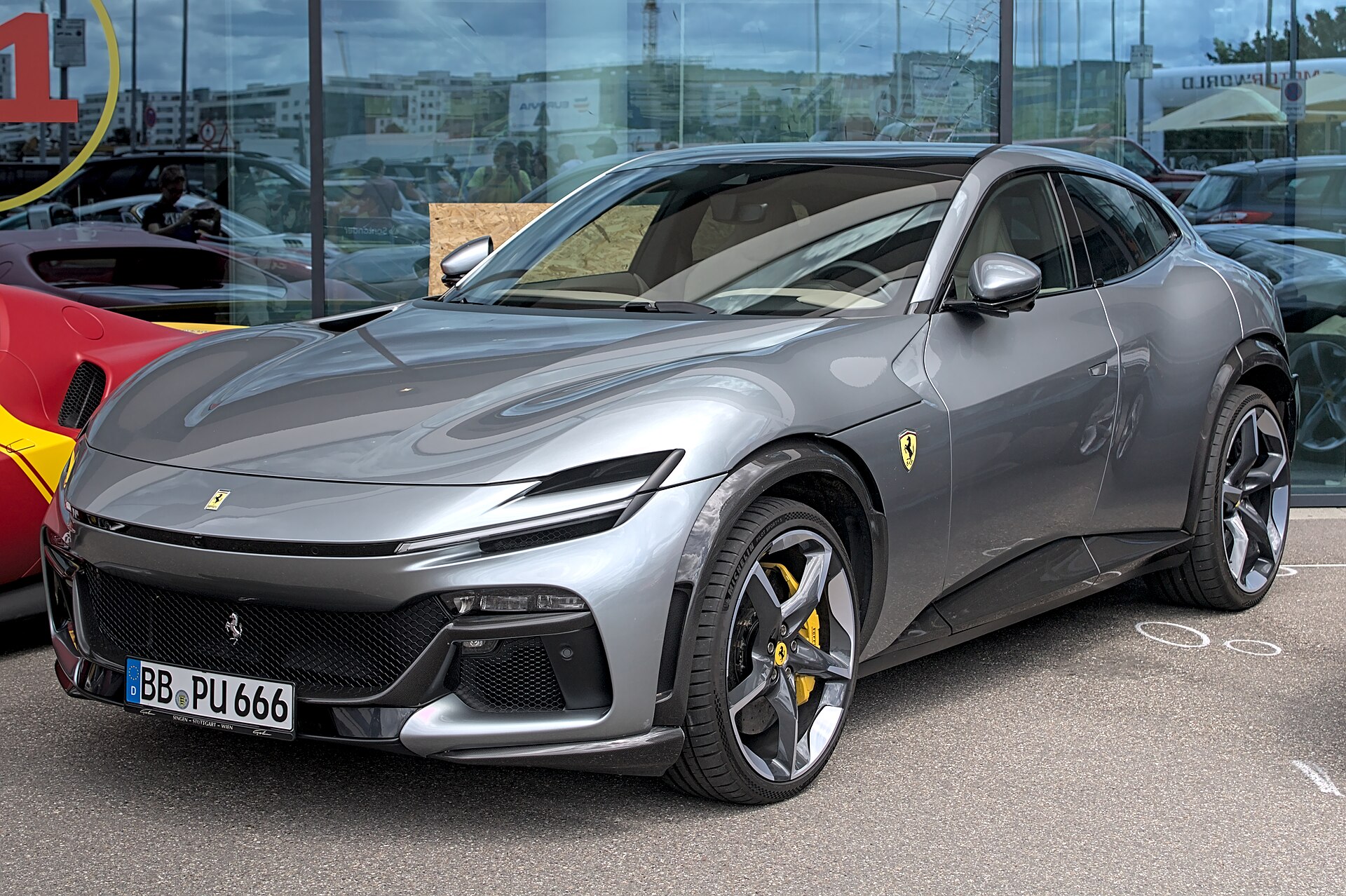
Up front, the headlights are tucked into narrow openings. Air passages and cutouts are integrated into the surfaces rather than simply tacked on as decoration. Over the rear wheels, the body tapers inward around the cabin while emphasizing the fenders. This makes the car look wider and lower than the size of its doors initially suggests.
The rear doors are rear-hinged and power-operated. With the front and rear doors open, getting in becomes part of the car's theater, but the B-pillar remains. The arrangement is intended to ease access without requiring rear doors as long as those of a more conventional design.
Inside, there is no rear bench. Two individual rear seats give each passenger a clearly defined space. Up front, the dashboard is visually divided between driver and passenger, with a separate screen in front of the latter. There is no large central touchscreen dominating the entire cabin.
Materials, colors, and options play a major role in the overall impression. Leather, Alcantara, and carbon-fiber trim can create very different characters, from an understated grand tourer to an overtly sporting machine. For a used example, photographs should therefore be supplemented with the original equipment specification; dark images rarely tell the whole story about stitching, finishes, and upholstery.
Engineering for more than making an entrance
The V12 sits well back in the front of the chassis, with the transmission at the rear axle. That is fundamentally different from simply putting a powerful engine in a tall family car. Ferrari has worked on mass distribution to give the layout sports-car-like balance.
All-wheel drive is complemented by rear-wheel steering and an active suspension system developed with Multimatic. The system's electric actuators manage body movements, including limiting body roll in corners. The brakes are carbon-ceramic. The technology shows which uses Ferrari has prioritized: fast driving on country roads and long-distance travel rather than off-road work.
We have not test-driven the car. The manufacturer's performance figures should therefore be read as exactly that, not as our own measurements. Nor does acceleration necessarily have to be the main draw for an owner. The Purosangue makes it possible to bring three other people along without giving up the naturally aspirated twelve-cylinder engine.
Cargo capacity is listed at 473 liters. That makes the car more useful for travel, but four individual seats also mean there is never room for a fifth person. Practicality is a relative concept here, measured against other Ferraris rather than ordinary family cars.
Exclusivity needs scrutiny
At its unveiling in 2022, the Italian base price was quoted at around 390 000 euro. That was before personalized options and is not a Swedish price. From the outset, then, the Purosangue occupied a price bracket where material choices and individual specifications can have a substantial effect on the total.
For a buyer on Blocket, the asking price is only the beginning. Check the service history, damage history, warranty, import history, and whether the equipment matches the description. Inspect the tires, wheels, and brakes as well. A high asking price is not proof of a high market value; comparable completed sales carry more weight. The Purosangue's appeal is clear, but you are buying the documented example—not the model's promise.
Sources
- Ferrari, Ferrari Purosangue
- Top Gear, Ferrari Purosangue review
- Car and Driver, 2024 Ferrari Purosangue (2024)
Ask questions about “Ferrari Purosangue – family size with twelve cylinders”. Answers are based on the magazine's own articles.