Mercedes-AMG ONE: Formula 1 Technology with a License Plate
Four electric motors, 11,000 rpm, and an uncompromising mission.
The Mercedes-AMG ONE is not just a fast Mercedes. It is an attempt to make Formula 1 technology usable on public roads. A Blocket link raises the question of what the buyer actually gets: an extreme collector car, but also a technical system that demands far more thought than straightforward horsepower comparisons.
 By Nora LindqvistReporter · Sports cars and motorsports
Translated from Swedish with the help of AI.
From Formula 1 to a Sales Listing
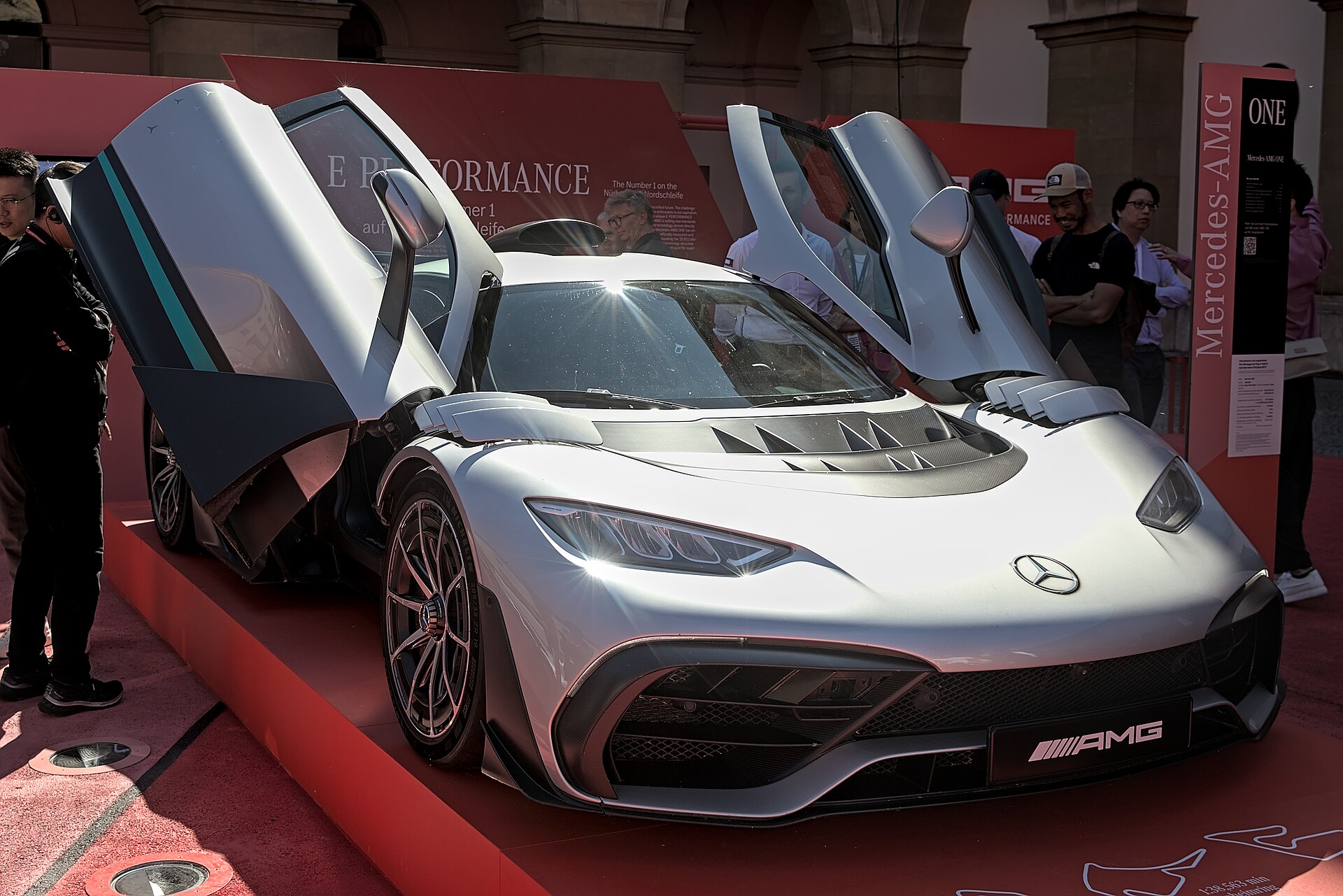
The Mercedes-AMG ONE, unveiled in production form in 2022, is a two-seat, mid-engine supercar with a carbon-fiber monocoque and a powertrain rooted in Mercedes' Formula 1 program. Production was limited to 275 units. Here, exclusivity is determined by the production plan, not just an unusually long options list.
The starting point is the linked Blocket listing. Its contents could not be verified here, so the price, mileage, model year, and identity of the specific car offered remain unconfirmed. This article therefore describes the model, not a verified car for sale.
The project was first shown as the Mercedes-AMG Project ONE in 2017. The road to the production car was a long one, because a racing engine does not automatically work in road traffic. Cold starts, idling, noise, and everyday changes in engine load impose different demands than leaving the pits and putting in a fast lap. The ONE's significance lies in its attempt to bridge precisely that gap.
Nor is it a Formula 1 car with lights bolted on afterward. The body, all-wheel drive, cabin, and entire powertrain integration were designed for a separate car model, capable of being driven on the road and put to use on the track.
The Engine Is Just the Beginning
Behind the cabin sits a 1.6-liter V6 with an electrically assisted turbocharger. The combustion engine develops 574 horsepower and is allowed to reach 11,000 revolutions per minute. That is lower than its racing relatives, but still an extreme engine speed for a car that can be registered for road use.
Four electric motors supplement the V6. Two drive the front wheels, one is connected to the combustion engine's crankshaft, and one works with the turbocharger. The last of these can help the compressor build boost without waiting for the exhaust flow a conventional turbo requires. That tackles turbo lag directly at its source.
Combined system output is 1,063 horsepower. Power reaches the rear wheels through a seven-speed automated manual transmission, while the front axle's electric motors also allow drive torque to be distributed individually between the front wheels. All-wheel drive is therefore about both acceleration and control over the car's movements.
AMG quotes 0–100 km/h in 2.9 seconds and 0–200 in 7.0. The difference between those two times says a lot: the ONE's strongest performance does not begin and end at a traffic light. It is built to keep accelerating when aerodynamic drag has become a major adversary.
The Body Works Just as Hard
The roof intake, long fin, and large rear diffuser make the racing connection clear. But the shape is primarily functional. Active aerodynamics alter the airflow around the car according to the drive mode and conditions, with features including an adjustable rear wing and louvers above the front wheels that can open.
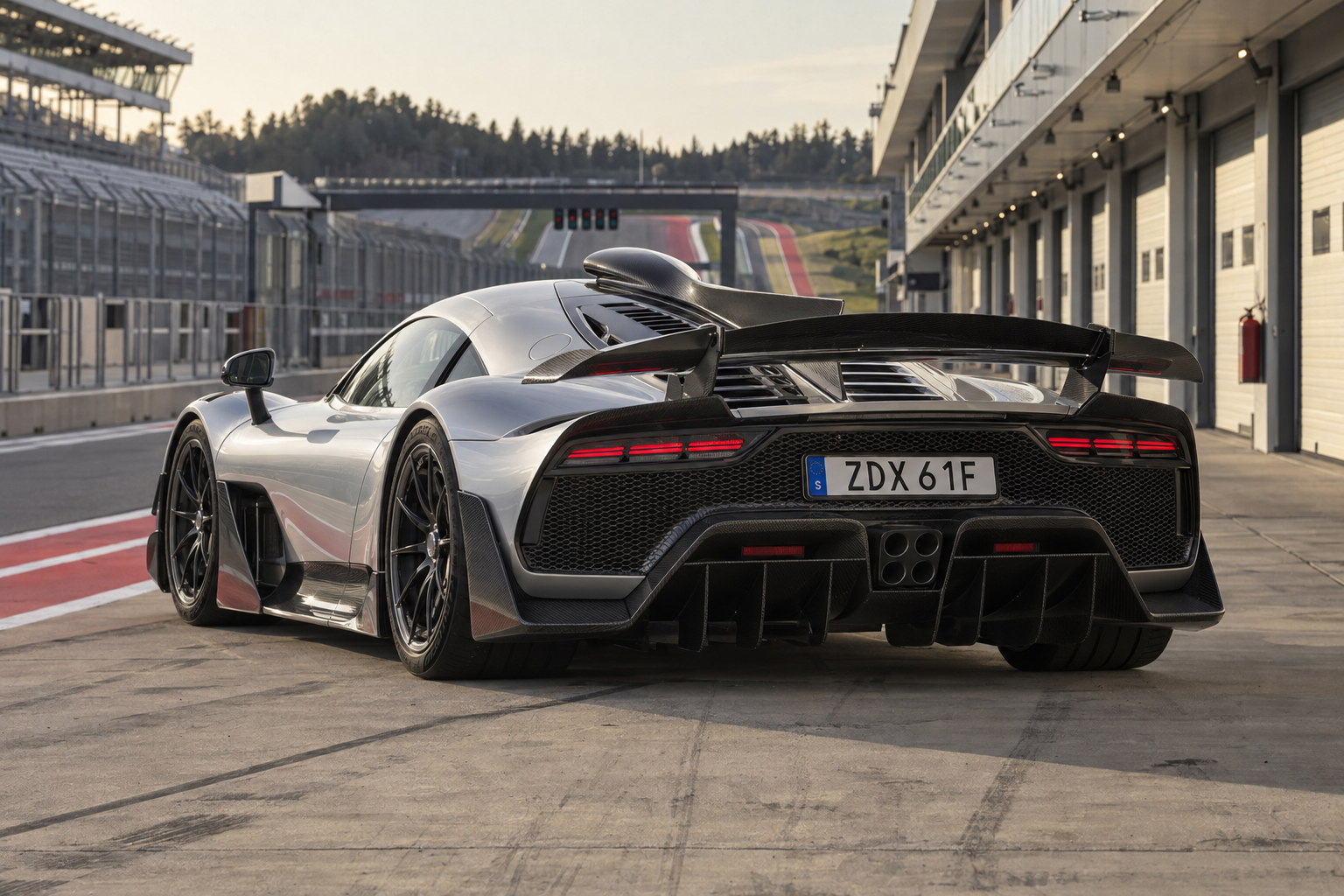
In Race Plus track mode, the car lowers itself by 37 millimeters at the front and 30 at the rear. Reduced ground clearance and revised aerodynamic settings help the car generate more downforce. A dedicated DRS mode reduces drag when maximum downforce is not needed. It is a trade-off between straight-line speed and cornering grip.
The suspension uses pushrods and transversely mounted spring-and-damper units. Carbon-ceramic brake discs are tasked with handling repeated stops from high speeds. Despite its carbon-fiber construction, AMG quotes a DIN weight of 1,695 kilos: hybrid components, cooling, and adaptations for road use make this something other than a lightweight formula car.
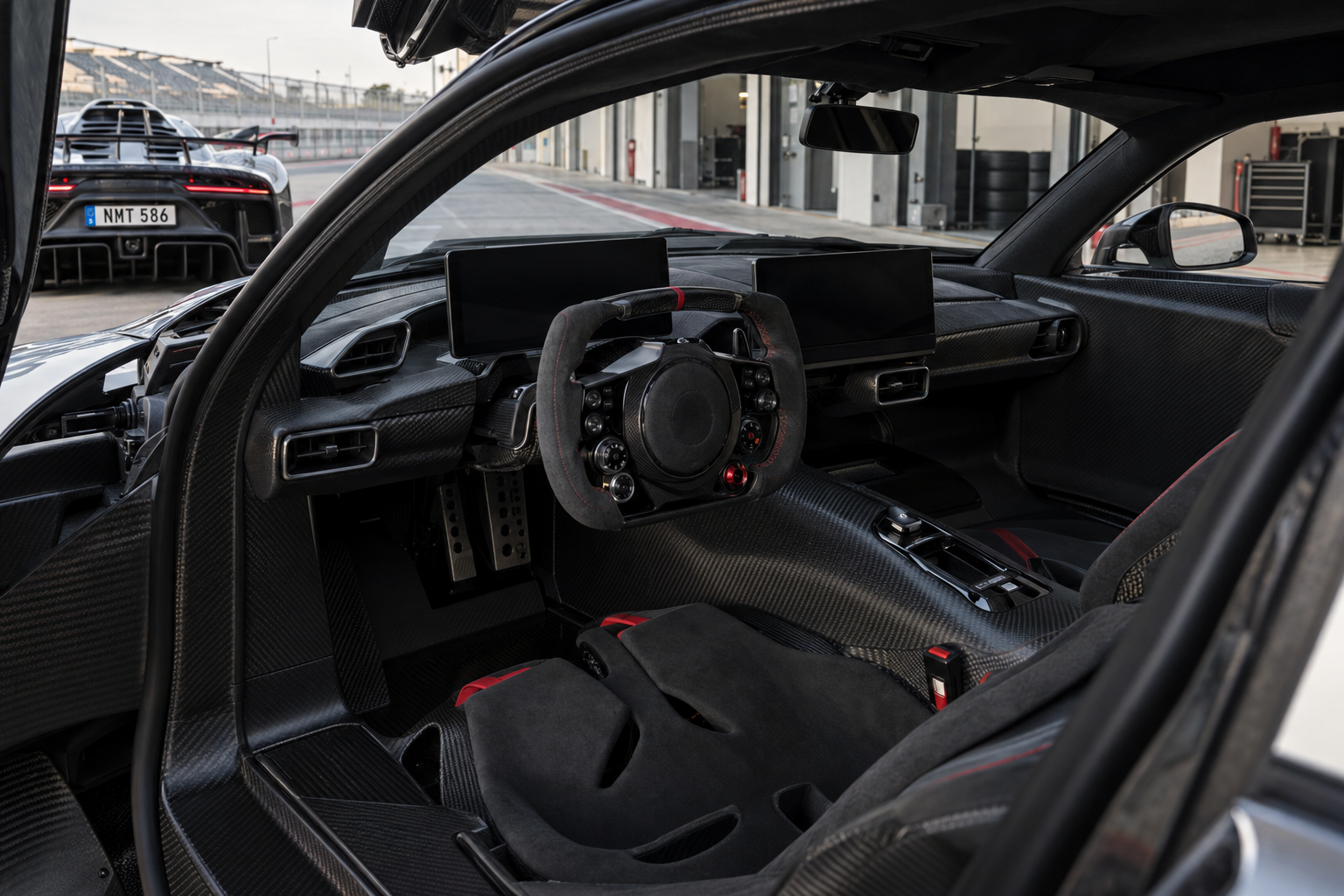
The cabin follows the same priorities. The seat cushions are integrated into the monocoque, while the steering wheel and pedal box can be adjusted to suit the driver. Two screens and an angular, motorsport-inspired steering wheel dominate the view ahead of the seats. Climate control and power windows are included, but luggage space and easy entry are hardly the car's main attractions.
A Record—and a Demanding Purchase
This article is not based on any firsthand driving impressions. A clearer measure of the car's intended use is instead Maro Engel's lap of the Nürburgring Nordschleife in September 2024: 6 minutes and 29.090 seconds over the full 20.832-kilometer course. The result was recorded as the production-car record at the time.
For a potential buyer, documentation is at least as important as the record. The chassis number, as-delivered specification, service history, any track sessions, and warranty terms need to be examined. Access to the right service network should also be established before a deal is made.
An advertised figure is also an asking price, not proof of market value. Without verified information about the car on Blocket, the offer cannot be assessed. The model's appeal, however, is clear: the ONE combines an unusual engine design with active aerodynamics and documented track performance. That makes it technically significant, not just rare.
Sources
- Mercedes-AMG, Mercedes-AMG ONE
- Nürburgring, Records
- Blocket, Annonslänk från läsaren, objekt 14422444 – innehållet ej verifierat
Ask questions about “Mercedes-AMG ONE: Formula 1 Technology with a License Plate”. Answers are based on the magazine's own articles.