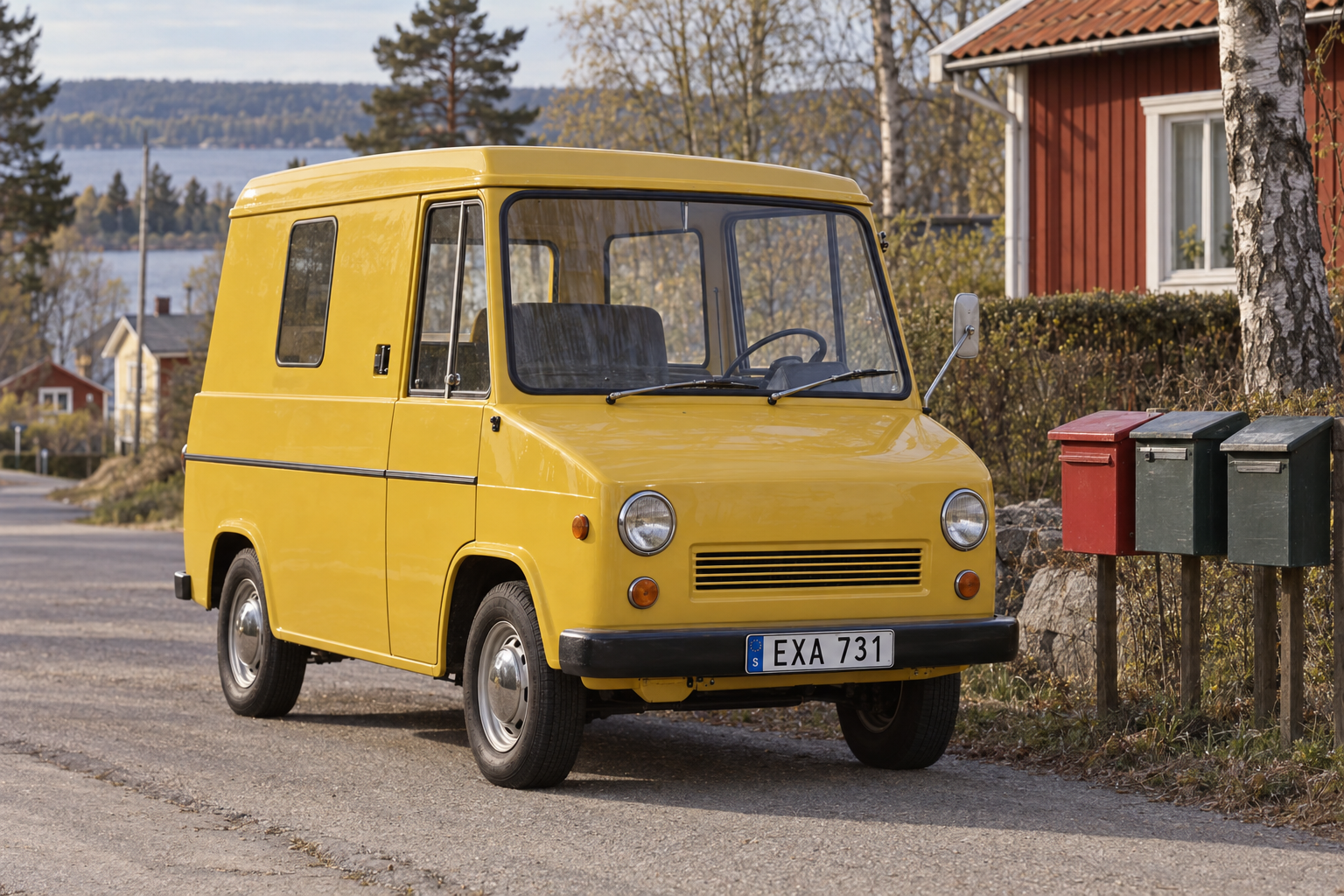
Tjorven – the postal van that thought outside the box
DAF engineering beneath a Swedish plastic body
Tjorven looked like a parcel on wheels, but its shape had a clear purpose. With a Dutch drivetrain, a Swedish plastic body and the postie's working day as its yardstick, this Kalmar-built machine became one of Sweden's most distinctive commercial vehicles.
 By Henrik SjöbergReporter · Special cars and classic cars
Translated from Swedish with the help of AI.
A vehicle built around the mailbag
The Kalmar KVD 440, better known as Tjorven, was a small Swedish delivery vehicle produced in series from 1969–1971. Its manufacturer was Kalmar Verkstad, a company with much deeper roots in railway workshops than in the world of passenger cars. The brief here was not to entice car buyers with long bonnets. The postie needed a practical working tool.
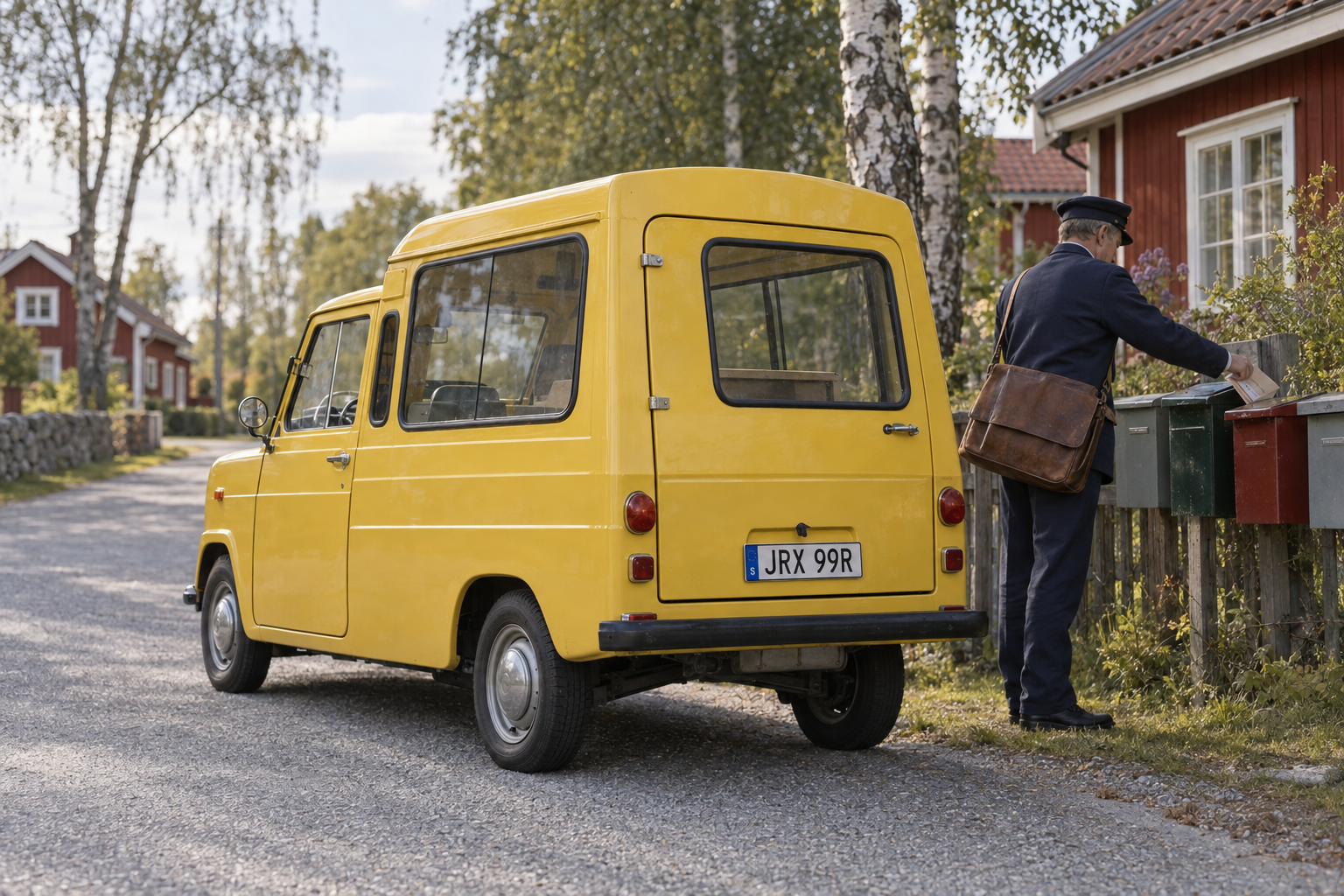
Posten needed a vehicle for frequent stops, narrow gaps and roadside deliveries. A conventional car could carry letters, of course, but its doors, seats and luggage compartment were not designed specifically for the job. Tjorven turned that thinking on its head: first the task, then the vehicle.
The nickname referred to Tjorven in Astrid Lindgren's Saltkråkan. It certainly suited a small, rather chubby vehicle with a big personality. The formal designation KVD 440 would hardly have earned the same place in the public memory. But behind the friendly name lay a serious attempt to streamline a working day in which every unnecessary movement was repeated many times.
This is the model's story, not a profile of a particular museum exhibit or collector's example. There is therefore no individual chassis number or state of restoration to report. The distinction matters: surviving Tjorvens may have been modified both during their working lives and in retirement.
Dutch engineering in a Swedish package
Developing an engine and gearbox from scratch for a small production run of postal vans would have been an expensive way to reinvent the wheel. Instead, Kalmar Verkstad used the engine and drivetrain from the DAF 44. The Dutch small car's air-cooled flat-twin engine and continuously variable Variomatic thus found themselves doing a very different job from family outings.
Variomatic used belts and pulleys with variable effective diameters to change the transmission ratio. The driver had no clutch pedal to operate and no manual gear changes to make. In a delivery vehicle, that was more than a convenience: with constant starts and stops, there was a clear benefit to not having to change gear over and over again.
Air cooling also meant that the engine did without a conventional water-cooling system and radiator. That did not, however, make the vehicle maintenance-free. The belt drive, engine and other mechanical components still needed attention. Tjorven was a working tool, not a technical magic wand painted yellow.
Nor should the DAF connection be taken to mean that Tjorven was simply a rebodied passenger car. The body and working environment were designed specifically for delivery duties. The result was a distinct Swedish vehicle with familiar engineering beneath its skin, a fairly sensible division of labour for a small manufacturer.
Boxy for good reason
The body was made from glass-fibre-reinforced plastic. The material suited small-scale production, where large stamping tools for sheet steel could otherwise have been a major expense. It also gave the designers the freedom to create the tall, box-shaped body without having to borrow a passenger car's silhouette.
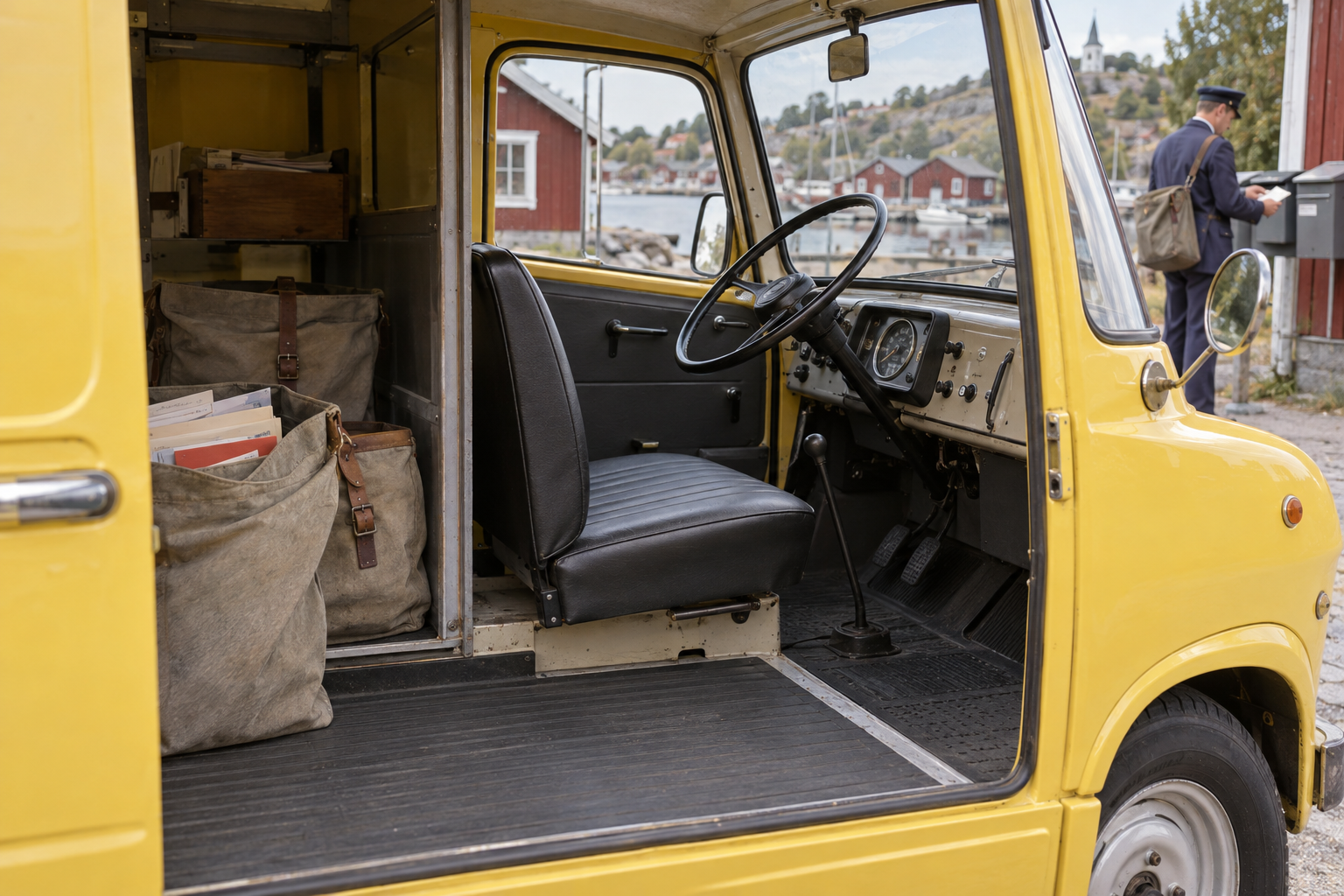
The large windows and upright shape were dictated by the job. The driver needed a clear view, while the load needed usable space rather than elegantly sloping lines. Tjorven therefore looks less like a conventional van in miniature and more like a small workroom on wheels.
The postal version's right-hand driving position was particularly well considered following Sweden's switch to driving on the right. It placed the postie close to the roadside and letterboxes. The sliding-door arrangement also reduced the clearance needed outside the vehicle compared with a door that swung out. Small design choices made a big difference when the same movements were repeated all day.
We have not test-driven the vehicle. Its intended use, however, is clear: an easily accessible driving position, an easy-to-operate drivetrain and room for the day's mail. It was the workflow that was meant to impress, not the acceleration on the way home.
From working vehicle to collector's car
Production was short-lived, and Tjorven remained an unusual vehicle rather than the beginning of a major Swedish commercial vehicle brand. It is precisely this combination of postal history, local industry and unusual engineering that makes it interesting today. It tells the story of a Sweden where even an everyday delivery problem could be answered with a vehicle model all of its own.
For a buyer, condition matters more than the charming name. The plastic body does not rust like sheet steel, but it can crack and may have old repairs. The metal components underneath must also be examined. The DAF connection helps when identifying mechanical components, while model-specific body parts can be considerably trickier to find.
The original interior, correct door arrangements and a documented service history are worth scrutinising. No reliable general price range is given here; few sales and wide variations in condition make comparisons uncertain. The best Tjorven is not automatically the shiniest, but the one whose history and restoration can be understood.
Sources
- Nick Georgano (red.), The Beaulieu Encyclopedia of the Automobile (2000)
- Postmuseum, Postmuseum
- DAF Museum, DAF Museum
Ask questions about “Tjorven – the postal van that thought outside the box”. Answers are based on the magazine's own articles.