Mercedes-AMG ONE: Formula 1 technology with number plates
Four electric motors, 11,000 rpm and an uncompromising mission.
The Mercedes-AMG ONE is not just a fast Mercedes. It is an attempt to make Formula 1 technology usable on public roads. A Blocket link raises the question of what the buyer actually gets: an extreme collector’s car, but also a technical system that demands considerably more thought than straightforward horsepower comparisons.
 By Nora LindqvistReporter · Sports cars and motorsport
Translated from Swedish with the help of AI.
From Formula 1 to a classified advert
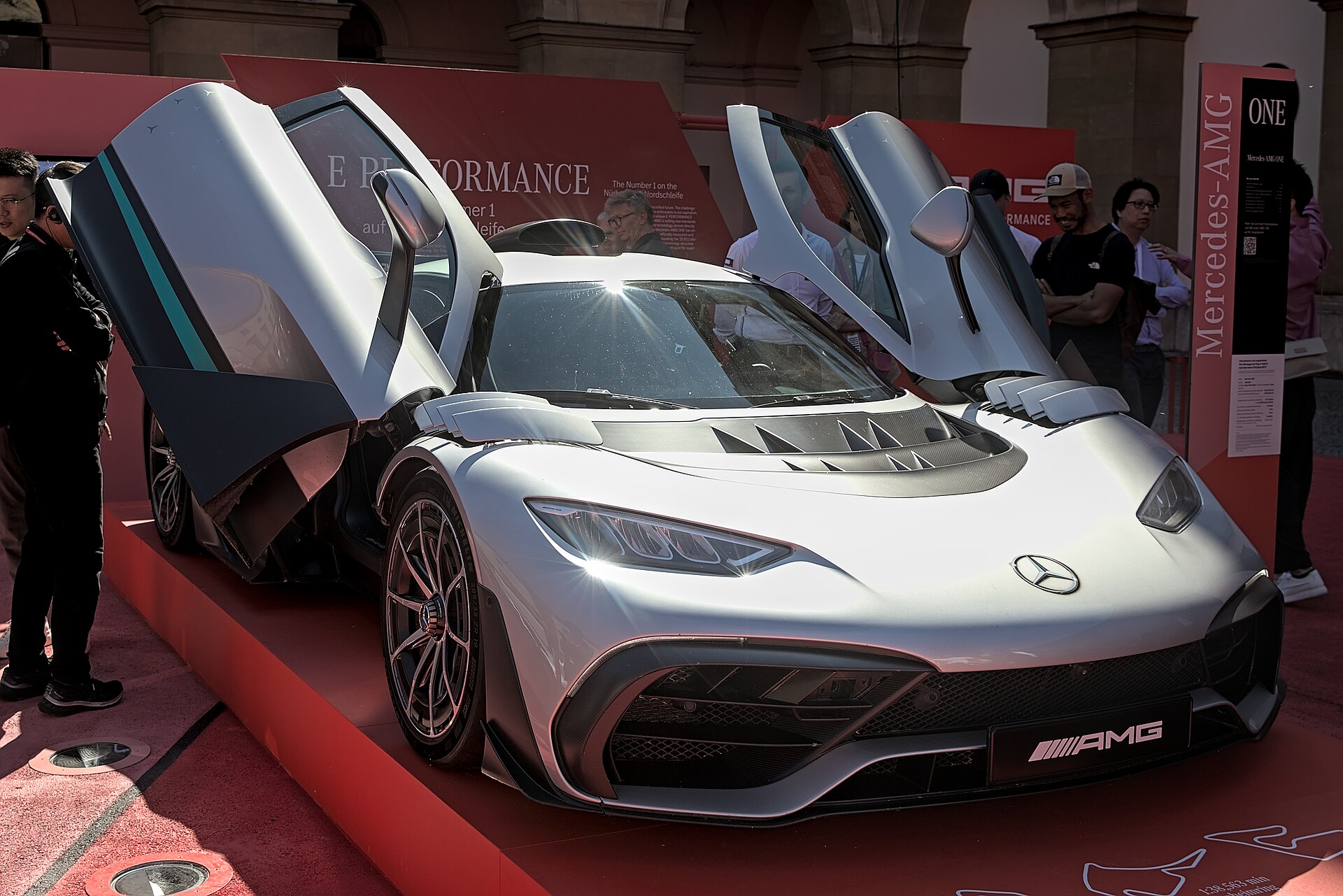
The Mercedes-AMG ONE, unveiled in production form in 2022, is a two-seater supercar with a mid-mounted engine, a carbon-fibre monocoque and a powertrain rooted in Mercedes’ Formula 1 programme. Production was limited to 275 examples. Here, then, exclusivity is dictated by the production schedule, not merely by an unusually long equipment list.
The starting point is the linked Blocket advert. Its contents could not be verified here, so the price, mileage, model year and identity of the particular car on offer remain unconfirmed. This article therefore describes the model, not a verified car for sale.
The project was first shown as the Mercedes-AMG Project ONE in 2017. The road to the production car was a long one, because a racing engine does not automatically work in road traffic. Cold starts, idling, noise and everyday changes in load impose different demands from leaving the pits and putting in a fast lap. The ONE’s significance lies in its attempt to bridge precisely that gap.
Nor is it a Formula 1 car with lights fitted as an afterthought. The bodywork, four-wheel drive, cabin and entire powertrain integration were designed for a separate model, capable of being driven on the road and put to work on track.
The engine is only the beginning
Behind the cabin sits a 1.6-litre V6 with an electrically assisted turbocharger. The combustion engine develops 574 horsepower and is allowed to reach 11,000 revolutions per minute. That is lower than its racing relatives, but still an extreme engine speed for a car that can be registered for road use.
Four electric motors complement the V6. Two drive the front wheels, one is connected to the combustion engine’s crankshaft and one works with the turbocharger. The latter can help the compressor build boost without waiting for the exhaust flow a conventional turbo needs. This tackles turbo lag directly at its source.
Combined system output is 1,063 horsepower. Power reaches the rear wheels through a seven-speed automated manual gearbox, while the front axle’s electric motors also allow torque to be distributed individually between the front wheels. Four-wheel drive is therefore about both acceleration and control of the car’s movements.
AMG quotes 0–100 km/h in 2.9 seconds and 0–200 in 7.0. The difference between those two times says a great deal: the ONE’s strongest suit neither begins nor ends at the traffic lights. It is built to keep accelerating when aerodynamic drag has become a decisive opponent.
The bodywork works just as hard
The roof-mounted air intake, long fin and large rear diffuser make the racing connection clear. Yet the shape is above all functional. Active aerodynamics alter the airflow around the car to suit the driving mode and requirements, using features including an adjustable rear wing and opening louvres above the front wheels.
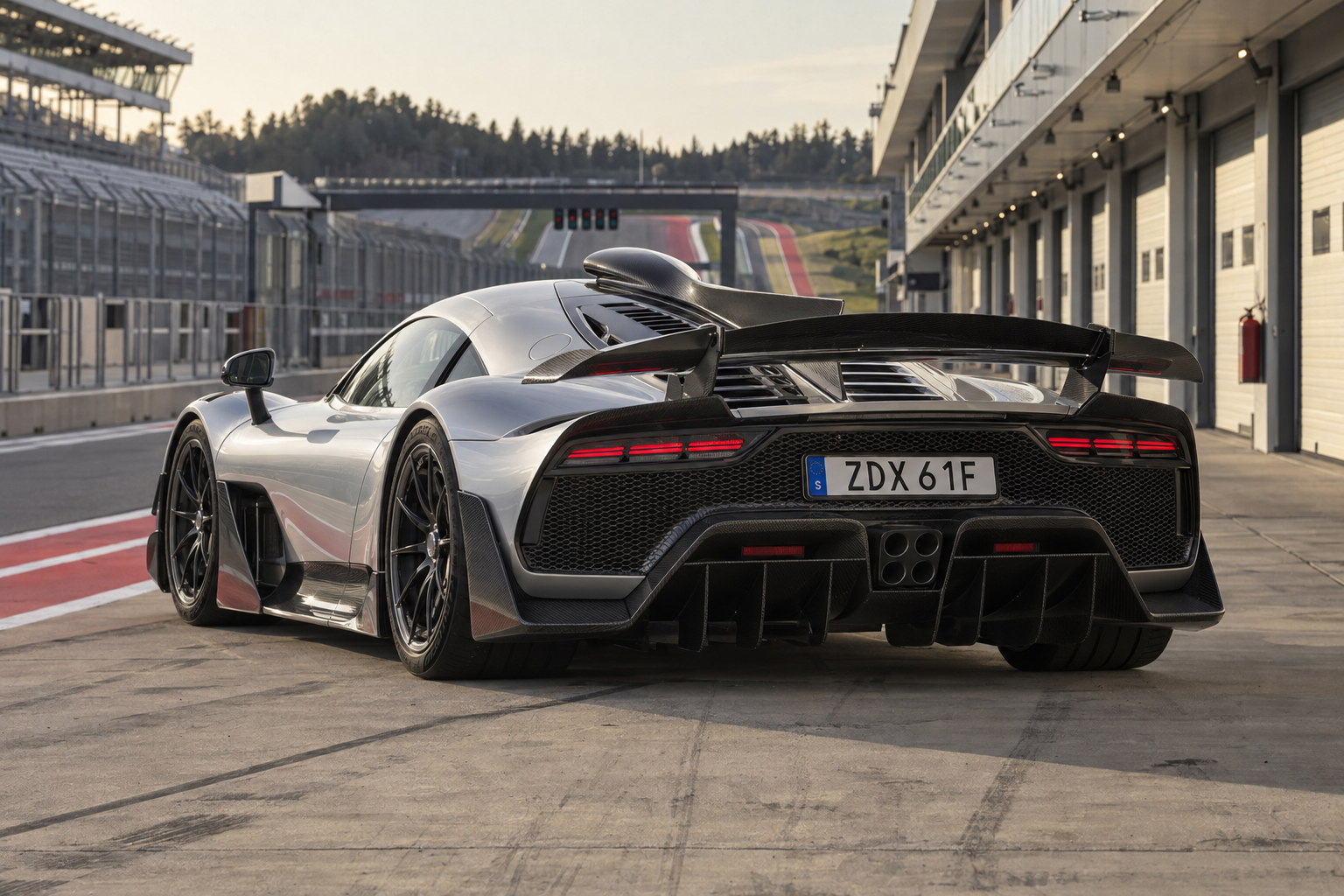
In the Race Plus track mode, the car is lowered by 37 millimetres at the front and 30 at the rear. Reduced ground clearance and altered aerodynamic settings help the car generate more downforce. A dedicated DRS mode reduces drag when maximum downforce is not needed. It is a trade-off between speed on the straights and grip through the corners.
The suspension uses pushrods and transversely mounted spring-and-damper units. Carbon-ceramic brake discs are tasked with handling repeated stops from high speeds. Despite its carbon-fibre construction, AMG quotes a DIN weight of 1,695 kilos: hybrid components, cooling and adaptation for road use make this something quite different from a lightweight single-seater.
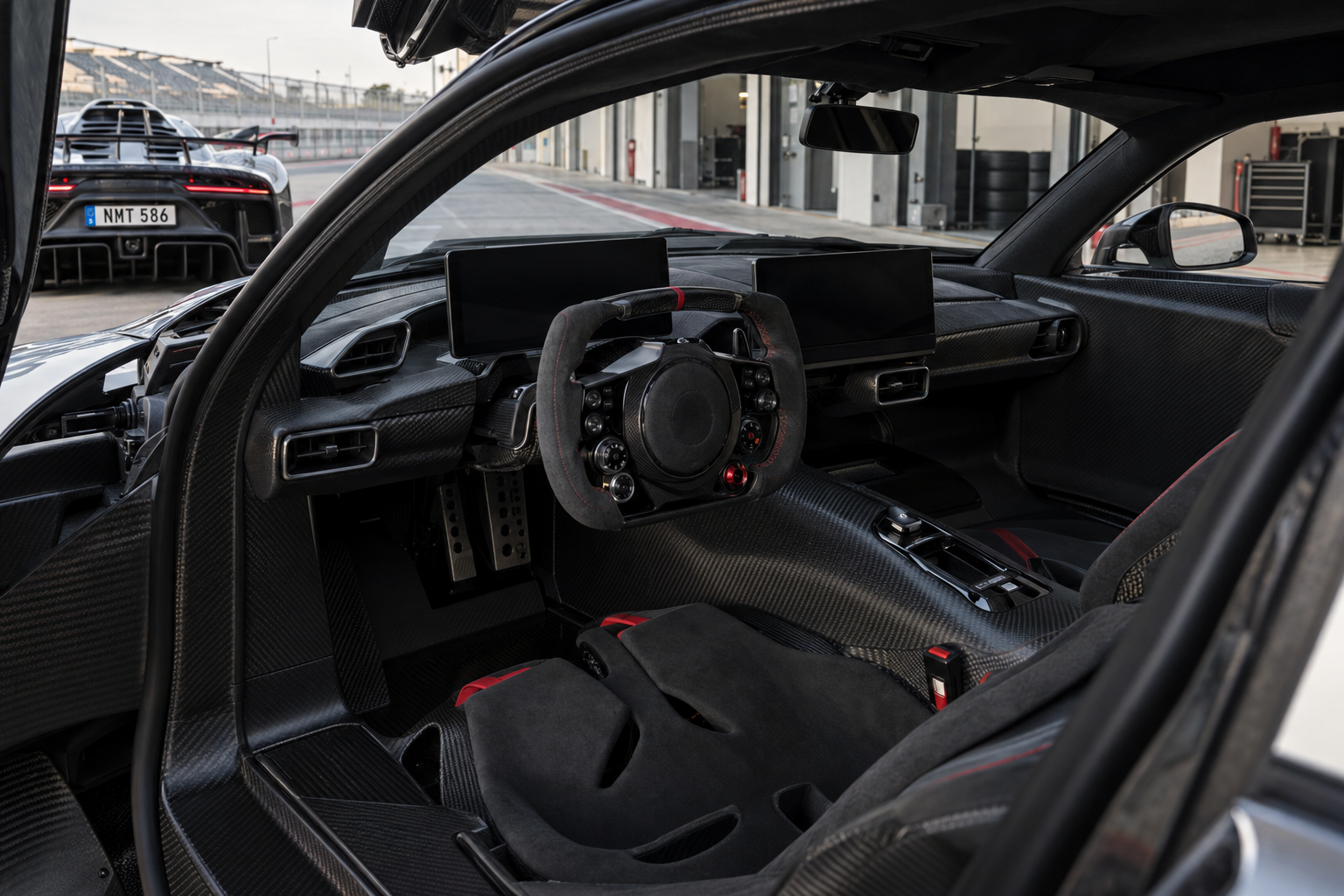
The cabin follows the same priorities. The seat cushions are integrated into the monocoque, while the steering wheel and pedal box can be adjusted to suit the driver. Two screens and an angular, motorsport-inspired steering wheel dominate the space ahead of the seats. Climate control and electric windows are fitted, but luggage space and easy access are hardly the car’s headline attractions.
A record – and a demanding purchase
This article is not based on any first-hand driving impressions. A clearer measure of the car’s intended use is instead Maro Engel’s lap of the Nürburgring Nordschleife in September 2024: 6 minutes and 29.090 seconds over the full 20.832-kilometre circuit. The result was recorded as a production-car record at the time.
For a prospective buyer, the documentation is at least as important as the record. The chassis number, as-delivered specification, service history, any track sessions and warranty terms all need scrutiny. Access to the appropriate servicing network should also be established before a deal is done.
An advertised figure is also an asking price, not proof of market value. Without verified details of the Blocket example, the offer cannot be assessed. The model’s appeal, however, is clear: the ONE combines an unusual engine design with active aerodynamics and documented track performance. That makes it technically significant, not merely rare.
Sources
- Mercedes-AMG, Mercedes-AMG ONE
- Nürburgring, Records
- Blocket, Annonslänk från läsaren, objekt 14422444 – innehållet ej verifierat
Ask questions about “Mercedes-AMG ONE: Formula 1 technology with number plates”. Answers are based on the magazine's own articles.