Volvo 262C Bertone – Sweden’s everyday car in an Italian tuxedo
Swedish underpinnings, Italian craftsmanship, and a roof that raised questions.
The Volvo 262C was the luxury car nobody quite expected: an angular design from Gothenburg with a low roof, a leather-lined cabin, and final assembly by Bertone. Behind the unusual silhouette lay a clear ambition—to make American luxury-car buyers see Volvo in a new light.
 By Henrik SjöbergReporter · Special cars and classic cars
Translated from Swedish with the help of AI.
A Volvo with other plans
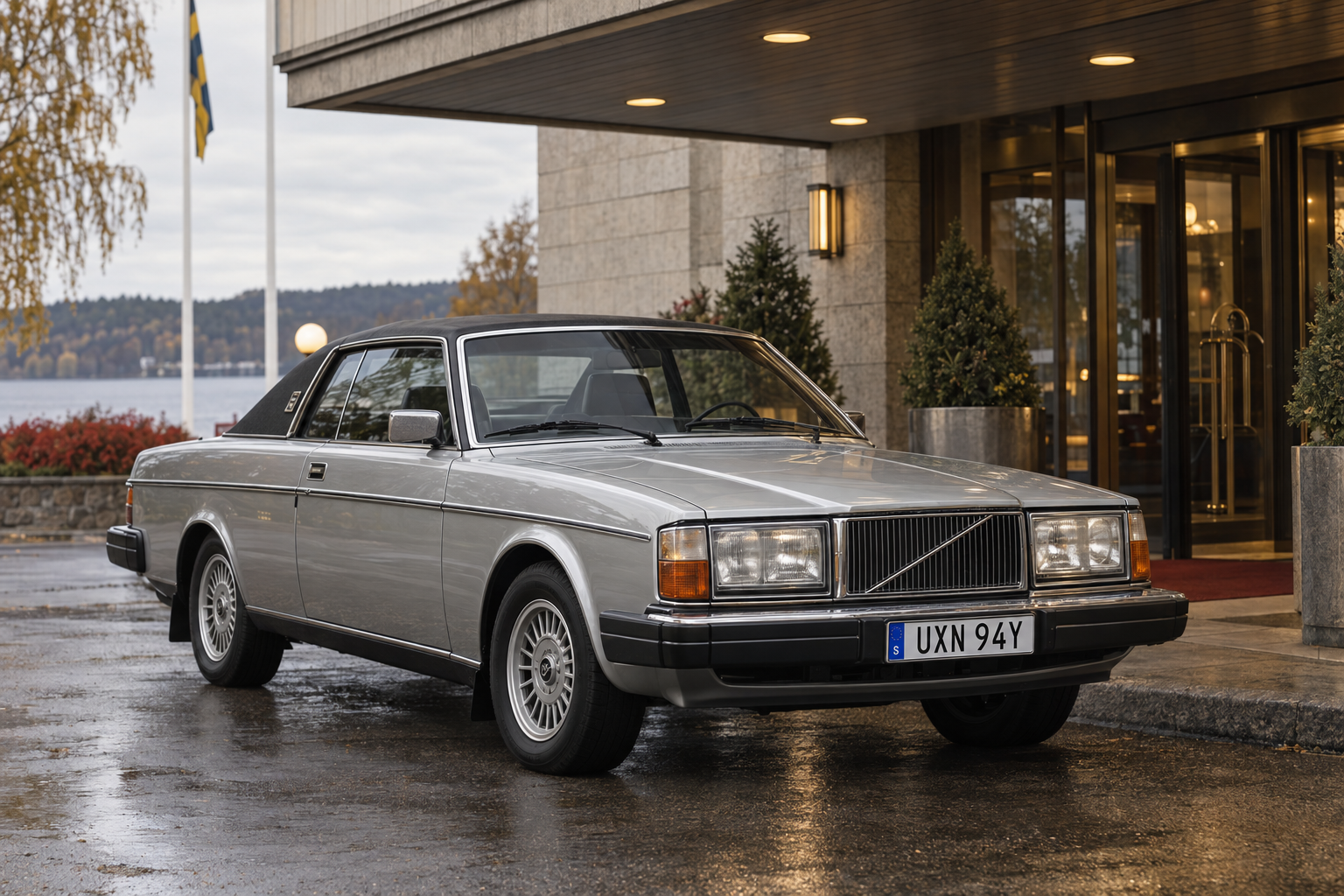
The 1978 Volvo 262C Bertone is a good starting point for understanding the model: metallic silver, a black vinyl roof, and a cabin where leather played a much bigger role than in the family’s regular Volvo. This is a series-production classic, not a custom-built show car. The model debuted at the Geneva Motor Show in 1977 and remained in production until 1981, with Volvo as the automaker and Italy’s Bertone as its partner for bodywork and final assembly.
The basic idea was to move Volvo upmarket. The brand enjoyed plenty of trust as a builder of safe, sensible cars, but lacked an exclusive coupe for customers who wanted to show off something more than their appreciation for sturdy door handles. The United States was a key target market, where personal luxury coupes were already an established category.
Volvo chief Pehr G. Gyllenhammar championed the project. The styling is associated with Volvo design chief Jan Wilsgaard, while an early prototype was built by Italian coachbuilder Sergio Coggiola. Bertone’s name on the finished car therefore does not mean the entire concept was drawn up there. The division of labor matters: Swedish styling and basic engineering, Italian small-series production.
The roof made all the difference
The relationship to the Volvo 260 is immediately apparent in the front end, hood, and much of the body. But the windshield was more steeply raked, and the roof was lowered by about six centimeters. Together with wide rear roof pillars, this gave the car an entirely different profile. Beneath that low hat, much of the big Volvo’s proportions remained.
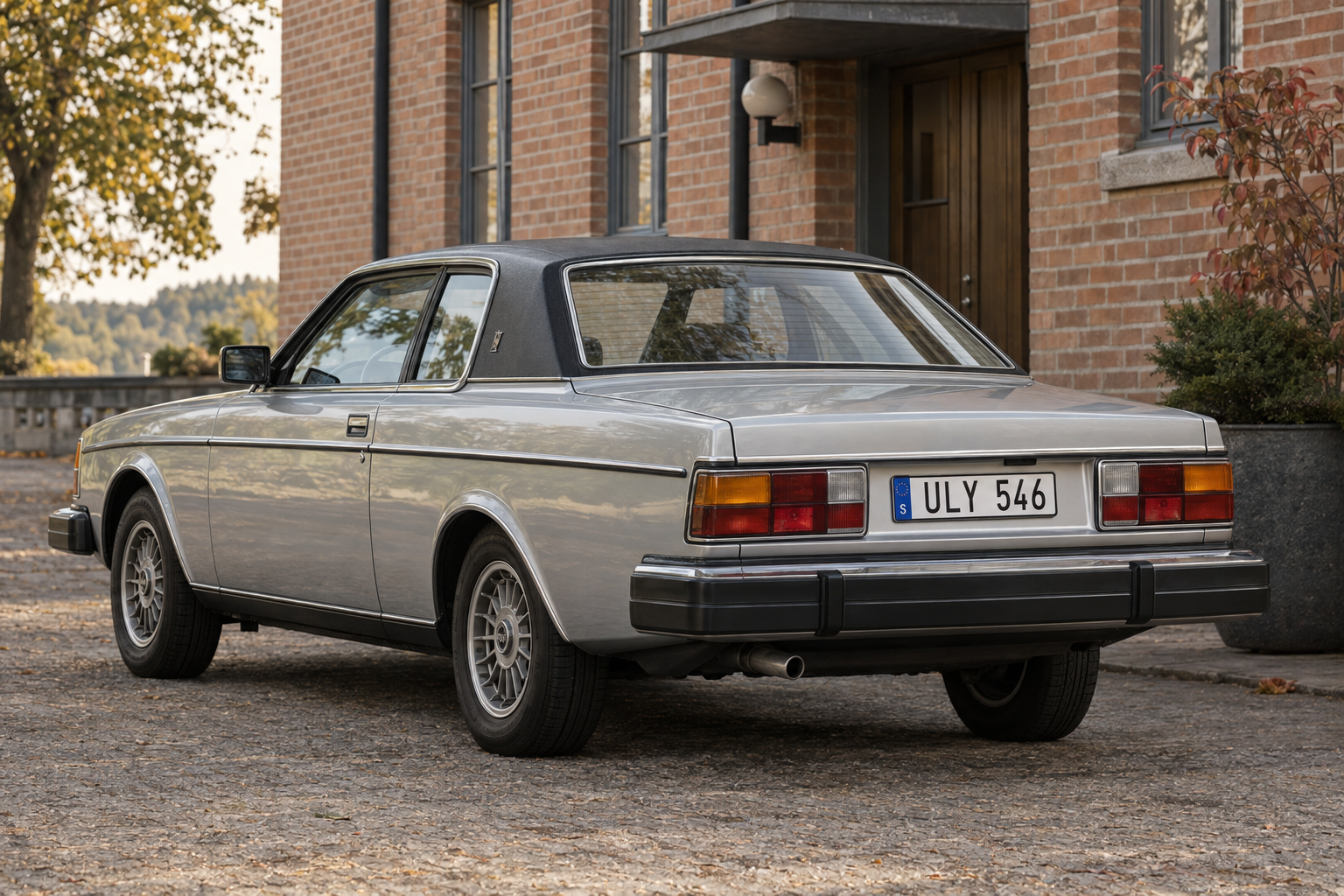
The result was hardly discreet. Where many Italian coupes tried to look light and agile, the 262C looked more like it had reserved the best table and intended to keep it. That tension between the tall basic body and the low roof is the car’s defining feature. You don’t have to find it beautiful to remember it.
Early cars had silver bodies and black vinyl roofs. The color palette later expanded, and the specification changed during production. A collector car should therefore be judged against its particular model year, not a general notion of what every 262C looked like.
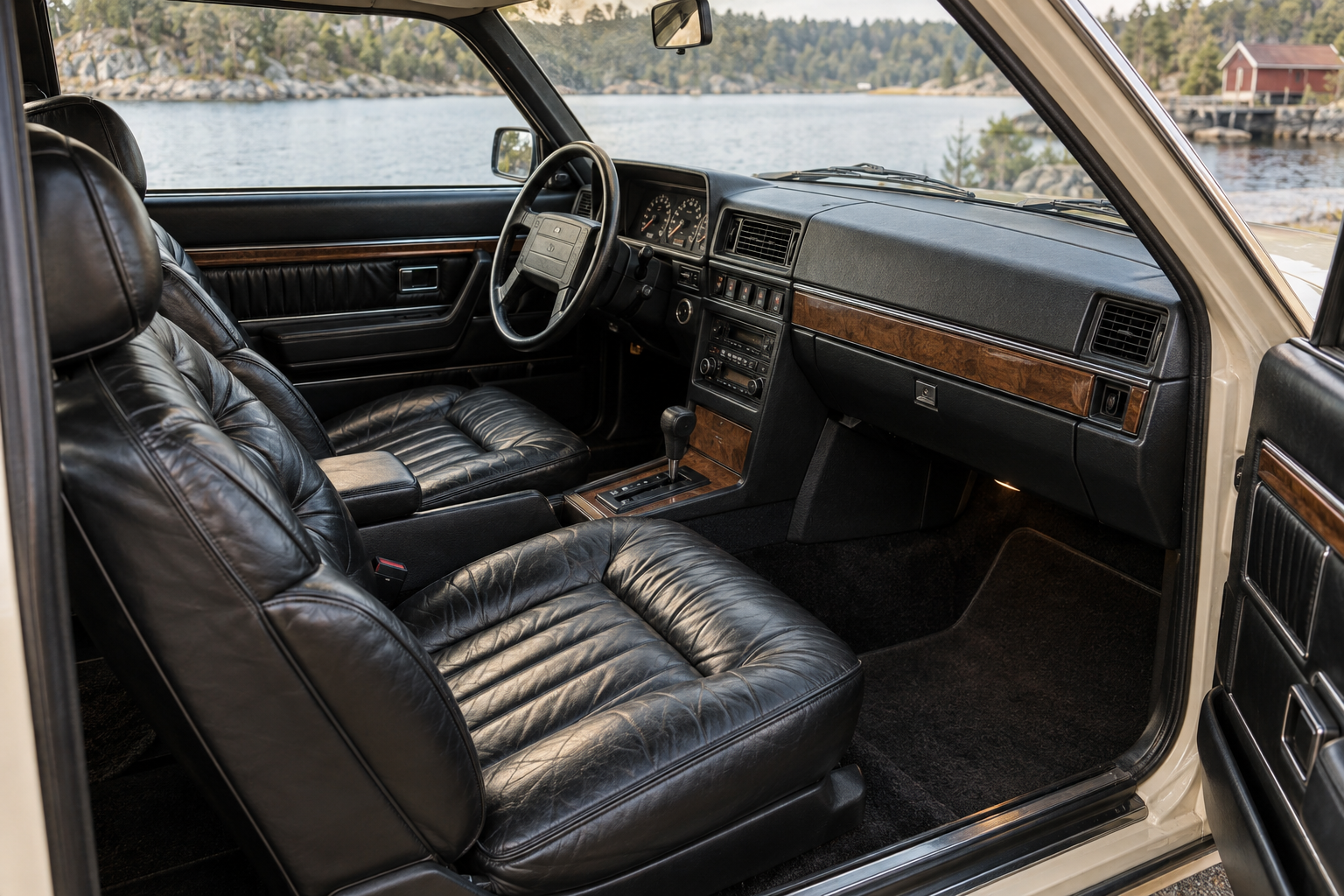
Inside, the difference from the standard cars was striking. Leather was used not just on the seats but also extensively across the cabin’s upholstered surfaces, alongside wood accents. At the same time, the dashboard immediately revealed its kinship with the everyday Volvo. Here, toolbox met jewelry box, with neither offering much of an apology.
Built for the journey, not the lap time
Under the hood sat the PRV six-cylinder, jointly developed by Peugeot, Renault, and Volvo. The engine featured aluminum construction and was also used in Volvo’s regular 260 series. The coupe’s exclusivity thus lay primarily in its body, interior, and production methods, not in any special racing engine.
Rear-wheel drive and the basic chassis design also carried over from the family cars. The solid rear axle remained, as did disc brakes all around. An automatic transmission suited the car’s intended role well, but a manual with overdrive was also offered. Engine displacement and specifications changed over the model’s lifetime and varied by market; American and European figures should therefore not be mixed up.
The 262C was intended for comfortable long-distance travel and everyday driving with a touch of prestige, rather than chasing sports cars through the next corner. The lower roofline also meant a practical compromise compared with the sedan. This is a coupe that sells on its distinctive atmosphere, not maximum cabin space. We make no claim to firsthand driving impressions here.
A collector car with dual citizenship
A total of 6,622 examples were built. That makes the 262C uncommon, but not so rare that every car is automatically a museum piece. For a buyer, documented condition, original details, and completed work matter more than a gleaming Bertone badge.
Many mechanical components are shared with other Volvo models, while coupe-specific body panels, glass, and interior trim can be considerably harder to replace. Check for rust, fit around the windows, and the condition of the sheet metal beneath the vinyl roof. Also examine the leather’s condition and the quality of any reupholstery work. A tidy but incorrect interior can be expensive to put right.
The PRV engine’s service history deserves particular attention, as does the condition of the cooling system. When restoring a car, photographs, receipts, and documentation of bodywork are valuable. Any general price estimate can easily be misleading when condition and originality vary so much from one example to another.
The 262C’s appeal remains the same: it wasn’t trying to stop being a Volvo, just to become a Volvo for a different occasion. That is why its unusual tuxedo still feels so distinctly its own.
Sources
- Volvo Cars, Volvo 262C
- Volvo Cars, Volvo 262C – the unexpected coupé turns 40 (2017)
- Björn-Eric Lindh, Volvo: The Cars — From the 20s to the 80s (1986)
Ask questions about “Volvo 262C Bertone – Sweden’s everyday car in an Italian tuxedo”. Answers are based on the magazine's own articles.