Aston Martin Lagonda – the future wrapped in leather
William Towns’ wedge-shaped luxury car made the dashboard the main attraction.
When Aston Martin unveiled the new Lagonda in 1976, it looked as though it had arrived from another decade. Behind its low nose, British coachbuilding craftsmanship met digital daring—a combination that still makes the model one of the automotive world’s most distinctive luxury cars.
 By Cecilia WahlReporter · Luxury cars and car design
Translated from Swedish with the help of AI.
A luxury car that refused to blend in
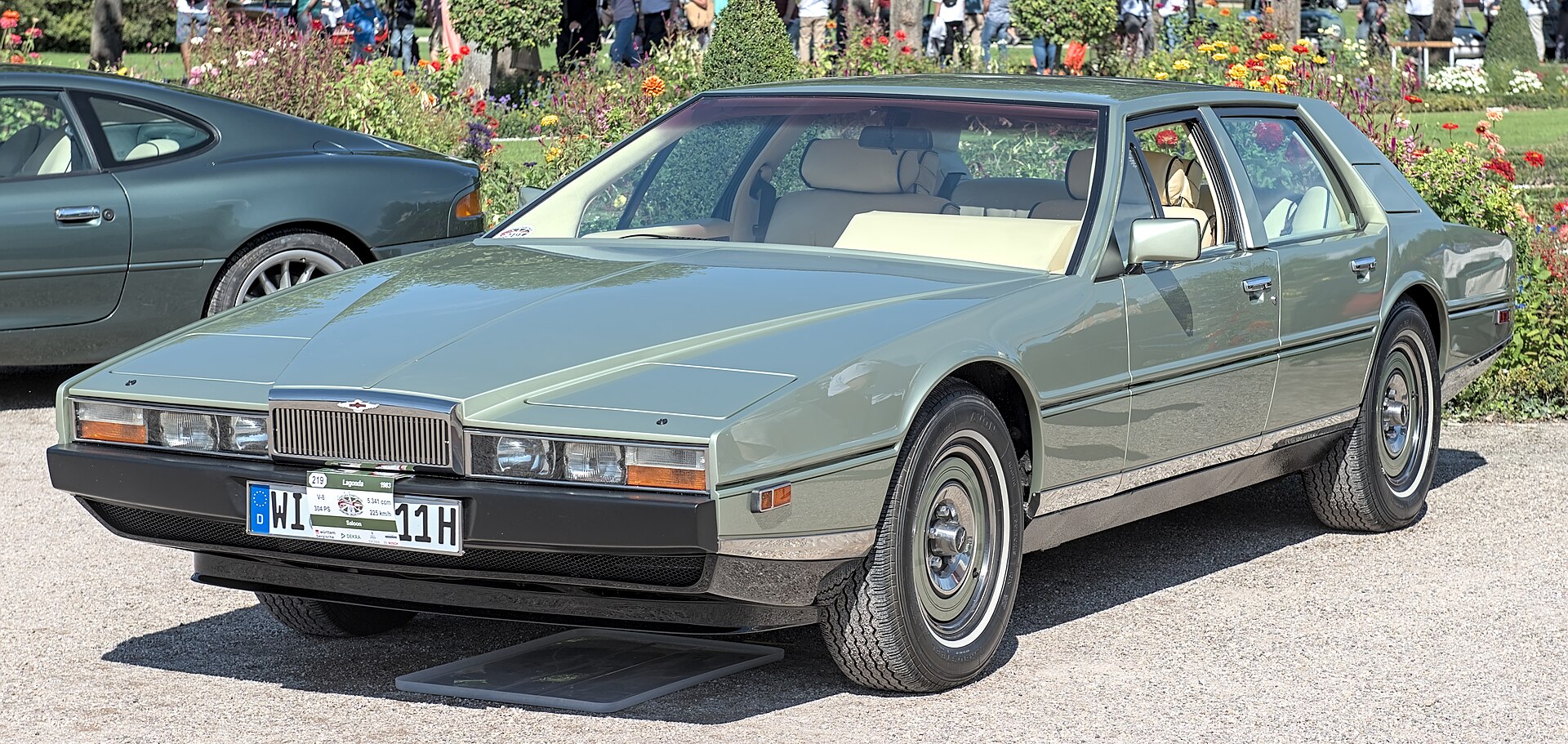
The Aston Martin Lagonda Series 2, introduced in 1976, was no cautious extension of the marque’s sports car line. It was a four-door luxury car with an almost defiantly low nose, long, flat surfaces, and a cabin that promised an electronic future. Designer William Towns created a car in which the ruler seemed to have had the final say. The meeting of this strict geometry and Aston Martin’s traditional craftsmanship is the model’s great appeal.
The name had a much longer history. Aston Martin had bought Lagonda in 1947, and the name carried memories of large, lavish British cars. A four-door Lagonda based on Aston Martin’s V8 model had already been introduced in 1974. It was built in very small numbers and should not be confused with its wedge-shaped successor.
The new car arrived after a financially difficult period for Aston Martin. There was therefore more at stake than a desire to round out the lineup: the Lagonda was meant to show that the small company could still surprise. Buyers were offered an alternative to Rolls-Royce and Bentley, but without their more formal design language. This was British exclusivity for those who would rather prompt questions than nods of approval.
A body drawn with a ruler, a cabin crafted by a saddler
Towns drew a continuous wedge rather than a traditional sedan with clearly separated volumes. The narrow grille sat low, the headlights were hidden in pop-up units, and the hood stretched out ahead of the windshield as a large, almost unbroken plane. The angular wheel arches reinforced the impression of a body carved from a single block.
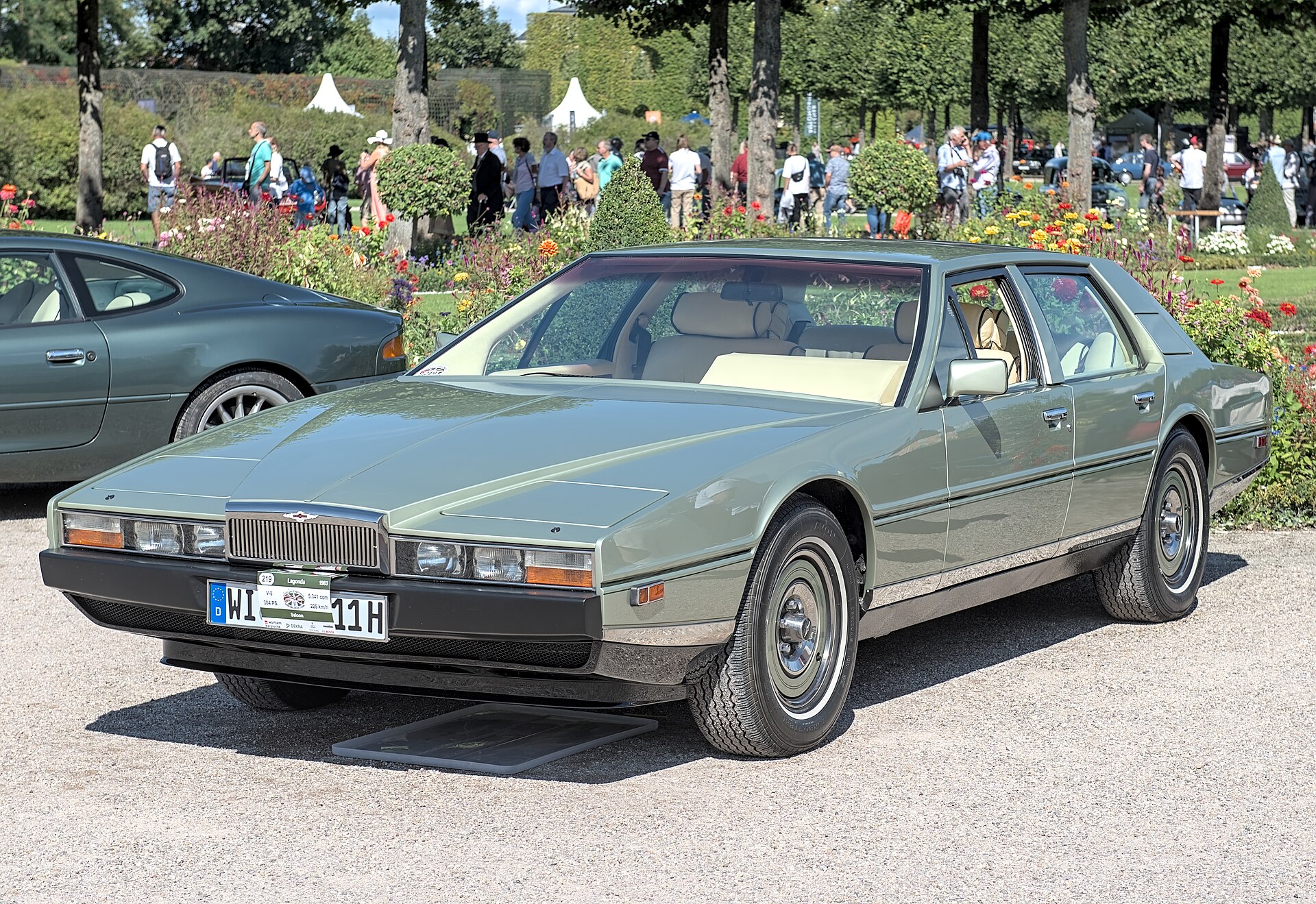
Its proportions were grand, but its low profile made the car visually different from other prestige sedans. The Lagonda looked less like a rolling living room and more like an object from an architect’s drawing board. The relationship between its long nose, straight sides, and relatively low roof remains more important to its visual character than any individual piece of trim.
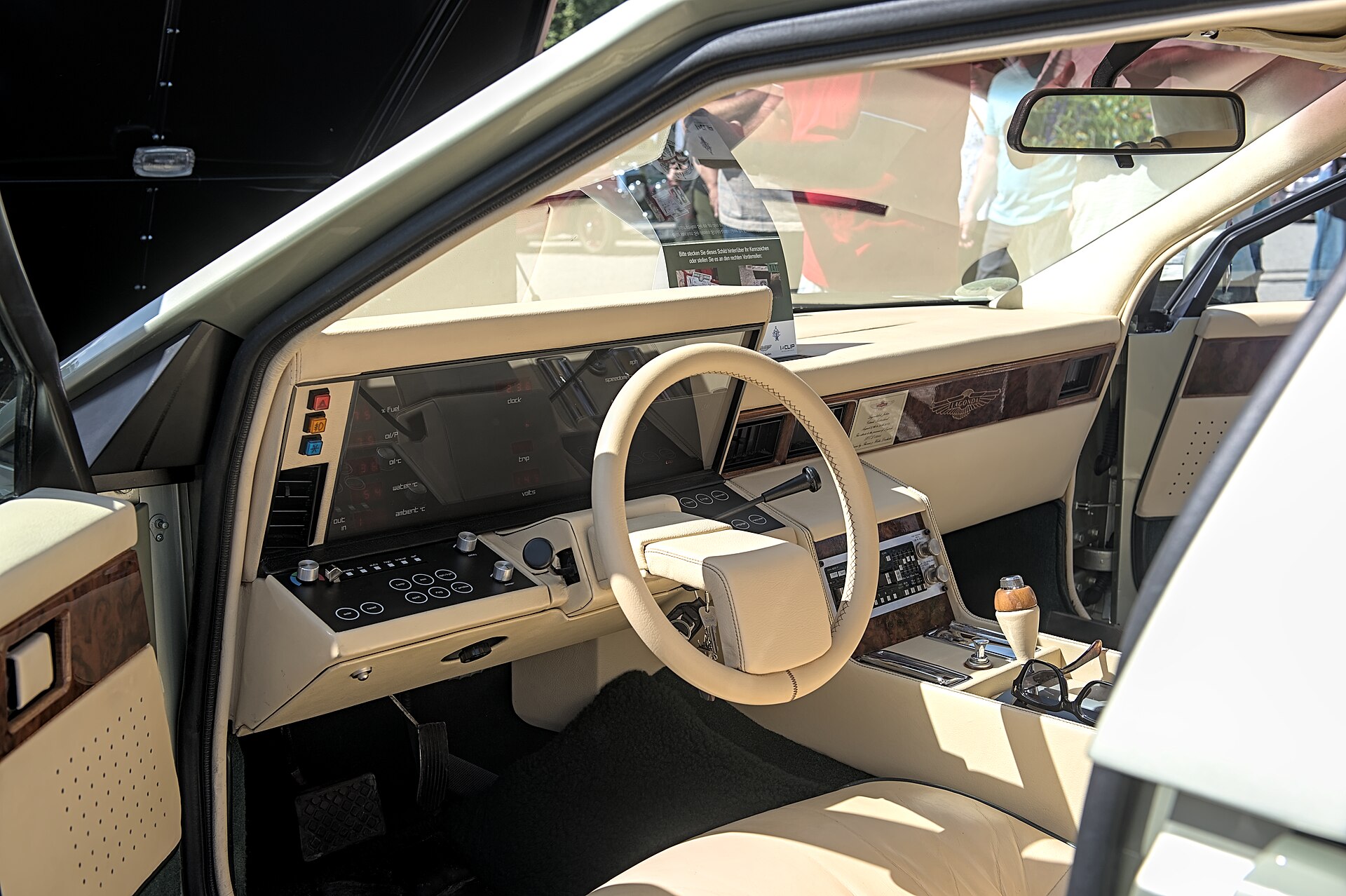
Inside, soft leather and wood met electronic instrumentation. The contrast was deliberately dramatic: materials rooted in an older British coachbuilding tradition surrounded displays and touch-sensitive controls. Instead of familiar round gauges, the driver saw glowing numbers. The dashboard became not just a workspace but also the car’s biggest talking point.
The cars were built in Newport Pagnell with extensive handwork. For a buyer in this price bracket, an individual combination of colors and materials was part of the order, not an insignificant detail. Documentation of the original specification therefore matters greatly for today’s collector cars: a tastefully retrimmed cabin is not automatically a cabin faithful to the original.
Electronics ahead of a familiar V8
Beneath the radical skin was a much more traditional setup: Aston Martin’s big V8, with rear-wheel drive and a three-speed automatic transmission. The Lagonda was intended for fast, long-distance journeys with several people aboard, not as a four-door race car. The long body and lavish interior made comfort and the act of arriving just as important to the experience as speed.
The electronics, on the other hand, represented a genuine leap forward—and a troublesome one. The early instrumentation and controls required extensive development work, contributing to the long wait between the unveiling and customer deliveries. A modern collector therefore needs to understand which version of the instrumentation a car actually has, not just the year it was registered.
The model changed during production. The Series 3 gained fuel injection, while the Series 4, introduced in 1987, gave Towns’ basic shape softer transitions and fixed headlights in place of the pop-up units. The instrumentation also evolved. Our editorial team has not test-driven the car; its intended role, however, is clear: a distinctive long-distance touring car that made technology part of the luxury.
Exclusivity with a repair bill
Production of the wedge-shaped Lagonda ended in 1990. Around 645 examples were built in total, making it rare even compared with many other handbuilt luxury cars. When new, it ranked among the most expensive sedans on the market. The price paid for the craftsmanship and low production volume, but also for the opportunity to choose something radically different.
Today, a purchase should begin with the car’s history. Working instruments, well-preserved leather, a sound chassis, and documented specialist work matter more than an enticing price tag. Check in particular whether the electronics have been repaired, modified, or replaced; the solutions can affect both usability and originality. Any valuation must be tied to the individual example. The Lagonda’s exclusivity remains, but so does the responsibility of preserving its unusual engineering.
Sources
- Aston Martin, Lagonda
- David Dowsey, Aston Martin: Power, Beauty and Soul (2007)
- Andrew Whyte, Aston Martin and Lagonda (1984)
Ask questions about “Aston Martin Lagonda – the future wrapped in leather”. Answers are based on the magazine's own articles.