Jaguar S-Type V8 – a British sedan with American ties
Four headlights, fine wood, and an eight-cylinder engine behind the nostalgic facade.
The Jaguar S-Type 4.0 V8 expressed the British marque’s traditions through soft curves and polished wood. But beneath the references to the sixties lay a modern design with ties to Lincoln. Today, it offers an accessible route to classic Jaguar luxury—for those who examine the history as carefully as the paint.
 By Cecilia WahlReporter · Luxury cars and car design
Translated from Swedish with the help of AI.
A new Jaguar with an old name
The 2000 Jaguar S-Type 4.0 V8 is a four-door luxury sedan from the marque’s years under Ford. The model was unveiled in 1998 and went on sale in 1999 as a smaller alternative to the XJ and a British challenger to the BMW 5 Series and Mercedes-Benz E-Class. Here, we’re looking at the early four-liter version, not the later 4.2-liter engine or the supercharged S-Type R.
The name came from the S-Type of the sixties, but the new car was not an evolution of its namesake. It was built in Castle Bromwich and shared its basic architecture with the Lincoln LS. It was a clear expression of how Jaguar was to grow: greater industrial resources behind the scenes, a stronger brand identity in everything the customer saw and touched.
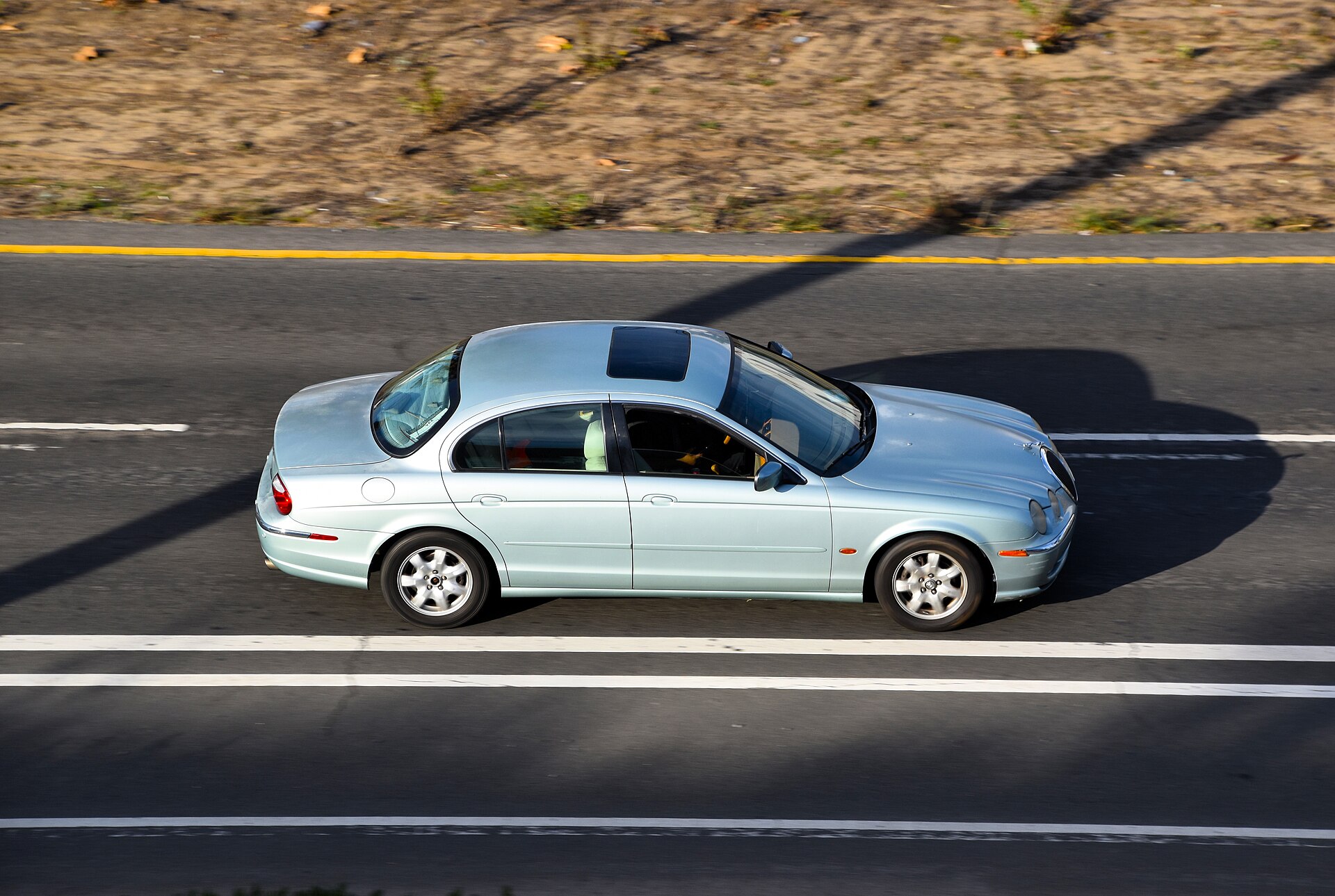
Design was led by Geoff Lawson. His task was a delicate one: to make a new sedan instantly recognizable as a Jaguar without the XJ’s long, low silhouette. The answer was a taller, rounder body, with four separate headlights and an oval grille serving as the family signature. The result remains easy to identify from a distance.
Wood, leather, and familiar touches
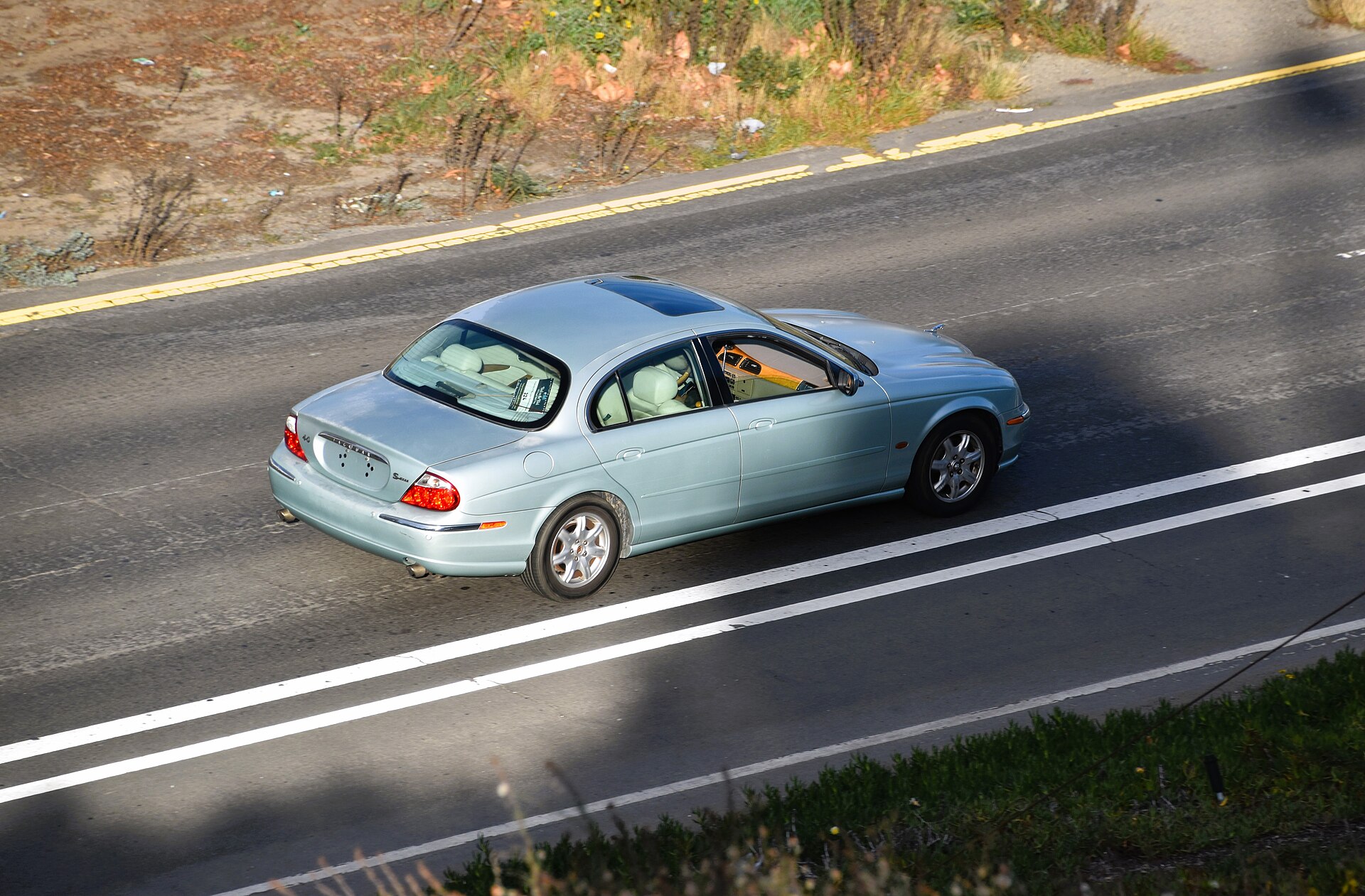
From the front, the S-Type is almost ostentatiously nostalgic. The gentle curve of the hood, the headlight surrounds, and the upright character of the grille evoke the marque’s older sports sedans. Along the sides, the look becomes more contemporary: a high beltline, curved door panels, and a rounded roofline. The rear is short and softly truncated rather than pointed or imposing.
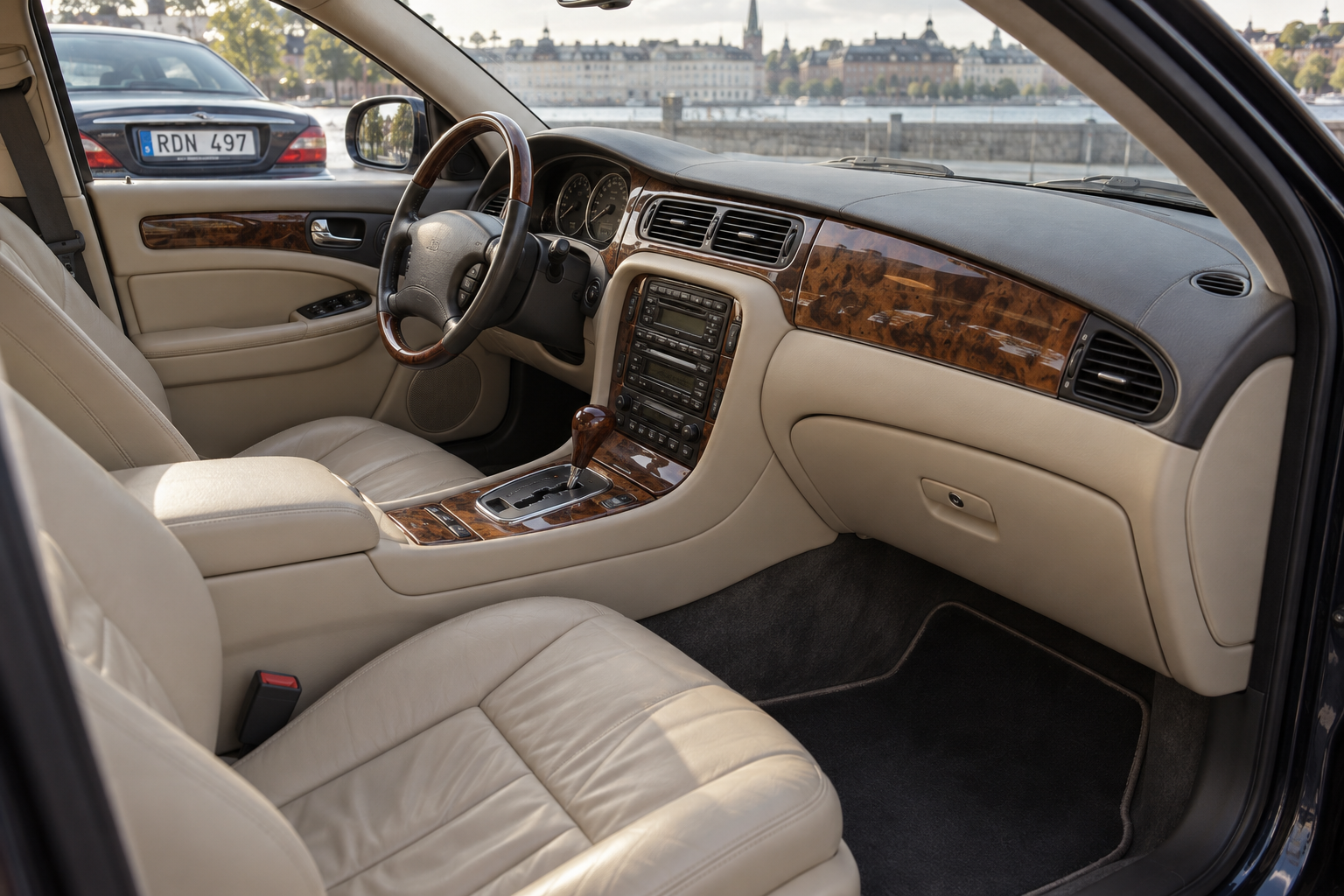
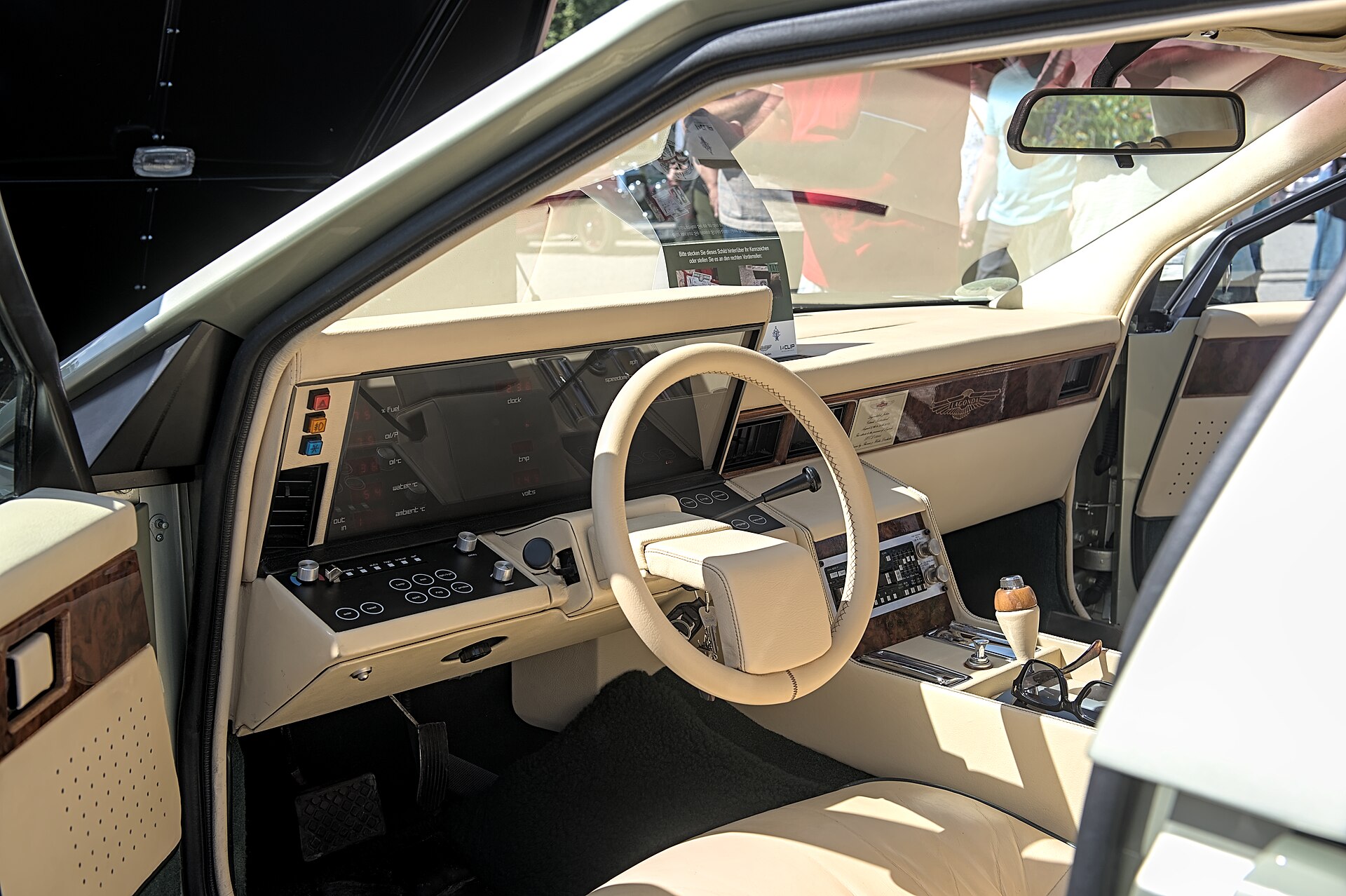
The cabin continues the story with wood veneer, leather, and a dashboard whose curves echo those of the body. This is not a minimalist environment. Buttons, air vents, and controls are allowed to stand out, and the interplay of materials is an important part of the experience. The distinctive J-shaped automatic shift gate is both a practical control and a small piece of Jaguar identity.
At the same time, the marque’s traditions should not be confused with the notion of a handbuilt specialty car. The S-Type was a series-production sedan, with industrially manufactured components and technology shared across the corporate group. Its exclusivity lay in the combination of design, materials, and character, not in each example having an individually crafted body.
For today’s buyer, the condition of the cabin is particularly revealing. Cracked leather on the outer edge of the driver’s seat, damaged veneer, and poorly fitted replacement parts significantly change the overall impression. A well-preserved original cabin can be more appealing than a hastily freshened-up interior. Also check that the colors, wheels, and equipment match the car’s documentation; availability varied by market and trim level.
A V8 for traveling, not showing off
Under the hood sits Jaguar’s AJ-V8, an aluminum eight-cylinder engine with four overhead camshafts. Power goes to the rear wheels through a five-speed automatic transmission. The engine gave the S-Type a clear position above the entry-level six-cylinder version: this was the car for customers who wanted greater reserves of power without choosing an outright performance model.
We have not test-driven the car. Its intended role is nevertheless clear from its engineering: a comfortable, fast touring sedan, with independent suspension and disc brakes all around. Automatic shifting, generous engine displacement, and a cozy driving environment prioritized relaxed use over keeping the driver constantly busy with the shifter.
Nor should the early S-Type be judged as though it were identical to every later example. The interior, chassis, and powertrain were among the things that changed over the model’s lifetime. The four-liter car therefore has its own technical identity, and parts or buying advice for a later 4.2-liter version do not always apply directly.
Accessible luxury calls for careful inspection
When new, the V8 version occupied the upper ranks of company and executive cars. On today’s used market, the purchase price can be surprisingly low considering the materials, engine, and original market position. That is no guarantee of inexpensive ownership, however. Condition and documented work matter more than an enticing asking price.
On the four-liter engine, the timing-chain tensioners are a key inspection point. Ask for documentation of any replacements and have a shop familiar with Jaguars assess the engine, cooling system, and automatic transmission. Underbody corrosion, worn suspension components, and electrical equipment deserve as much attention as how the engine runs. A shiny body is not enough to establish a clean bill of health.
The most convincing S-Type V8 is therefore rarely the cheapest. It is the example whose service history, sound mechanicals, and carefully preserved cabin add up to a credible whole. That is when the car’s true appeal emerges: not just retro styling, but a distinctive interpretation of the British touring sedan at the turn of the millennium.
Sources
- Jaguar Cars, Jaguar S-TYPE (2000)
- Jaguar Cars, Jaguar S-TYPE Driver's Handbook (2000)
- Nigel Thorley, Jaguar: All the Cars (2003)
Ask questions about “Jaguar S-Type V8 – a British sedan with American ties”. Answers are based on the magazine's own articles.