Mercedes-Benz 300 SLR: the racing car that gained a roof and became priceless
The Uhlenhaut Coupé combined gullwing doors with Grand Prix technology.
It looks like an elegant relative of the 300 SL, but beneath the bodywork lies considerably sharper machinery. Two examples of the Mercedes-Benz 300 SLR Uhlenhaut Coupé were built in 1955 – and one of them sold in 2022 for 135 million euros. The story begins not with money, however, but with a racing engineer who wanted to push further.
 By Henrik SjöbergReporter · Special cars and classic cars
Translated from Swedish with the help of AI.
A racing car, not a more refined 300 SL
The 1955 Mercedes-Benz 300 SLR Uhlenhaut Coupé is a closed-body racing prototype, of which Mercedes-Benz built two examples. Its nickname comes from Rudolf Uhlenhaut, the engineer who led the marque’s racing car development. It never became a regular showroom model. It did, however, enjoy an afterlife as one of the most written-about company cars in motoring history.
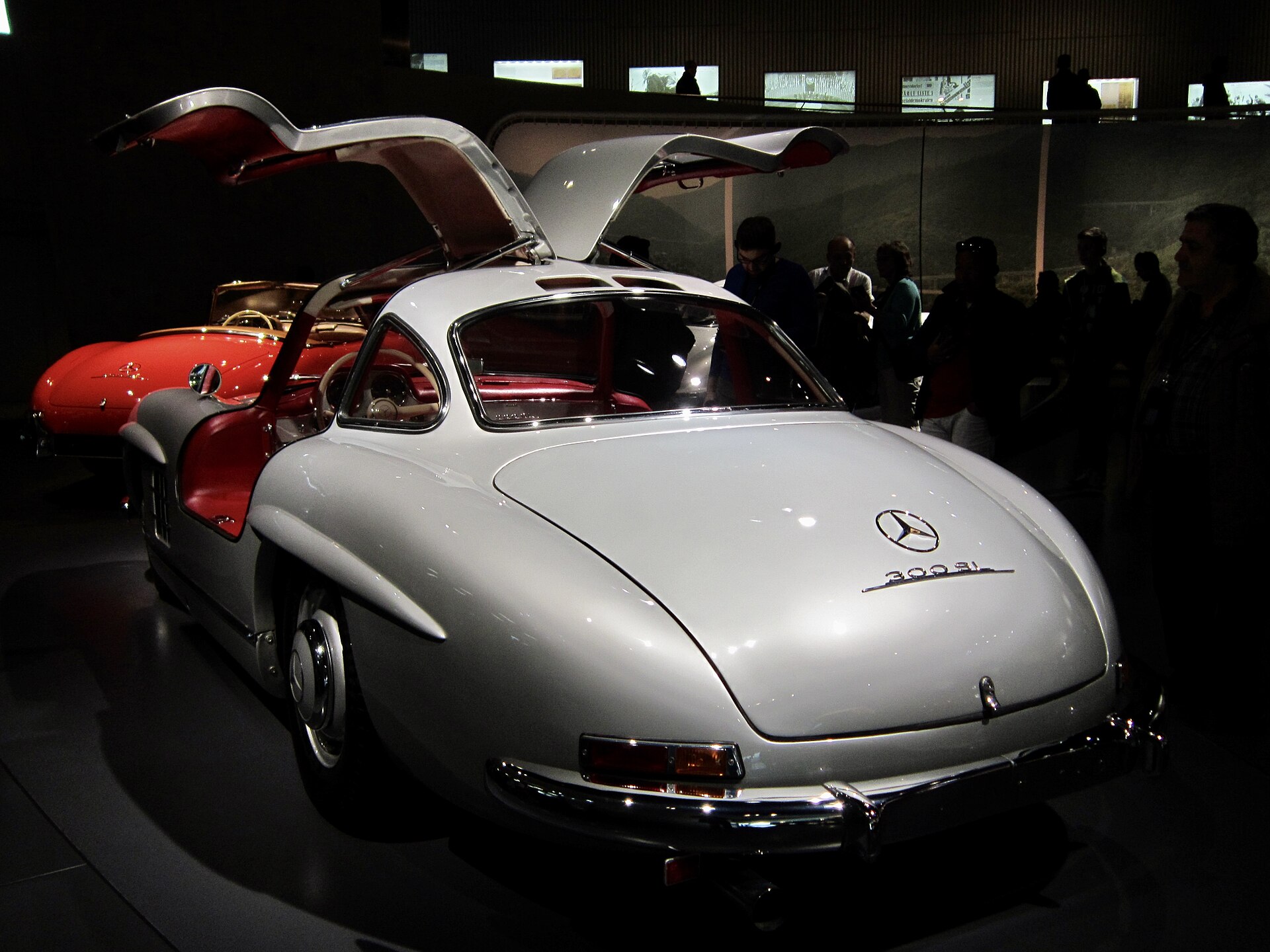
The gullwing doors make it tempting to call it an extra-powerful 300 SL. But the family resemblance lies mainly in its appearance and certain design principles. Beneath the skin, the 300 SLR, internally designated W 196 S, is related to Mercedes’ successful W 196 R Formula 1 car. This is racing technology in a sharp suit, then, not a road car with a tuned engine.
Among its victories, the open-top 300 SLR won the 1955 Mille Miglia with Stirling Moss and navigator Denis Jenkinson. The coupé was developed as a closed-body variant for sports car racing, where a body with less aerodynamic drag could offer an advantage on fast circuits. The basic idea was practical: the same racing machine, but better equipped for higher speeds and longer distances.
Gullwings out of necessity
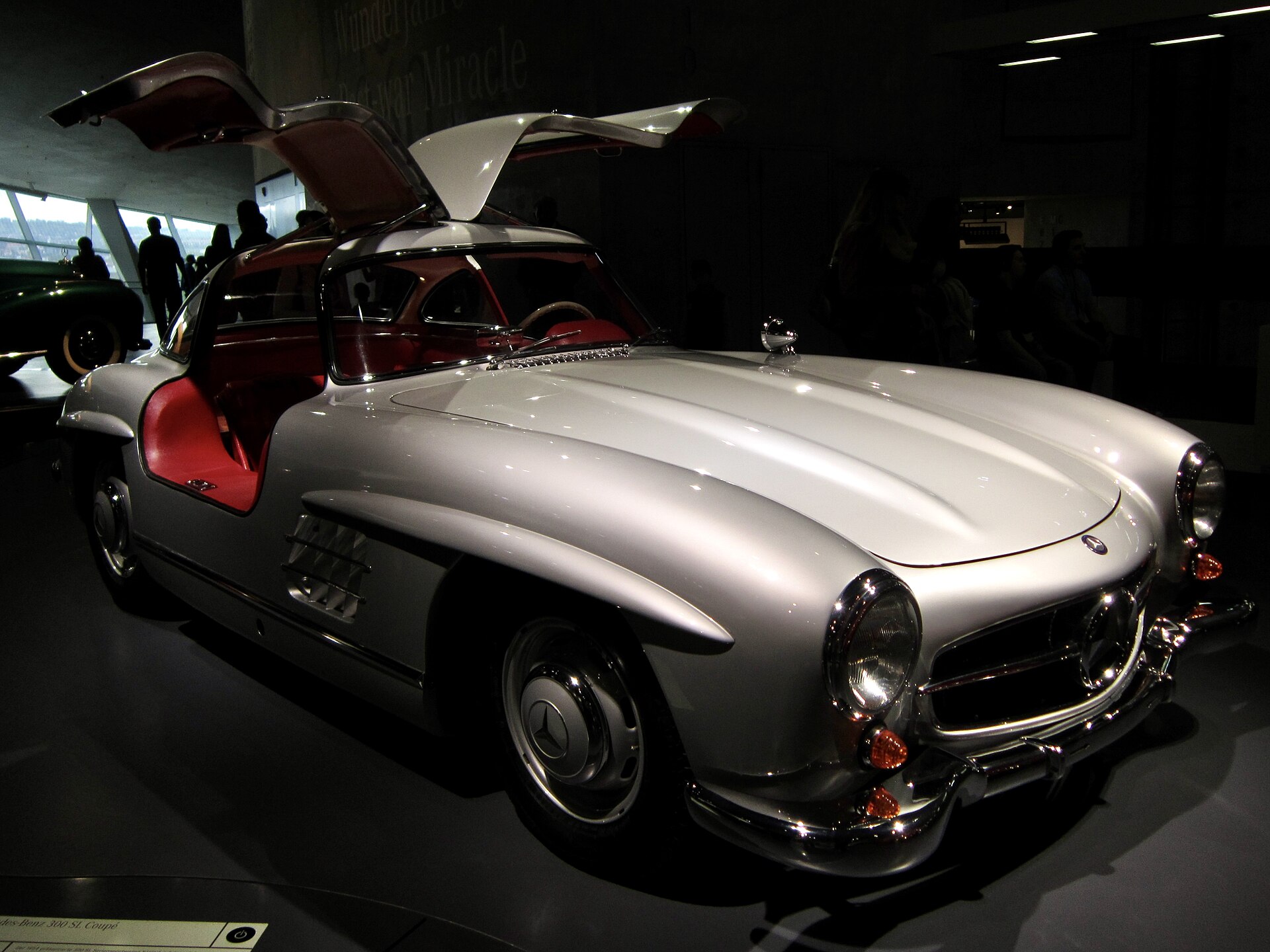
The light-alloy body was built over a frame of thin steel tubes. The frame’s high sides provided rigidity but left little room for conventional doors. The solution was to extend the openings into the roof. In other words, the gullwings were not just a way to make an entrance at a hotel; the structure beneath them dictated their shape.
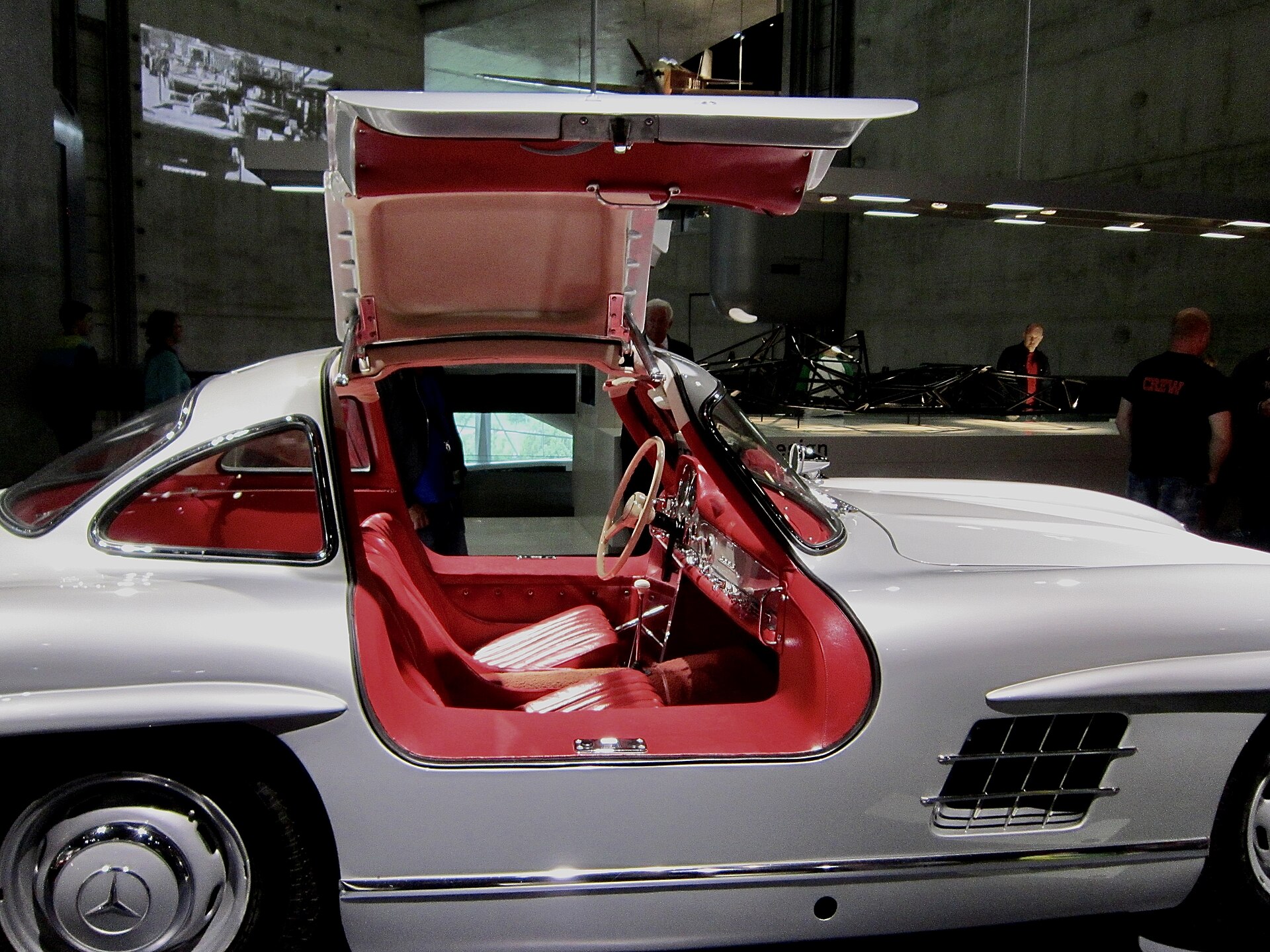
The long bonnet, covered headlamps and rounded tail give the car a remarkably cohesive appearance. At the same time, the side-exit exhausts reveal that the comfort department did not have the final say. The two examples are usually distinguished by their red and blue interiors respectively. Both are original factory-built prototypes, not later conversions of standard 300 SLs.
The cabin seats two, but is shaped around the racing car’s needs. High sills demand some thought when climbing in, and the driver sits behind a large steering wheel with the instruments clustered closely ahead. Gaining a roof did not turn the car into a cosseting grand tourer. Here, elegance is more a matter of how much engineering has been fitted beneath a beautiful surface.
The engine is a straight-eight with direct fuel injection and desmodromic valve operation: the valves are closed mechanically rather than relying solely on valve springs. This was advanced technology for high engine speeds. The engine is steeply inclined to keep the bonnet low. The brakes also reveal its origins; large drum brakes were used, mounted inboard towards the centre of the car to reduce unsprung mass.
The career that never began
The coupé emerged during a season that proved both triumphant and catastrophic for Mercedes. At Le Mans in 1955, an open-top 300 SLR was involved in the accident in which driver Pierre Levegh and more than 80 spectators died. Mercedes withdrew its remaining cars from the race and pulled out of works competition at the end of the year.
The Uhlenhaut Coupé therefore never had the racing career for which it had been developed. Instead, one of the cars was used by Uhlenhaut for journeys on public roads. That is where its image as the ultimate company car comes from. But stories of his alleged record-breaking journeys should be treated with caution; the car’s actual engineering is spectacular enough without stopwatch legends.
We have not driven the car. Its intended use nevertheless says a great deal: high speeds over long racing stints, not quiet small talk between traffic lights. Mercedes quotes a top speed of around 290 km/h. For a car from 1955, that is a figure that still raises eyebrows.
Two built, one sold
On 5 May 2022, the example with the red interior was sold at a private auction at the Mercedes-Benz Museum in Stuttgart, held in conjunction with RM Sotheby’s. The price was 135 million euros. That was a documented auction result for that particular car, not a general price list for the model.
Mercedes kept the other example in its collection. For an interested reader, a museum setting is therefore considerably more realistic than a classified advert. The combination of just two cars built, factory-preserved history and the connection to Uhlenhaut explains its exceptional status. Here is both an engineering crossroads and a racing dream cut short – with doors that still know how to make an entrance.
Sources
- Mercedes-Benz Museum, Mercedes-Benz 300 SLR “Uhlenhaut Coupé”
- RM Sotheby’s, 1955 Mercedes-Benz 300 SLR Uhlenhaut Coupé (2022)
- Karl Ludvigsen, Mercedes-Benz Quicksilver Century (1995)
Ask questions about “Mercedes-Benz 300 SLR: the racing car that gained a roof and became priceless”. Answers are based on the magazine's own articles.