Volvo P1800 – a Swedish Sports Car with a Long Afterlife
From Pelle Petterson’s drawing board to The Saint and Irv Gordon’s record-setting journeys
Designed by a young Swede in Italy, first built in England, and made world-famous by a British TV hero. The Volvo P1800 combined sports-car lines with everyday-car endurance—and kept an American teacher driving for more than fifty years.
 By Lars EkströmEditor-in-chief · Vintage cars and automotive history
Translated from Swedish with the help of AI.
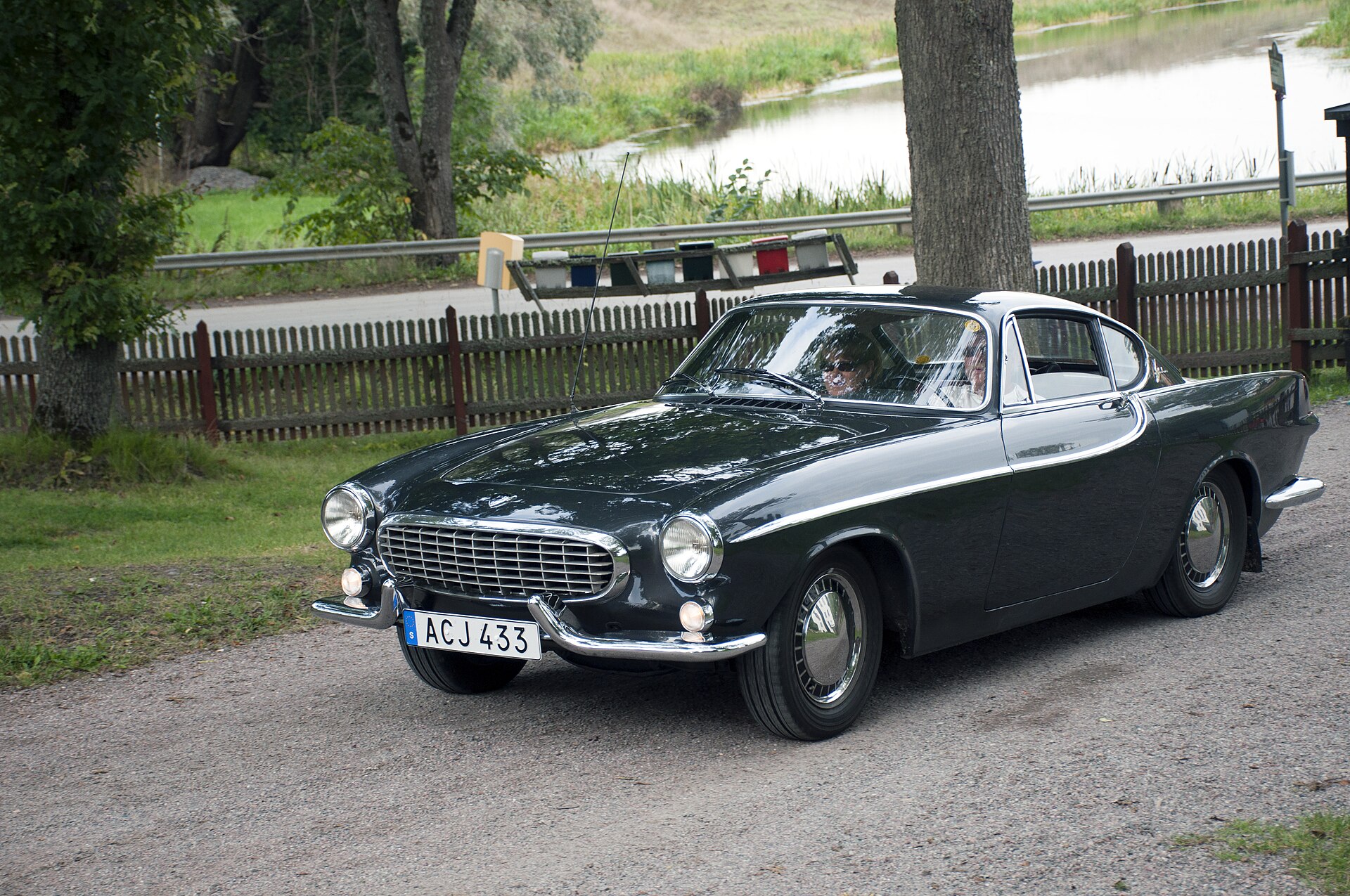
At the Brussels Motor Show in 1960 stood a low-slung Volvo with a long hood and small fins above the rear fenders. The brand associated with sturdy family cars was showing something different: an elegant coupe for people who wanted a journey to be more than transportation. Yet when the Volvo P1800 entered series production in 1961, the Swedish sports car was the product of a distinctly international collaboration.
This is where the story begins for the P1800, later the 1800 S and 1800 E, and finally the 1800 ES shooting brake. The model family lasted until 1973. It was not a dedicated competition car, but a grand tourer with sporty styling and mechanicals that an ordinary Volvo shop could understand.
A Swedish Pen in Italy
Volvo’s earlier attempt with the open-top Volvo Sport, often called the P1900, had been short-lived. Its successor would have a fixed roof and better prospects for both production and sales. Helmer Petterson, who had previously worked on the PV444, took on an important role in the project.
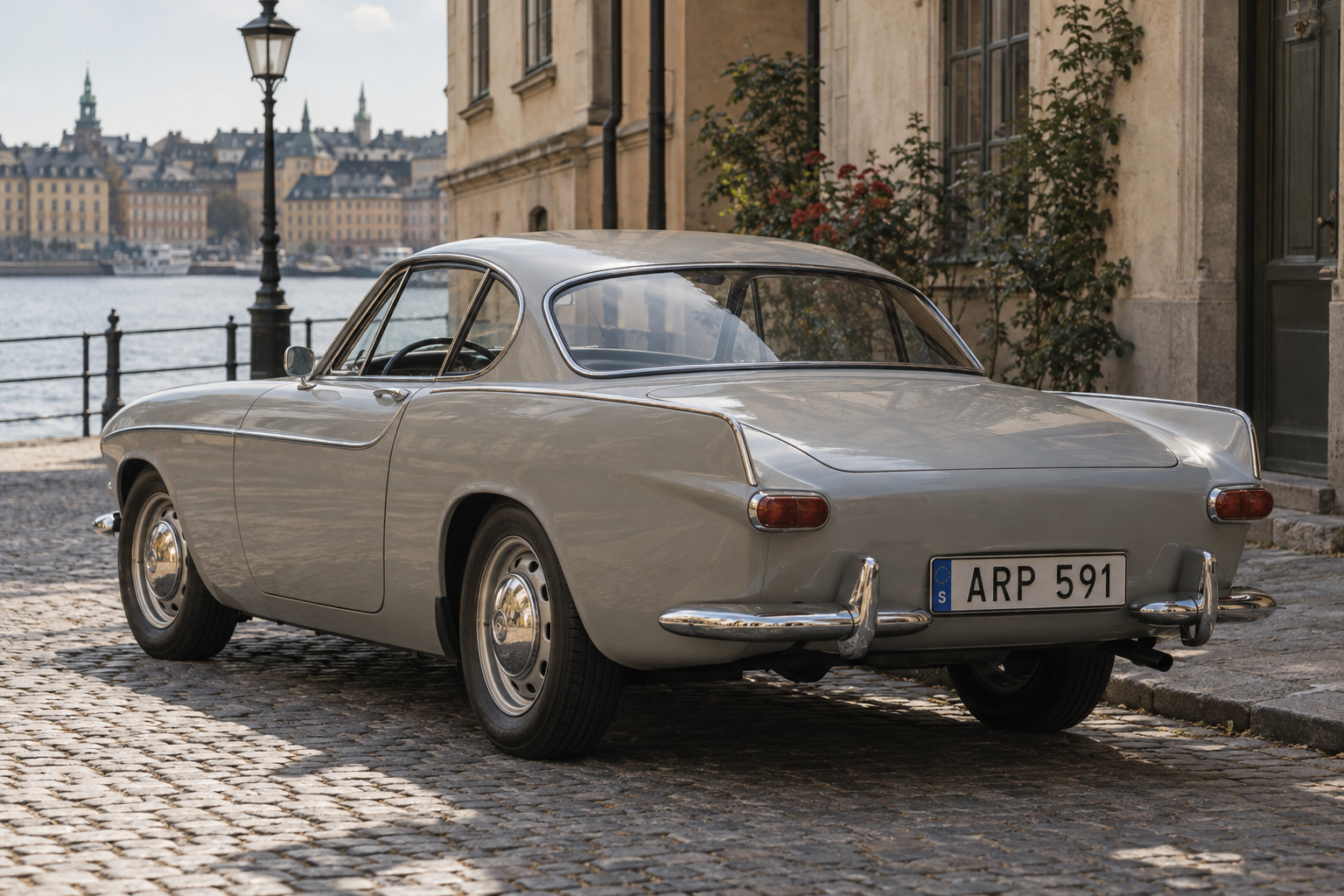
The styling was entrusted to Italy’s Frua. Helmer’s son Pelle Petterson worked there, and his proposal was the one selected. For a long time, the Italian design house’s name was emphasized rather than the young Swede’s contribution. Today, Pelle Petterson’s authorship is an established part of the car’s history.
The body had unmistakable fifties features: a curved windshield, pronounced rear fenders, and plenty of chrome. Yet the overall design was lighter and more cohesive than those details might suggest. The cabin offered two proper front seats and a very cramped rear seat. The instruments made the cockpit something quite different from that of the more everyday Amazon, even though much of the mechanical hardware was related.
For Volvo, the car was also a showcase, particularly in export markets. It was meant to draw attention to the brand without abandoning its reputation for durability. That very combination of dream car and familiar, serviceable mechanicals gave the model its distinctive character.
From Jensen to Gothenburg
Volvo did not have the capacity to build the new coupe in its own facilities right away. The bodies came from Pressed Steel in Scotland, while Jensen Motors in West Bromwich handled assembly. There, British factory workers turned the Italian-influenced design into a Swedish-branded car.
The partnership proved troublesome, however. Volvo was unhappy with the quality and moved assembly to the Lundby plant in Gothenburg in 1963, after around 6 000 British-built cars. The designation changed to 1800 S, with S standing for Sweden—not a special sports version.
Under the hood was initially the B18, a four-cylinder pushrod engine. It was less exotic than the bodywork, but suited the car’s mission: combining long-distance touring with reasonable ease of servicing. Engines, brakes, and equipment evolved over the model’s life. The B20 arrived for the 1969 model year, and the 1800 E brought electronic fuel injection and rear disc brakes for the 1970 model year.
This article is not based on a firsthand test drive. The engineering does, however, reveal the intent: overdrive for more relaxed highway driving, room for luggage, and an enclosed cabin for use even after summer had ended.
The Saint and the Teacher Who Kept Driving
From 1962, the car reached an audience far beyond the auto shows. Roger Moore drove a white P1800 as Simon Templar in the TV series The Saint. The elegant Volvo became part of the character’s identity. That exposure gave the model international recognition that sales figures alone could never have created.
Another central figure was American teacher Irv Gordon. He bought his red 1966-model 1800 S new and drove it with a persistence that eventually became world-famous. In 2013, the car passed three million miles.
A clarification about Swedish units is needed here: that corresponds to approximately 483 000 Swedish mil, not three million mil. In 2014, Guinness recorded an odometer reading of 3 039 122 miles. The record story also involves years of maintenance and repairs, not a car that went untouched through the decades.
The Glass Hatch and Life as a Classic
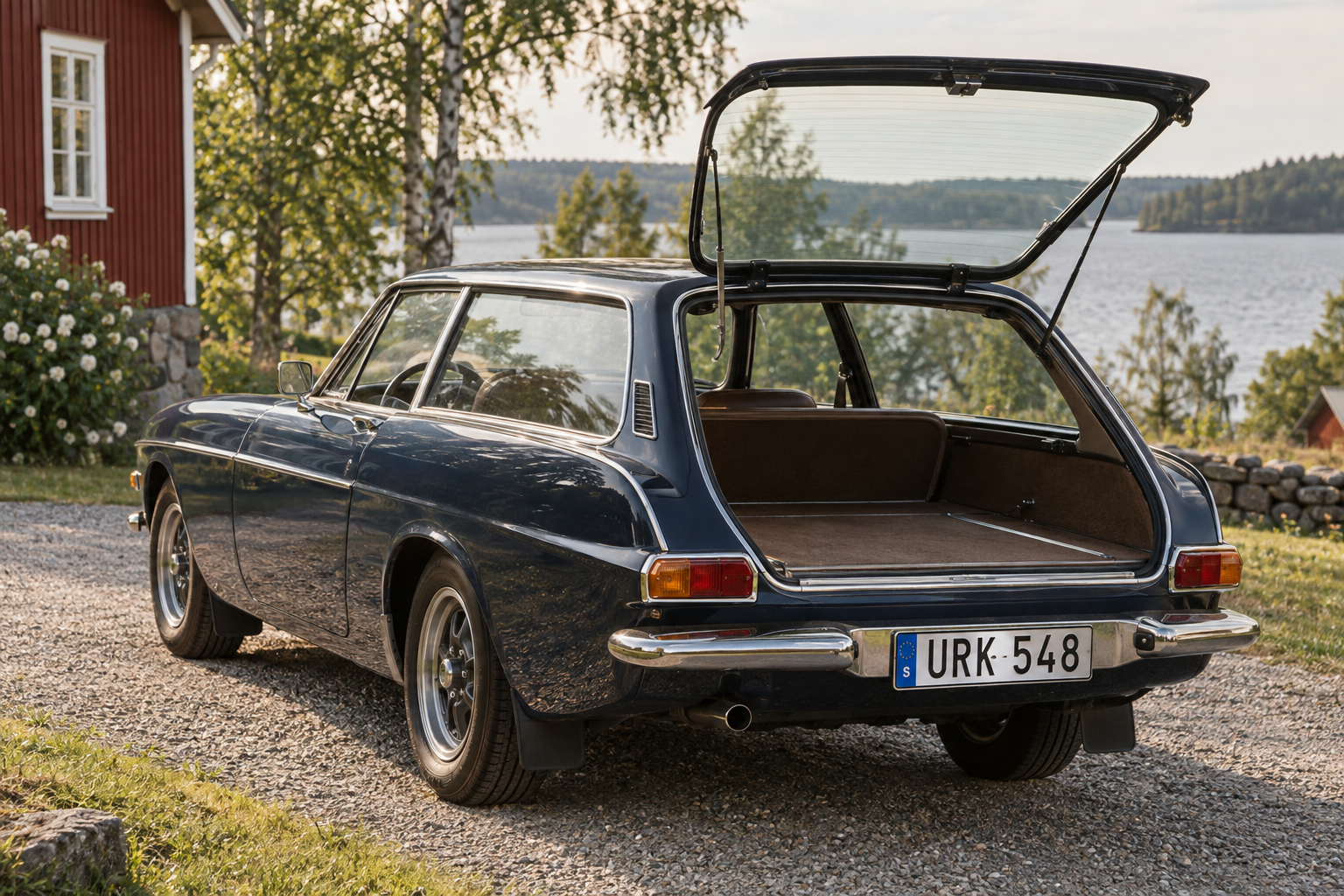
The 1800 ES arrived for the 1972 model year, with an extended roof and a large glass rear hatch. It made the sports-car concept more practical without sacrificing its distinctive character. The coupe ended production in 1972; the ES continued until 1973. A total of 47 492 cars were built across the model family.
For today’s buyers, there is no meaningful one-size-fits-all valuation: version, bodywork, originality, and documentation carry considerable weight. Rust and previous repairs should be examined carefully, as should panel fit and the completeness of the trim. A well-documented restoration can be worth more than a shiny finish. The P1800’s charm lies in its lines, but a good example starts with the sheet metal beneath them.
Sources
- Volvo Cars, Volvo P1800/1800
- Volvo Cars, Volvo 1800 ES
- Guinness World Records, Highest vehicle mileage (2014)
Ask questions about “Volvo P1800 – a Swedish Sports Car with a Long Afterlife”. Answers are based on the magazine's own articles.