Volvo ÖV4 – the open-top beginning of a Swedish automotive story
1927: Gabrielsson and Larson’s idea becomes reality in Gothenburg
The first production Volvo was an open-top, tall-bodied car built around proven technology. With the ÖV4, Assar Gabrielsson and Gustaf Larson laid the foundation for something far bigger than they themselves could foresee. Today, the surviving cars tell the story of the craftsmanship behind the industry.
 By Lars EkströmEditor-in-chief · Vintage cars and automotive history
Translated from Swedish with the help of AI.
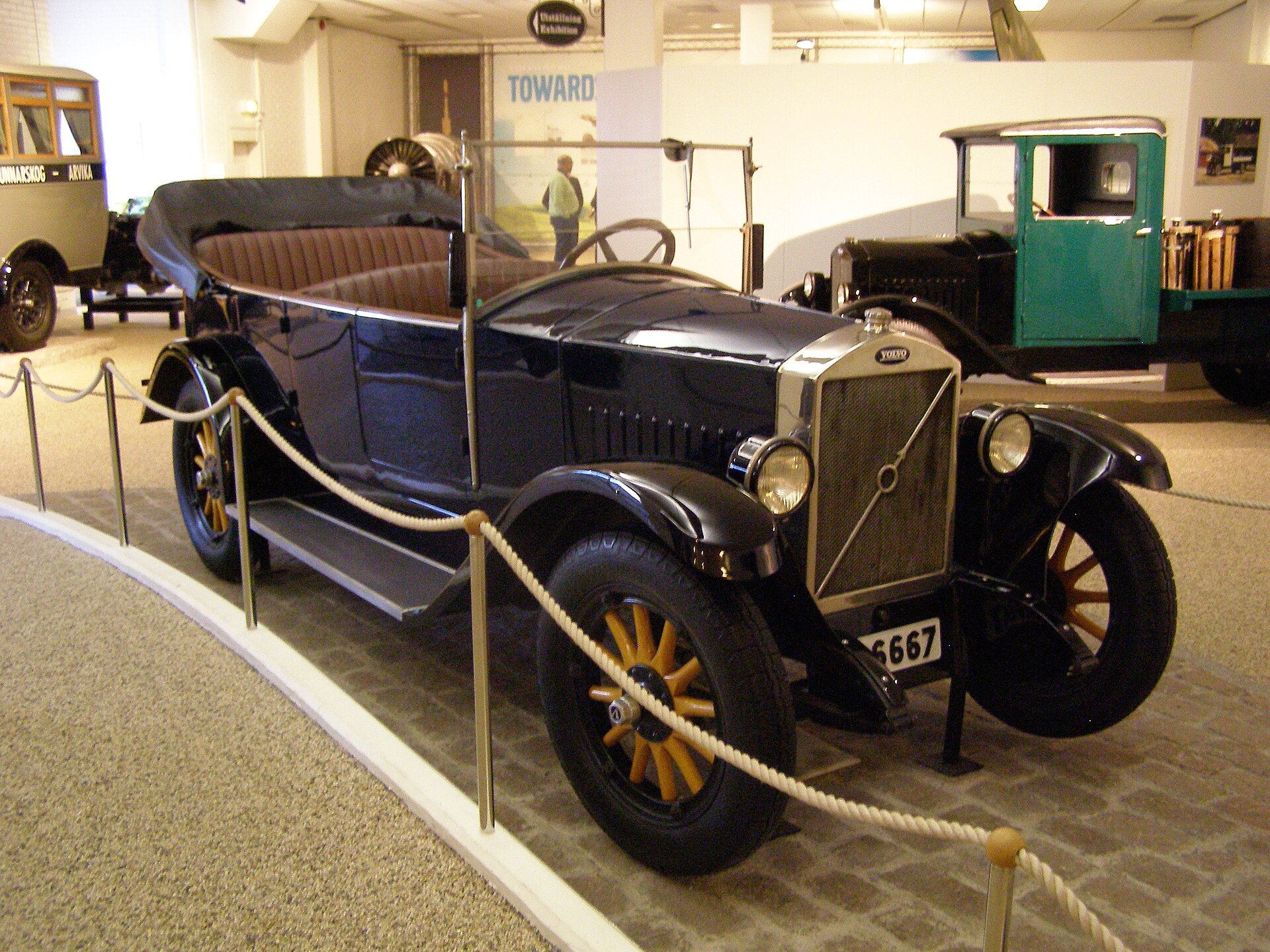
On April 14, 1927, sales manager Hilmer Johansson drove the first production Volvo out of the factory on Hisingen in Gothenburg. The car was an ÖV4, an open four-seat passenger car with an upright radiator, freestanding headlights, and a folded top behind the cockpit. What rolled across the factory threshold was no technical revolution. What made it remarkable was that the idea of a Swedish-built car had now become a product to sell.
The 1927 Volvo ÖV4 is the starting point for this story. The designation stood for an open car with a four-cylinder engine. The name “Jakob” is often used for the model, but originally referred to one of the prototypes. It is a small distinction worth preserving when presenting the car as the first Volvo.
Two men and a network of workshops
Assar Gabrielsson came from SKF and had the business acumen. Gustaf Larson was the engineer who could turn those ambitions into drawings, material choices, and manufacturing work. During the mid-1920s, they pushed ahead with prototype cars and sought a path to series production. SKF’s support proved decisive, and manufacturing was established in Lundby on Hisingen.
The idea was not that every part had to be invented or manufactured behind the same factory gates. Volvo was built around a network of suppliers and workshops. The engines came from Pentaverken in Skövde, while components and craftwork from several sources came together during assembly in Gothenburg. Behind the founders’ familiar names were people who fitted bearings, straightened sheet metal, and checked that the parts actually worked together.
The Swedish market already had plenty of imported cars. A new manufacturer therefore needed to offer more than national pride: the car had to withstand the roads of the day and be maintainable. The ÖV4 was the beginning, but its open body limited its usefulness for much of the year. The enclosed PV4 joined the lineup as early as 1927.
Proven technology beneath tall fenders
The ÖV4 was built on a separate frame. Its body combined a wooden framework with sheet metal, a construction method in which woodworking and sheet-metal work were as integral as mechanical assembly. The styling is associated with artist Helmer MasOlle, who was also involved in the early test cars.
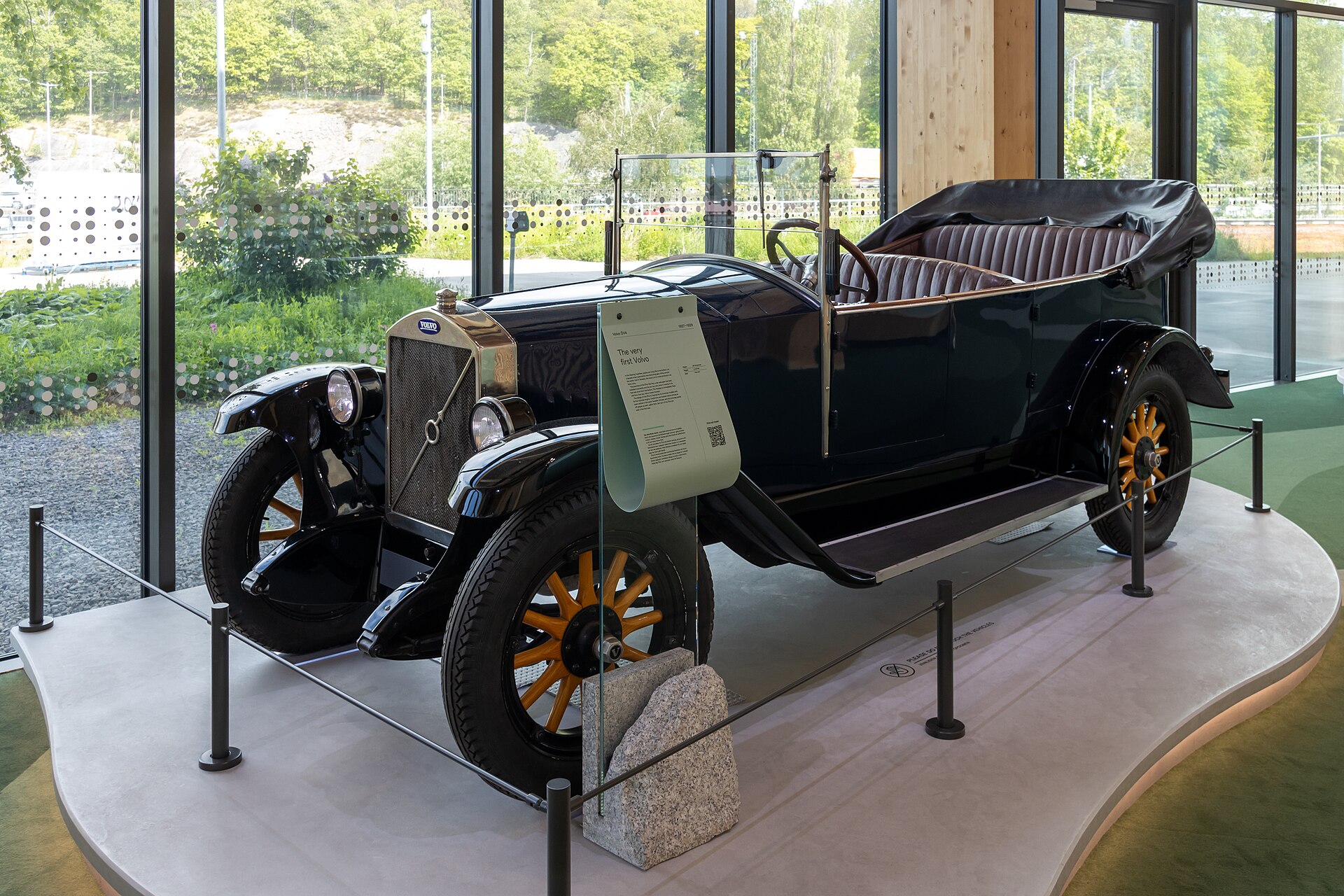
Its appearance belongs unmistakably to the 1920s: a narrow body, a high step up into the cabin, running boards between the fenders, and large wheels. The upright windshield and folding top provided basic weather protection, not the shelter a later Volvo owner would take for granted. The cabin’s simplicity speaks of a time when a car journey required both dressing for the weather and preparation.
Under the hood sat a low-revving four-cylinder flathead engine. Power went through a manual transmission to the rear wheels. Solid axles and leaf springs were familiar solutions to repair shops. There was no reason to make the design any more unfamiliar than necessary to those who would keep the car running.
The brakes acted on the rear wheels, an important reminder of the car’s age. The ÖV4 should not be judged as a modern car in old-fashioned clothing. Distances, route choices, and anticipation must be adapted to its design, particularly when driving in today’s traffic.
A car for a different everyday life
We have not test-driven the ÖV4. Its intended use nevertheless says much about its character: it was a passenger car for country roads and city streets, not a competition machine. The engine’s modest output and the chassis design belong to an automotive world in which the ability to get through and ease of repair carried considerable weight.
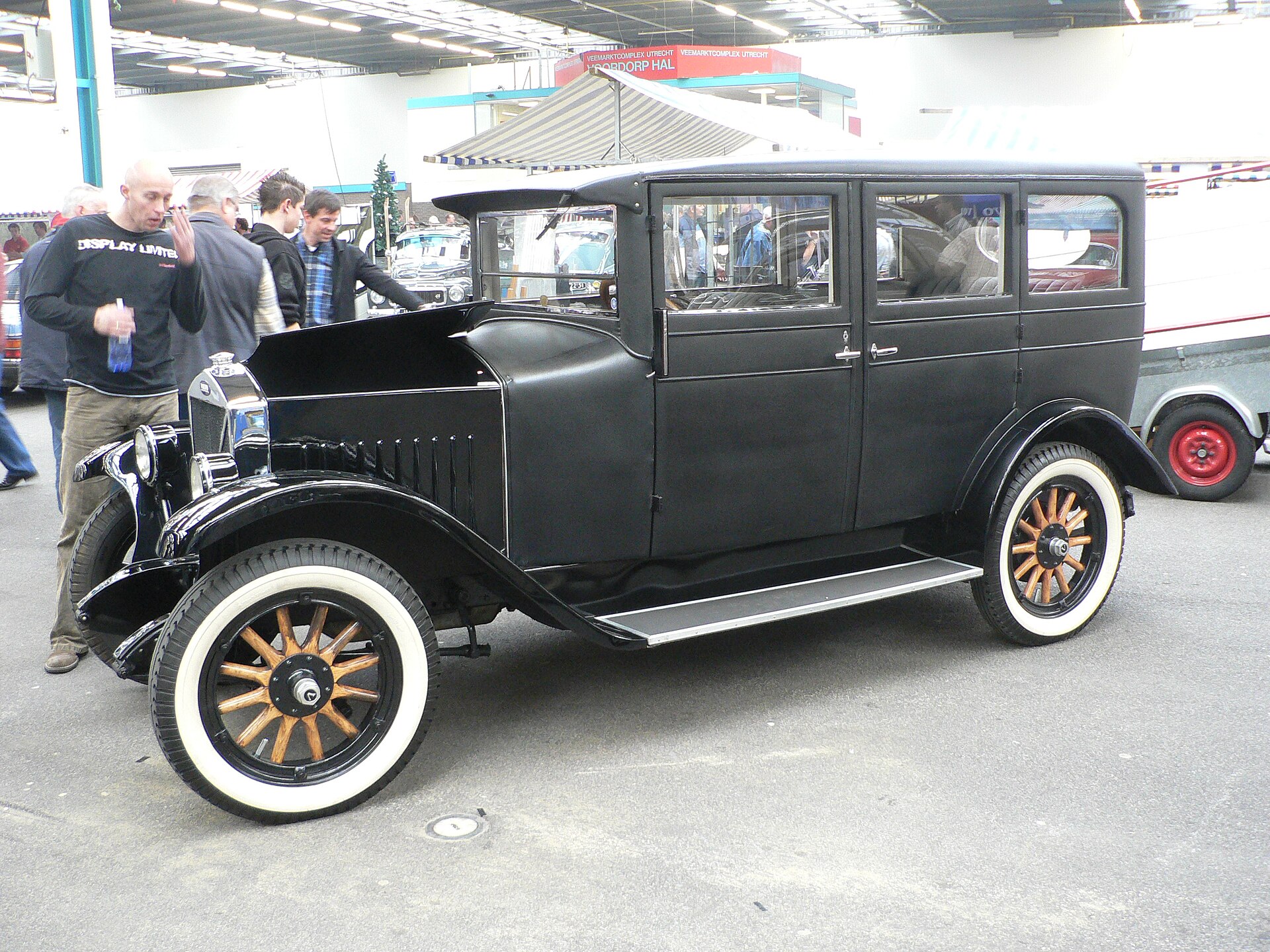
The introductory price in Sweden was 4 800 kronor in 1927. That hardly made it an everyday household purchase. Car ownership also involved regular checks, lubrication, and adjustments that today’s drivers usually leave to a repair shop. For the early owner, contact with the car’s mechanical workings was considerably more direct.
Preserving history requires care
Production ended at 275 cars over the years 1927–1929. The ÖV4 was therefore no volume success, but its historical significance outweighs its production total. It demonstrated that the organization, suppliers, and assembly operation could form a functioning automaker.
Surviving ÖV4s can be found in museum collections, including Volvo’s. An exact number of surviving cars, however, should not be given without an up-to-date inventory. Nor should a highly polished museum example automatically be described as an untouched original.
For each individual car, the chassis number, ownership history, and restoration records need to be examined. The wooden framework, body panels, instruments, and mechanical parts may have been repaired or replaced over nearly a century. That is precisely where much of the fascination lies: the ÖV4 is both an industrial milestone and a hand-built object whose details still bear traces of the workshops behind the first Volvo.
Sources
- Volvo Cars, Volvo ÖV4
- Volvo Group, Our history
- Björn-Eric Lindh, Volvo 1927–1977 (1977)
Ask questions about “Volvo ÖV4 – the open-top beginning of a Swedish automotive story”. Answers are based on the magazine's own articles.