Mercedes-Benz 600 – the Limousine for Kings and Dictators
The W100 combined lavish comfort with hydraulics that still demand respect.
When the Mercedes-Benz 600 was unveiled in 1963, the ambition went beyond building a comfortable prestige car. It was meant to show what engineering could achieve without the usual constraints. The result became a favorite of royalty, pop stars, and dictators—and one of the automotive world's most demanding classics.
 By Lars EkströmEditor-in-chief · Vintage cars and automotive history
Translated from Swedish with the help of AI.
At the Frankfurt auto show in the fall of 1963, a Mercedes stood on display that made even the brand's regular luxury cars seem restrained. It was called, quite simply, the 600. Behind that designation was a new prestige car, developed for people who often traveled in the back seat and rarely needed to ask what the journey cost.
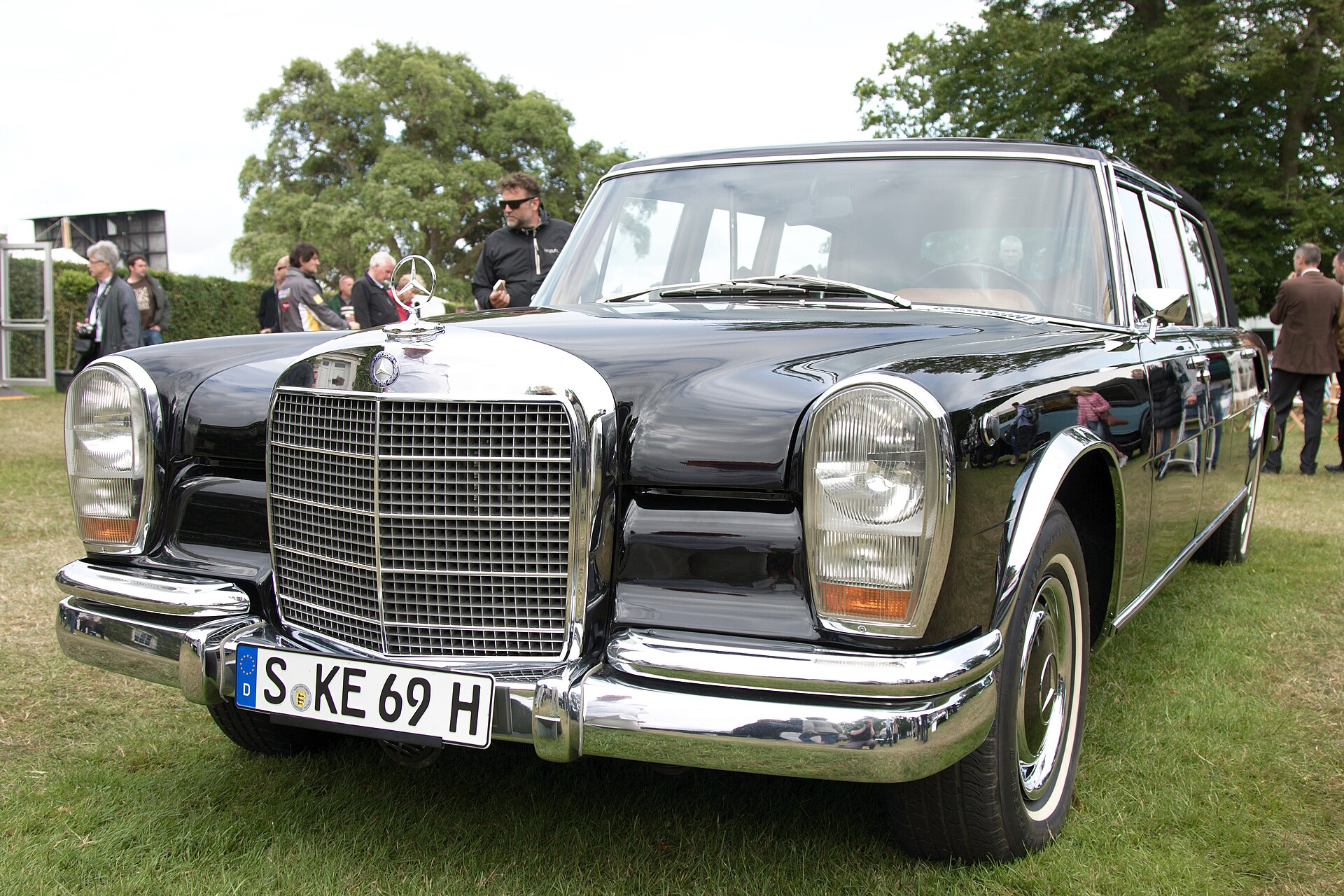
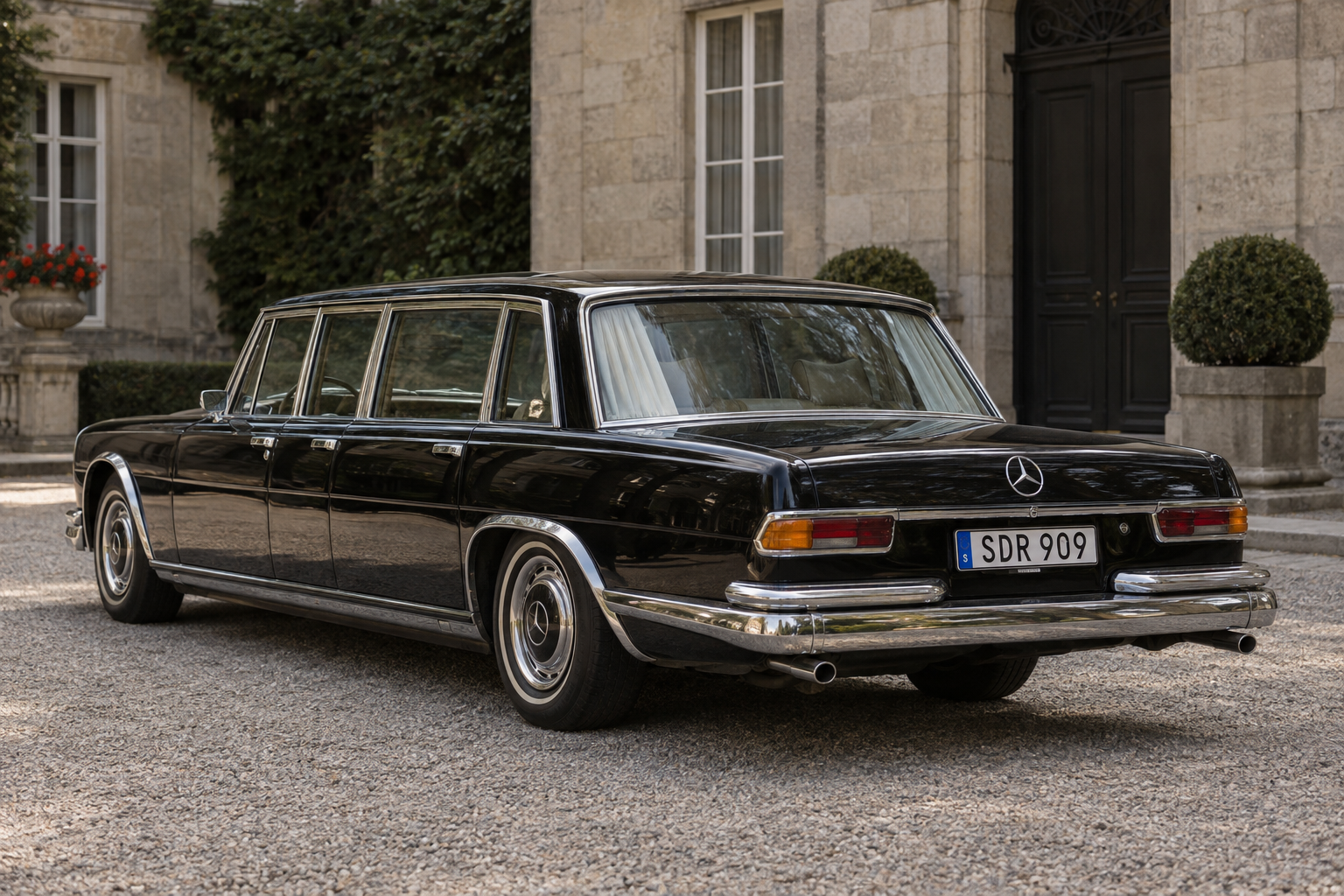
The Mercedes-Benz 600, internally designated W100, was introduced in 1963 and produced from 1964 to 1981. This article covers the model range, particularly the standard limousine and the extended Pullman, rather than a single surviving example. The bodies were built by Mercedes-Benz itself. No independent coachbuilder was needed to turn the car into a drawing room on wheels.
A Mercedes Above All Others
Development took place under the supervision of passenger-car chief Fritz Nallinger, with engineers such as Rudolf Uhlenhaut and Karl Wilfert playing central roles. The brief was not simply to compete with Rolls-Royce. Mercedes wanted to combine the dignity of a prestige car with sophisticated handling and performance that made its size less of a burden.
Under the hood was the brand's new M100, a large V8 with mechanical fuel injection. It had to both propel the car and power its extensive auxiliary systems. Air suspension and disc brakes all around were part of the design; this was no old-fashioned parade car in modern dress.
The standard limousine was already just over five and a half meters long. The Pullman stretched to more than six meters and was offered with four or six doors. It provided room for more passengers and a clearer separation between the chauffeur's workplace and the passenger compartment. The Landaulet version, with an opening roof over the rear section, made the car particularly useful for official appearances.
Only 2 677 examples were built in total. That low number says something about both the clientele and the work behind each car: this was manufacturing in which craftsmanship, customization, and meticulous assembly were allowed to take time.
Comfort Under Hydraulic Pressure
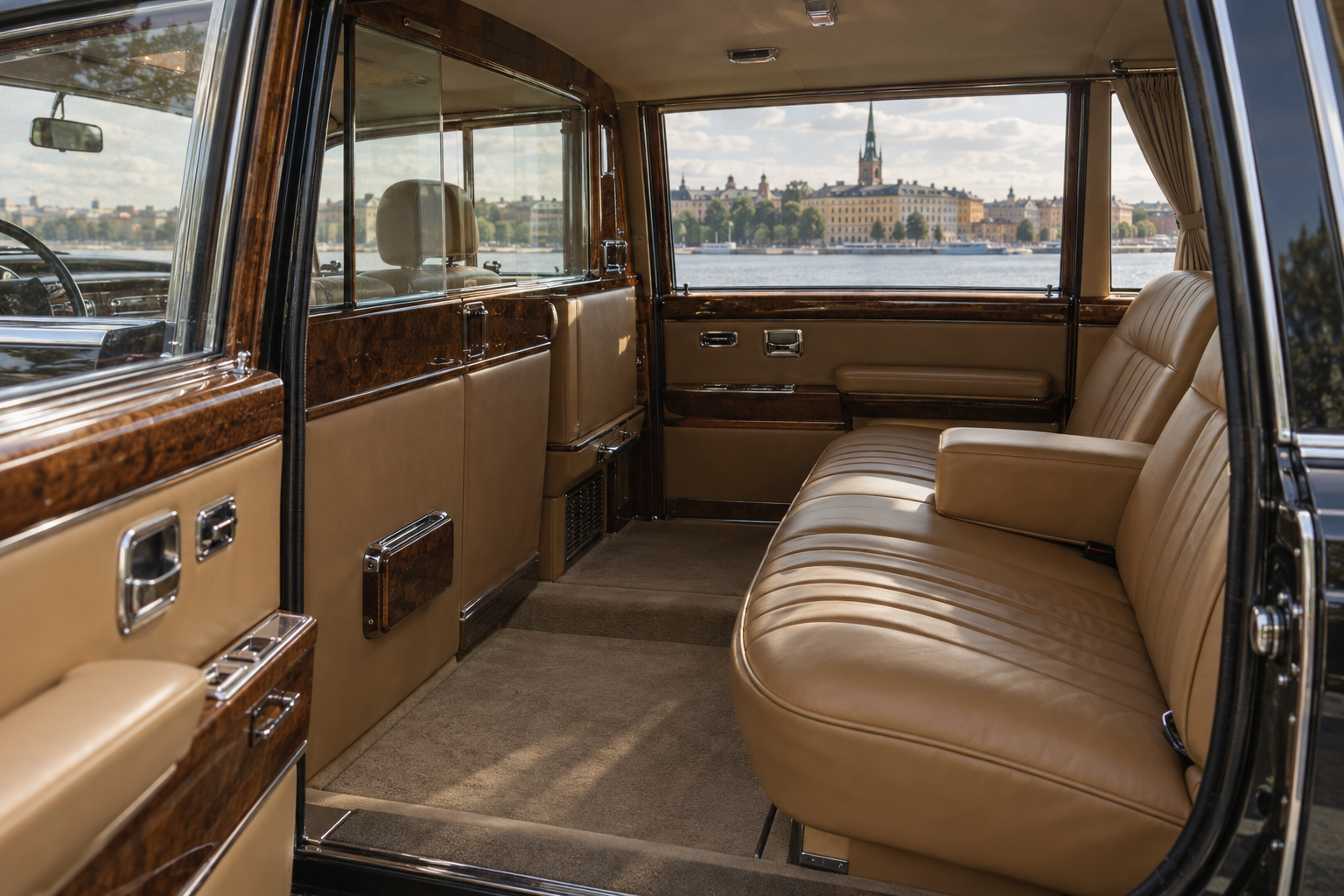
The truly distinctive engineering lay hidden beneath wood paneling, upholstery, and sheet metal. A central high-pressure system operated the power windows, seat adjustments, and power-assisted door closing, among other things. Depending on the equipment specified, it also controlled features such as the glass partition and trunk lid. Operating pressure was around 150 bar.
The hydraulics delivered powerful, smooth movements without each function needing its own electric motor. But this was not the same system as the air suspension—a distinction easily lost when listing all the car's features.
For passengers at the time, the technology was intended to fade from awareness. One control should be enough; the machinery did the rest. For today's owners, the relationship is often reversed. Hoses, seals, valves, and the correct hydraulic fluid become central concerns. A small leak can require major work when components are buried deep inside doors or interior trim.
The cabin combined glossy wood, carefully padded seats, and an almost architectural sense of order. Upholstery and equipment varied with each order. Restoring a 600 is therefore about more than a beautiful paint job: correct materials, preserved fittings, and functioning original systems carry considerable weight.
Same Back Seat, Different Worlds
Elvis Presley and John Lennon were among the famous owners. At the same time, the model was used by authoritarian leaders such as Josip Broz Tito and Nicolae Ceaușescu. Pope Paul VI received a specially built 600 Landaulet in 1965. Few car models have served such different public roles.
The car gave its passengers privacy, space, and immediately recognizable status. That also explains its politically tainted legacy: it was an effective symbol of power, regardless of who sat behind the curtains.
The editorial team has not test-driven the car. Its intended use, however, is clear: long chauffeur-driven journeys, official transportation, and ceremonial duties. The shorter limousine could also suit an owner who wanted to drive. The Pullman placed greater priority on life behind the partition.
Expensive Then—Demanding Now
At its introduction, the standard limousine's German base price was quoted at 56 500 D-mark. Special requests and a longer body made the purchase even more expensive. This was a car for the very top of the market, not simply the next step up from a well-equipped Mercedes.
As a rough editorial estimate, not a verified price quotation, a well-preserved standard example today could be worth around one to two million kronor. A Pullman can be valued at several million. Condition, history, originality, and documented mechanical restoration can shift the value substantially; any claimed celebrity provenance must be substantiated.
For a buyer, a specialist inspection matters more than a gleaming grille. Rust, air suspension, hydraulics, and missing interior details can make a cheap example the most expensive of all. A well-cared-for 600, on the other hand, preserves something unusual: the feel of an era when a luxury car could also be an uncompromising engineering project.
Sources
- Mercedes-Benz Classic, Mercedes-Benz Public Archive – modellserie 600 (W 100)
- Mercedes-Benz Museum, Mercedes-Benz 600
- James Taylor, Mercedes-Benz 600: The Grand Mercedes (2016)
Ask questions about “Mercedes-Benz 600 – the Limousine for Kings and Dictators”. Answers are based on the magazine's own articles.