Hyundai N Vision 74: retro styling hides a rolling laboratory
Pony Coupé heritage, a battery, and a fuel cell in one experiment
The Hyundai N Vision 74 looks like a lost supercar from the 1970s, but it was built to test an advanced electric powertrain. Behind the Giugiaro-inspired lines is an actual development vehicle—not a promise of a finished production car.
 By Amir HaddadTechnology editor · Future cars and modern cars
Translated from Swedish with the help of AI.
A car of the future with an old family resemblance
The Hyundai N Vision 74, unveiled in 2022, is a drivable concept and development vehicle from the brand’s N performance division. Hyundai calls this type of vehicle a rolling laboratory: a car built to explore technology rather than preview a finished model ahead of its launch. That is an important distinction when the spectacular bodywork can so easily steal all the attention.
The name points back to the 1974 Hyundai Pony Coupé Concept, designed by Giorgetto Giugiaro at Italdesign. The original concept car had a wedge shape, crisp surfaces, and a distinctive geometric profile. It never became the production sports car its shape suggested. The N Vision 74 borrows its design language, but is not a technical continuation of the original.
Giugiaro, then, was responsible for the inspiration, not automatically for the 2022 concept. The family resemblance is a deliberate design choice by Hyundai: giving an experimental sports car a historical identity. For a brand whose N operation is considerably younger than many European performance divisions, that connection is also a way to tell a longer story.
Retrofuturism with a practical mission
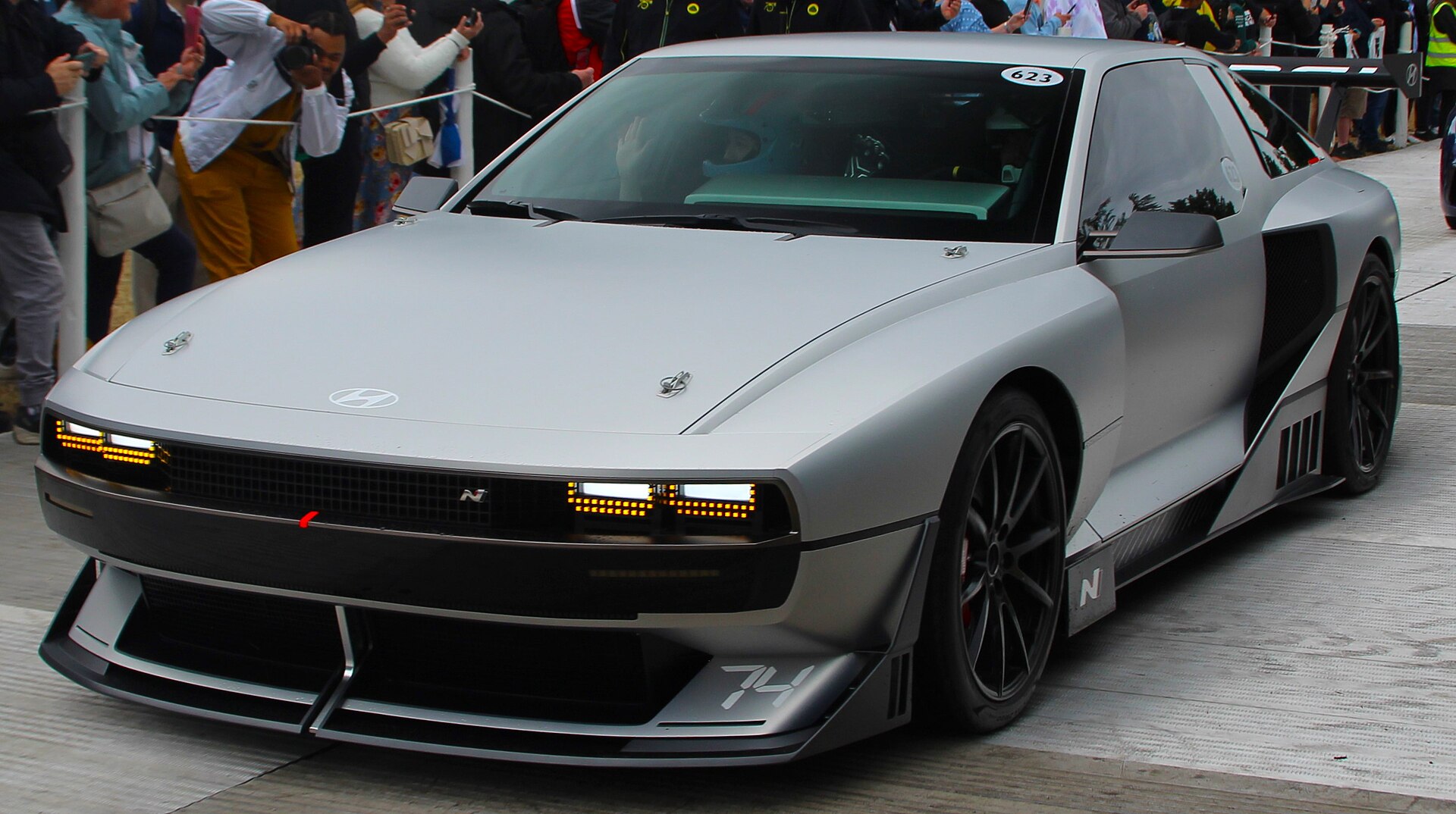
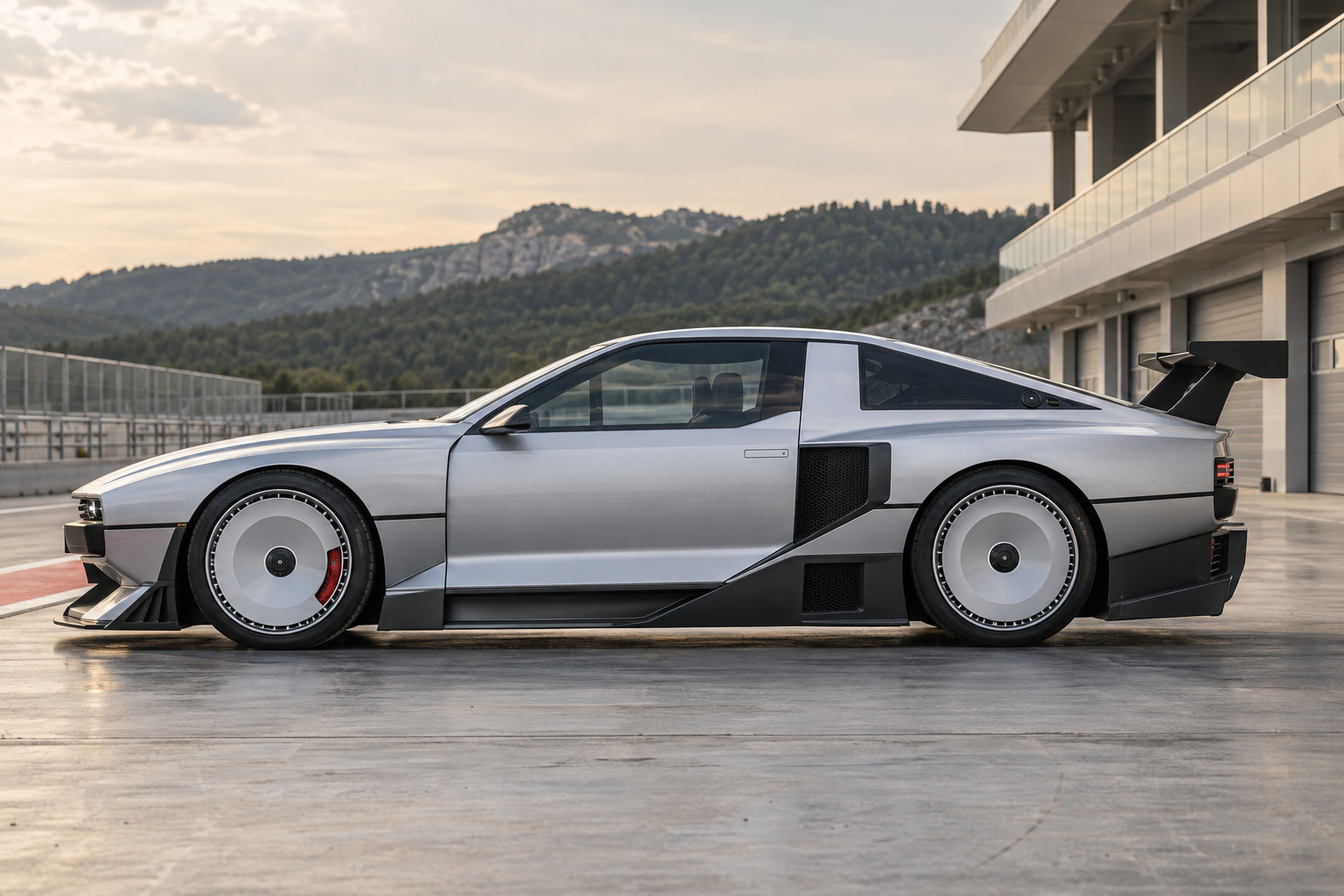
The low nose, straight body lines, and pronounced roof profile hark back to the concept cars of the 1970s. At the same time, pixel-inspired lights, heavily flared fenders, and a large rear wing make it clear that the N Vision 74 is not trying to pass as a restored classic. It is a modern interpretation, with proportions and details shaped by the sports car’s intended use.
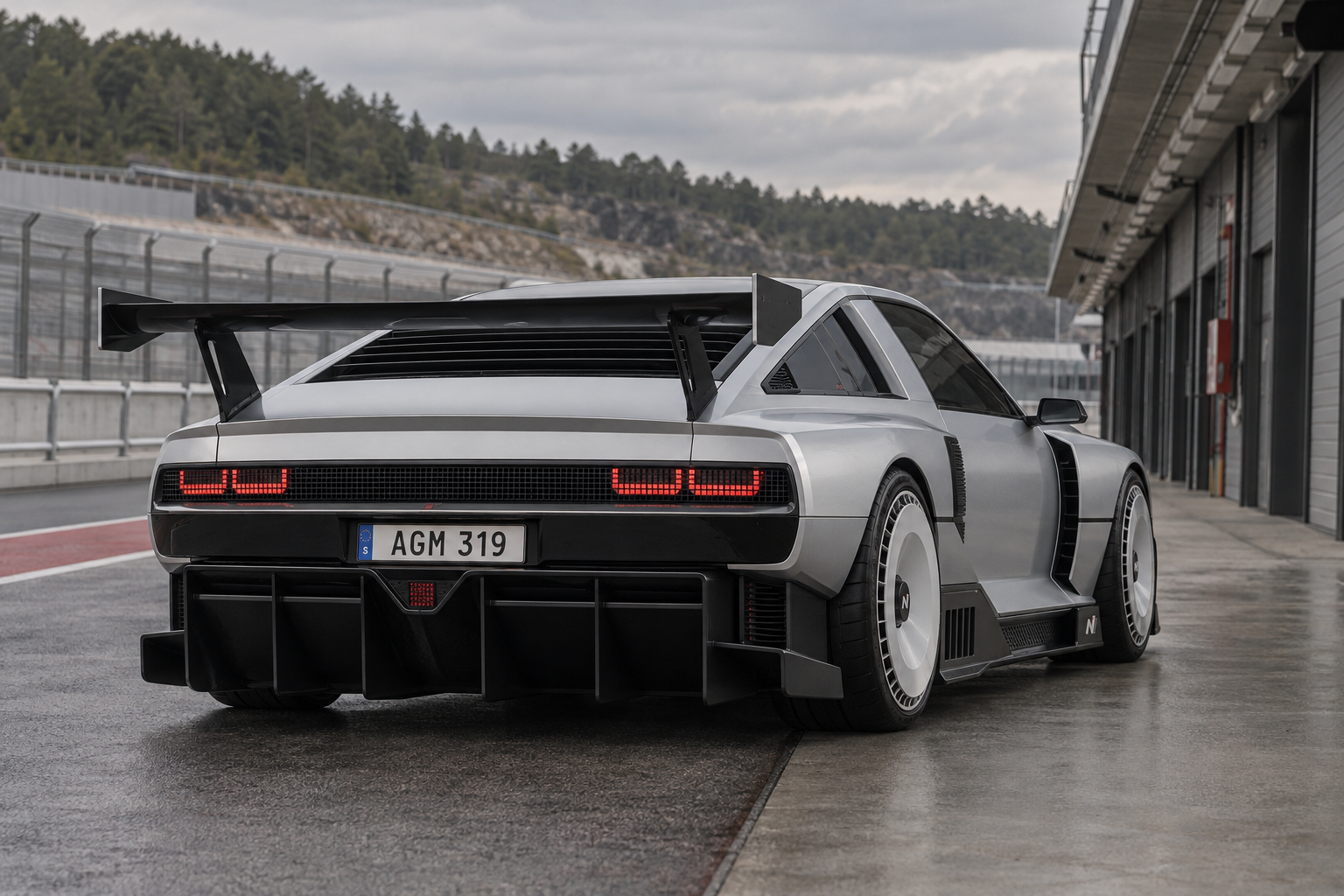
Those openings are particularly important. The fuel-cell system, battery, and electric motors all have to operate under heavy loads here. Heat must be carried away from multiple components with different needs. The aggressive bodywork is therefore tied to a real engineering problem, even if a concept also has to serve as an attention grabber.
The cabin follows the same mix of old and new. Hyundai describes a cockpit that combines digital information with physical controls. The aim is a distinctly driver-focused workspace. Materials, detailing, and equipment, however, should not be read as a specification for a future customer car; this is still an experimental platform.
How the battery and fuel cell work together
The N Vision 74 is electrically driven, but has two energy stores: a rechargeable battery and hydrogen in pressurized tanks. The hydrogen is not burned in a piston engine. Instead, a fuel cell converts hydrogen and oxygen into electrical energy that can be used in the car’s electrical system. Two electric motors at the rear axle provide propulsion.
The battery is much more than a small auxiliary energy store. Under hard acceleration, the motors can demand far more power than the fuel cell alone delivers. The battery then meets that power demand, while the fuel cell can supply energy over a longer period. The system’s controls must coordinate these flows according to load, temperature, and the battery’s state of charge.
That also explains why the components’ power figures should not be added together as if they were separate motors driving the wheels. The fuel cell produces electricity; the electric motors convert that electricity into motion. The battery acts as a power buffer between the energy supply and the rapid changes in demand the driver requests with the accelerator pedal.
Two rear motors also make it possible to control the distribution of drive torque between the rear wheels. By varying the power, the system can influence how the car rotates through a corner. It is a tool for both traction and balance, but the result depends on control software, tires, and chassis setup. Our editorial team has not driven the car and therefore draws no conclusions of its own about the experience behind the wheel.
Confirmed technology is not a promise you can buy it
What is confirmed is that Hyundai unveiled a working development vehicle with this powertrain architecture in 2022. The power, top speed, and range figures come from the manufacturer. The range figure in particular should be treated with caution: it is not the same as an independently verified result for a production car under a clearly disclosed standardized test.
The development goal is to explore technology for future performance cars. That is a long way from a production decision with finalized engineering, a delivery date, and a price. The original concept documentation provided neither a price for Swedish customers nor an opportunity to order the car. Reports of a possible successor must therefore be assessed separately, not used as evidence that this particular concept will enter production.
The significance of the N Vision 74 lies in the combination: a recognizable design heritage and a tangible attempt to unite sustained energy delivery with high instantaneous power. The styling sparks interest. The interplay between the systems makes the car technically intriguing.
Sources
- Hyundai N, N Vision 74 (2022)
- Hyundai Motor Company, Hyundai Motor’s N Brand Unveils Two Rolling Lab Concepts, Signaling High-Performance Vision for Electrification (2022)
- Italdesign, Pony Coupé (1974)
Ask questions about “Hyundai N Vision 74: retro styling hides a rolling laboratory”. Answers are based on the magazine's own articles.