Ford Model T – the car that put the world on wheels
With simple engineering and a new kind of factory, the Model T became a car for the masses.
When the Ford Model T was introduced in 1908, a car was still an unattainable luxury for many. Nineteen years and just over 15 million cars later, the equation had changed. The secret lay as much on the factory floor as under the hood.
 By Lars EkströmEditor-in-chief · Vintage cars and automotive history
Translated from Swedish with the help of AI.
In 1913, at Ford's factory in Highland Park outside Detroit, the work began coming to the worker. Chassis were pulled through the assembly process, and each man performed a specific task. For those bolting the parts together, the working day changed. For car buyers, the result would be an ever-lower price.
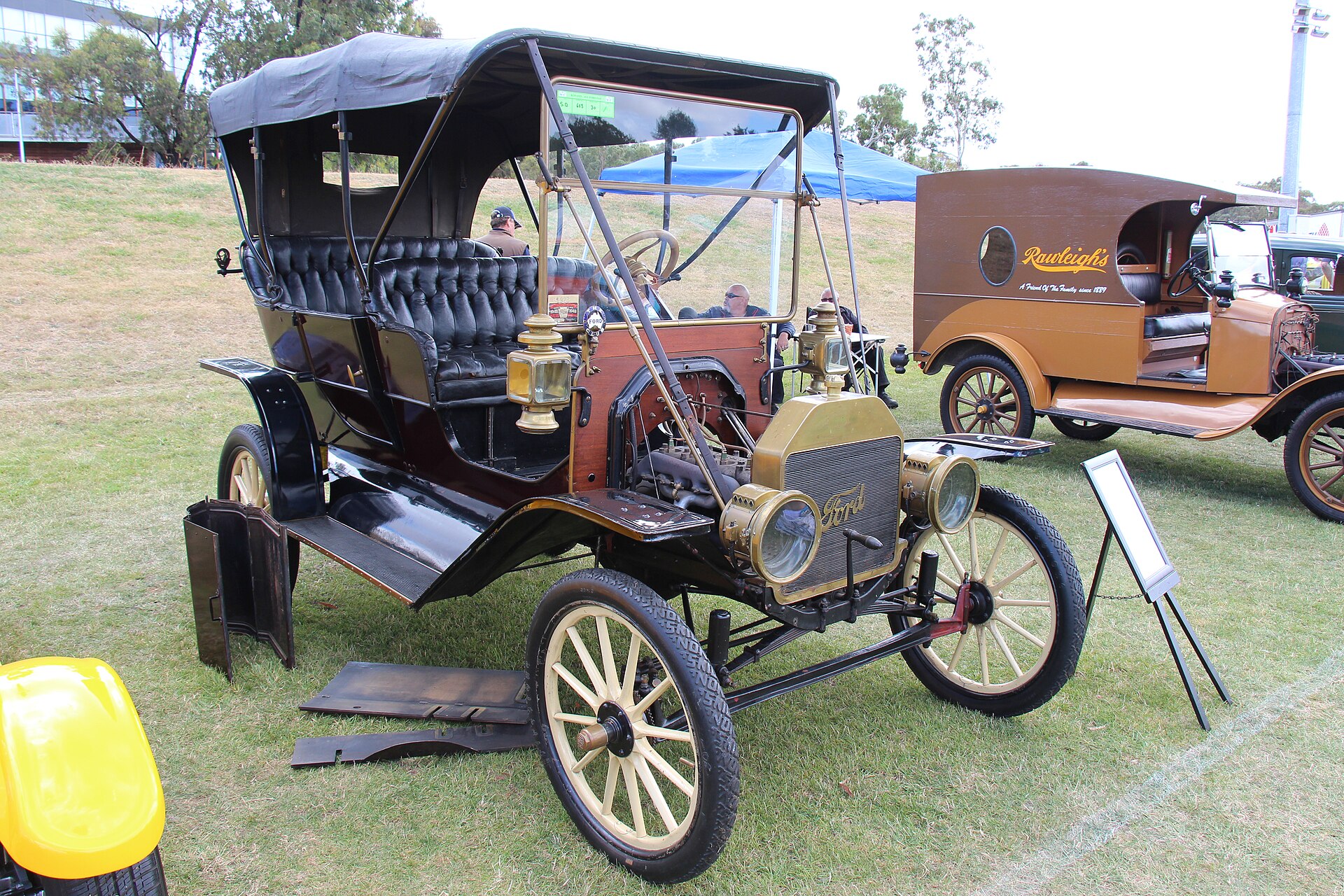
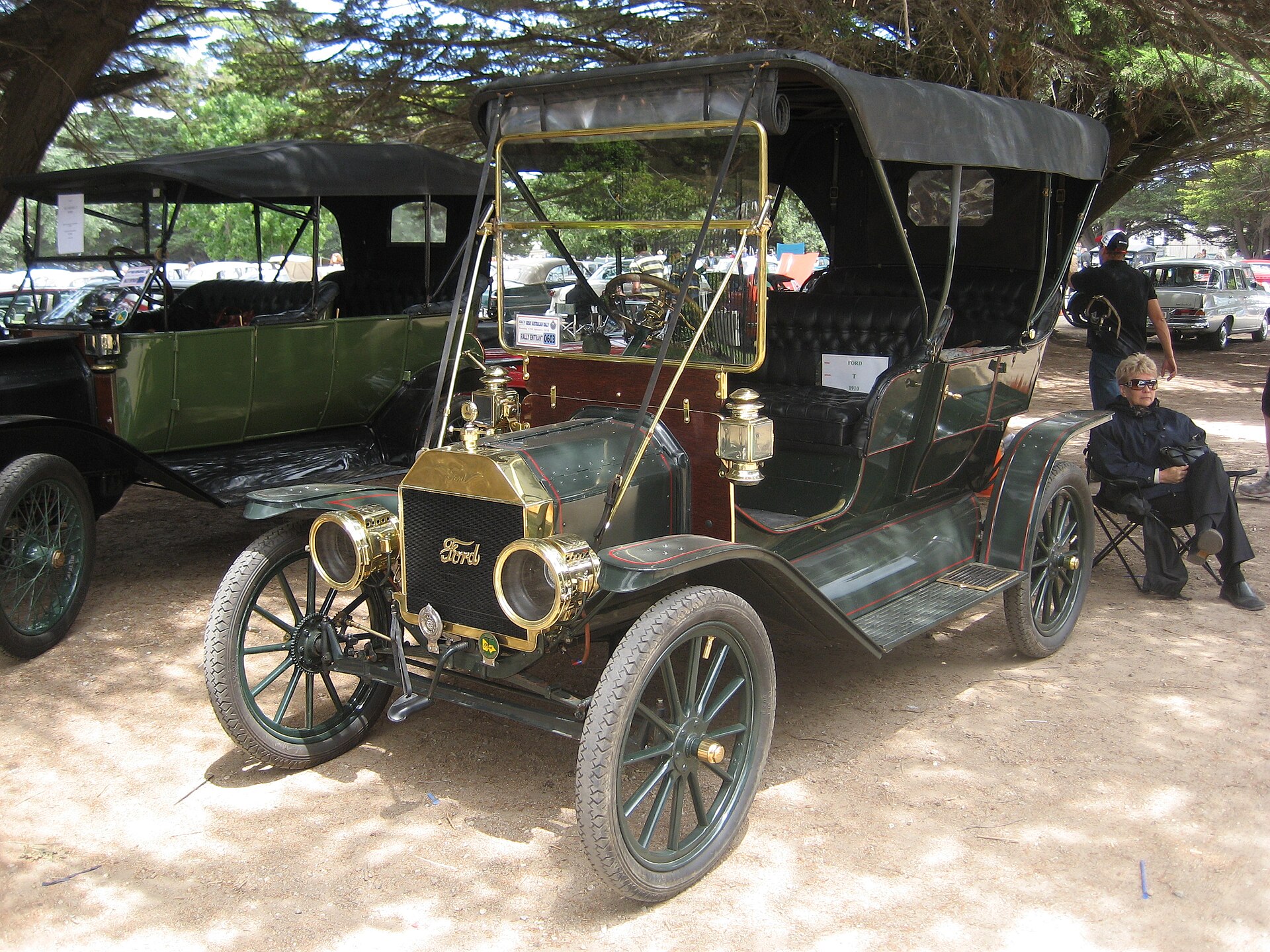
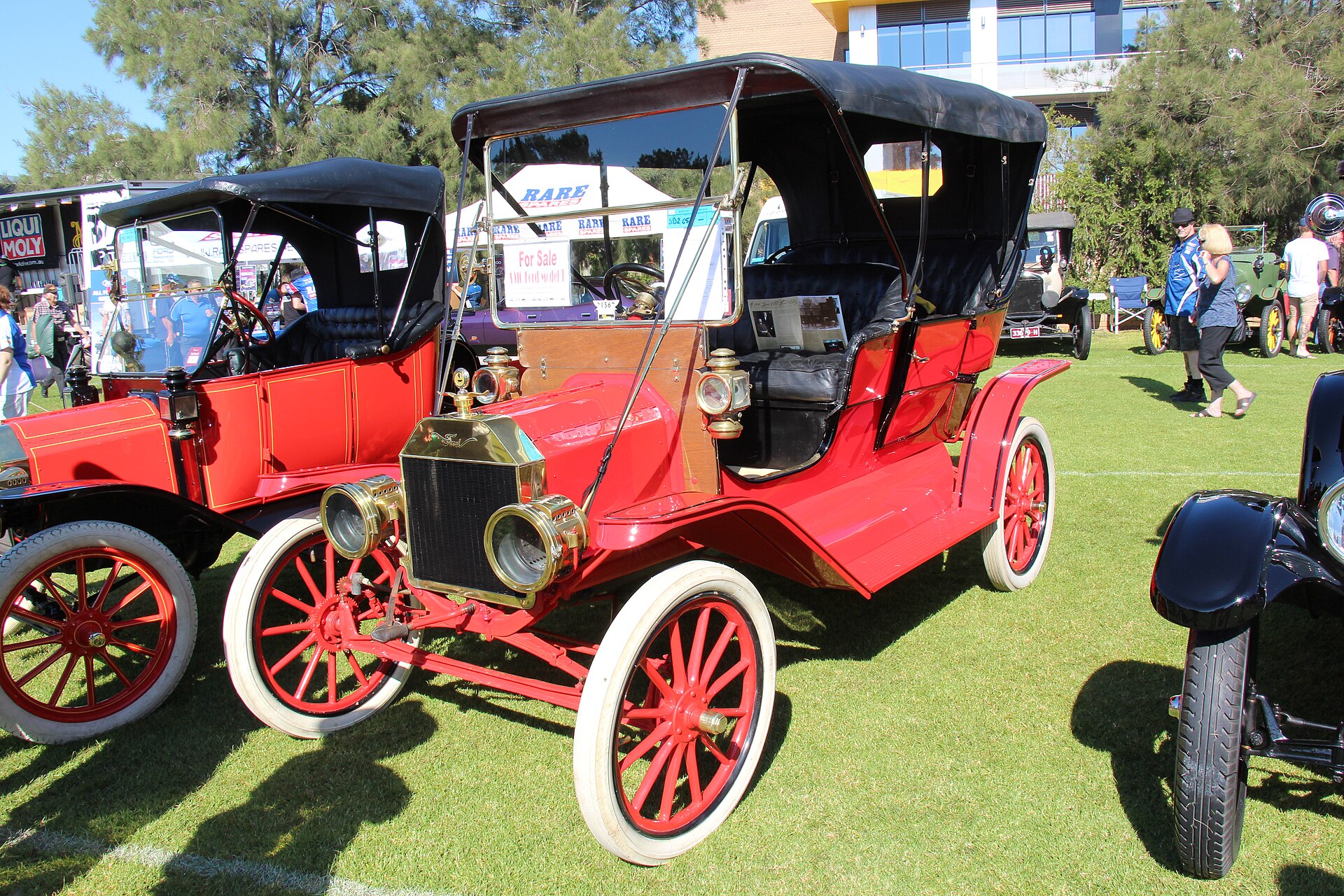
The car was the Ford Model T, built from 1908–1927, with the early open Touring version serving as our starting point here. It was built by Ford Motor Company and, over time, offered in several body styles for families, working professionals, and businesses. No single surviving example or chassis number is the focus: this is the story of the model that made car ownership possible for a much wider audience.
A car for bad roads
Henry Ford wanted to build a useful car rather than a grand one. Important colleagues also contributed to the design, including Childe Harold Wills, Joseph Galamb, and Eugene Farkas. Their work produced a light, relatively uncomplicated car with high ground clearance, suited to an America where roads outside cities often consisted of dirt, ruts, and mud.
Vanadium steel was used in highly stressed components to combine strength with low weight. The four-cylinder engine was cast with a single cylinder block, an efficient solution at a time when separate cylinders were still in use. Fuel was gravity-fed, and the engine's magneto supplied power to the ignition system.
Simplicity did not mean everything was primitive. The design was carefully thought out for its purpose: the car had to withstand everyday work and be serviceable far from a large dealership shop. Spare parts, repair expertise, and accessories eventually became an entire world surrounding the Model T.
The factory that drove down the price
Ford did not invent the moving assembly line out of thin air. The company brought together and developed existing ideas about division of labor, interchangeable parts, and material flow. During 1913, moving assembly was introduced in stages at Highland Park, first for components and then for chassis.
The often-quoted reduction from just over twelve hours to around an hour and a half refers to chassis assembly, not the entire job of building the car. The distinction matters. Foundries, machining, and body manufacturing still required extensive work.
The Touring version's American introductory price was 850 dollars. By the mid-1920s, some Model T versions could be bought for under 300 dollars. This is not a comparison between identically equipped cars, but the direction of prices is clear. High volumes and continuous improvements in efficiency made the car more accessible.
For workers, however, the system also meant more repetition and tighter control over the pace of work. The rise of mass motoring thus had a buyer's story as well as a factory worker's story. When production ended in 1927, more than 15 million Model Ts had been built. In Sweden, too, the Model T became a familiar part of everyday life in the early days of motoring.
Three pedals – but not like today's
Anyone encountering a Model T for the first time should forget today's pedal layout. The planetary transmission provided two forward speeds and reverse, but was operated through bands and a clutch rather than a conventional gearshift lever.
The left pedal controlled low gear, neutral, and high gear. Pressing it down selected low gear; in the middle position, the transmission was in neutral. With the hand lever in the driving position and the pedal released, high gear engaged. The center pedal operated reverse. The right pedal applied a brake in the transmission, rather than today's separate service brakes at every wheel.
Throttle and spark advance were managed with controls at the steering wheel. The hand lever acted on both the parking brake and the transmission controls. The driver therefore had to learn a specific operating sequence, and starting with a crank required the correct grip and ignition setting. Electric starting was offered later in the model's life.
This was a car for transportation rather than displays of speed. The tall, narrow body and transverse leaf-spring suspension belonged on the roads of the time. In today's traffic, the braking system demands anticipation and respect for the design's age.
Preserving an everyday hero
An early Touring has an open passenger compartment, a folding top, and an upright driving position. The brass radiator distinguishes the early cars from later versions. And no, not all Model Ts were black: other colors were offered both in the early years and toward the end of production.
For today's buyer, correct model-year specification, documented history, and mechanical condition matter more than shiny paint. Many examples have acquired parts from different production years. A careful restoration must therefore extend beyond the body: the wooden framework where fitted, wheels, steering, transmission bands, and brakes all need inspection.
There is no single correct collector price. Body style, originality, and restoration quality determine value. The Model T's great asset is instead its vibrant car culture: a vintage car that can still be understood, repaired, and used on its own terms.
Sources
- Bruce W. McCalley, Model T Ford: The Car That Changed the World (1994)
- Henry Ford och Samuel Crowther, My Life and Work (1922)
- Horace Lucian Arnold och Fay Leone Faurote, Ford Methods and the Ford Shops (1915)
Ask questions about “Ford Model T – the car that put the world on wheels”. Answers are based on the magazine's own articles.