Citroën SM: French Luxury with a Maserati Heart
A gran turismo that did almost everything its own way.
The Citroën SM combined Italian engine artistry with French engineering stubbornness. Beneath Robert Opron’s long bodywork, a Maserati V6 shared space with hydropneumatics and steering that wanted to return to center on its own. The result was one of the 1970s’ most distinctive luxury cars—and a classic that demands more than a handsome service booklet.
 By Henrik SjöbergReporter · Special cars and classic cars
Translated from Swedish with the help of AI.
When Citroën Gained Access to Maserati
The Citroën SM, built from 1970–1975, was a new kind of French luxury coupe: front-wheel drive, hydropneumatic suspension, and a Maserati V6. The focus here is the original European 2.7-liter version from 1970. It was a gran turismo for long journeys at high speed, not a family car with a sport package. Citroën wanted to combine the DS’s technical edge with performance and prestige in a higher class.
When Citroën took control of Maserati in 1968, the project gained access to an engine manufacturer that could deliver something more exotic than a further development of the DS’s four-cylinder engine. Maserati’s Giulio Alfieri was responsible for the compact V6. Its unusual 90-degree bank angle linked the design to Maserati’s V8 experience, but the engine was no simple workshop exercise in which two cylinders were merely sawed off.
Displacement was kept below 2.8 liters to avoid a higher French tax bracket. The engine sat well back in the front of the chassis, with the transmission ahead of it. This allowed Citroën to retain front-wheel drive while giving the car the low nose its shape required. The collaboration was therefore more than an Italian badge on the valve covers: it influenced the entire layout of the car.
Opron’s Long Lines
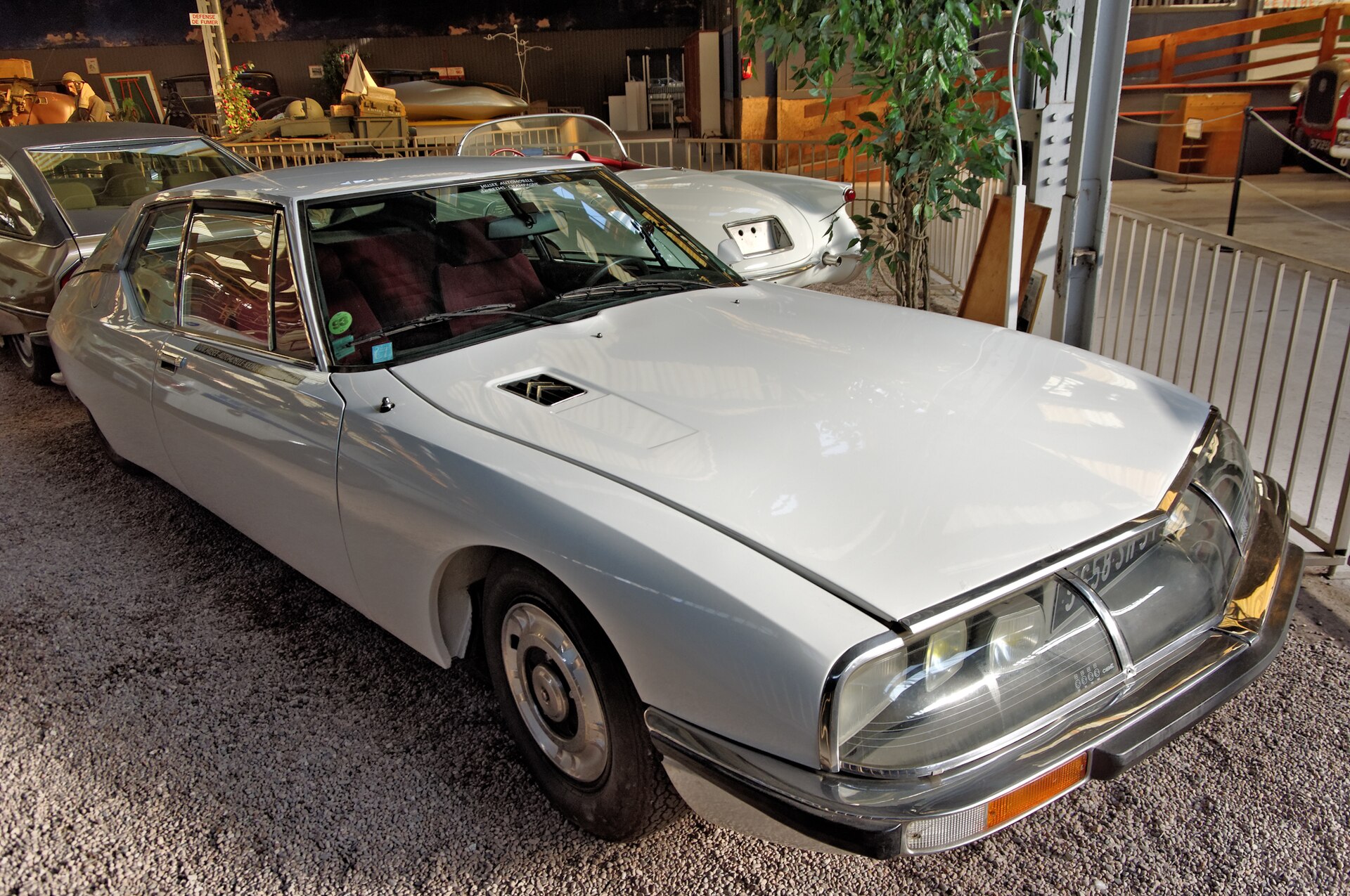
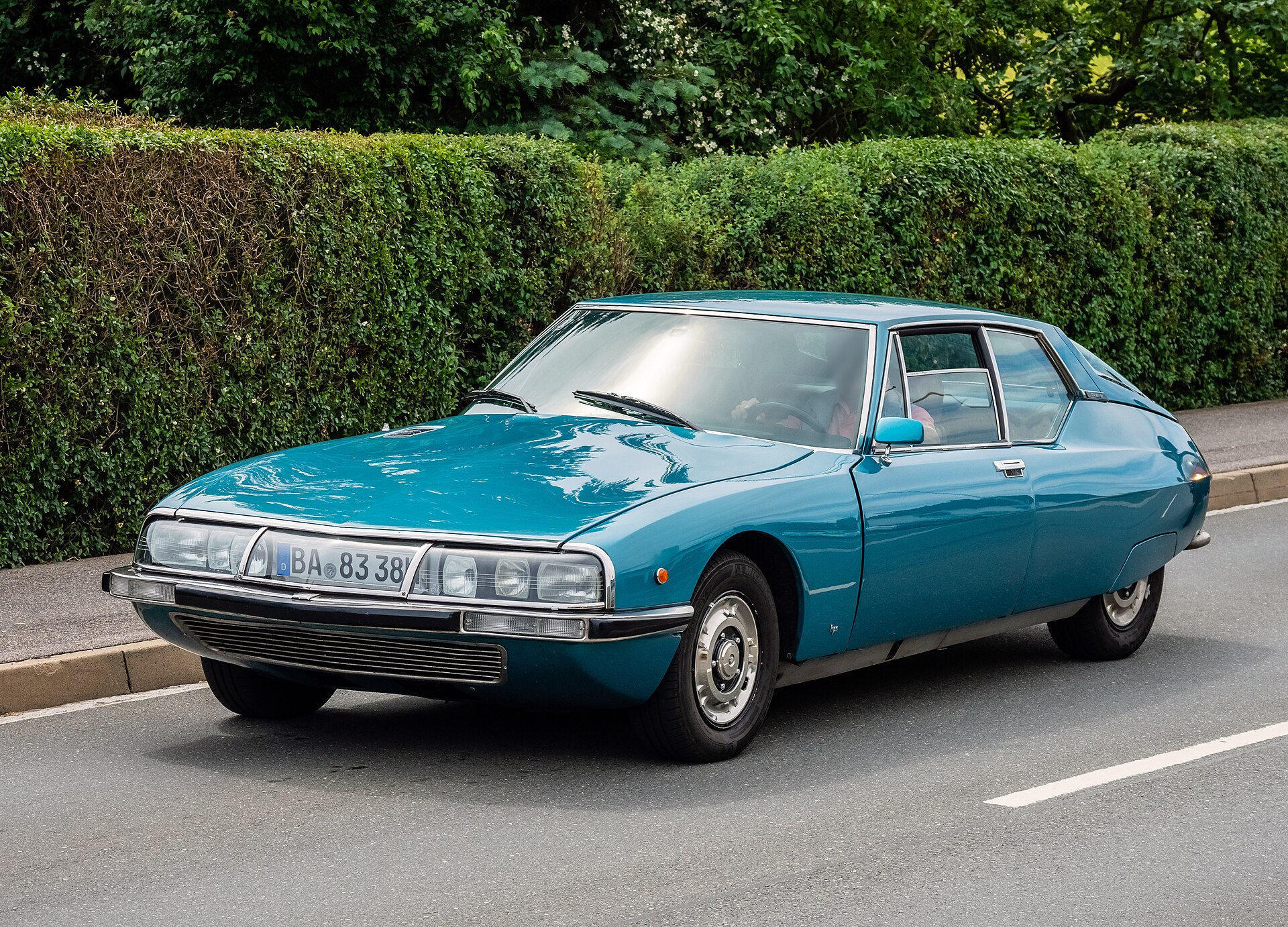
The SM debuted at the Geneva Motor Show in 1970. Under Robert Opron’s direction, it received a body that tapered toward the rear, with a long hood, expansive glass, and partially covered rear wheels. The shape was as much about aerodynamic drag as it was about making the car unmistakable. There was hardly much risk of confusing it with the neighbor’s Mercedes.
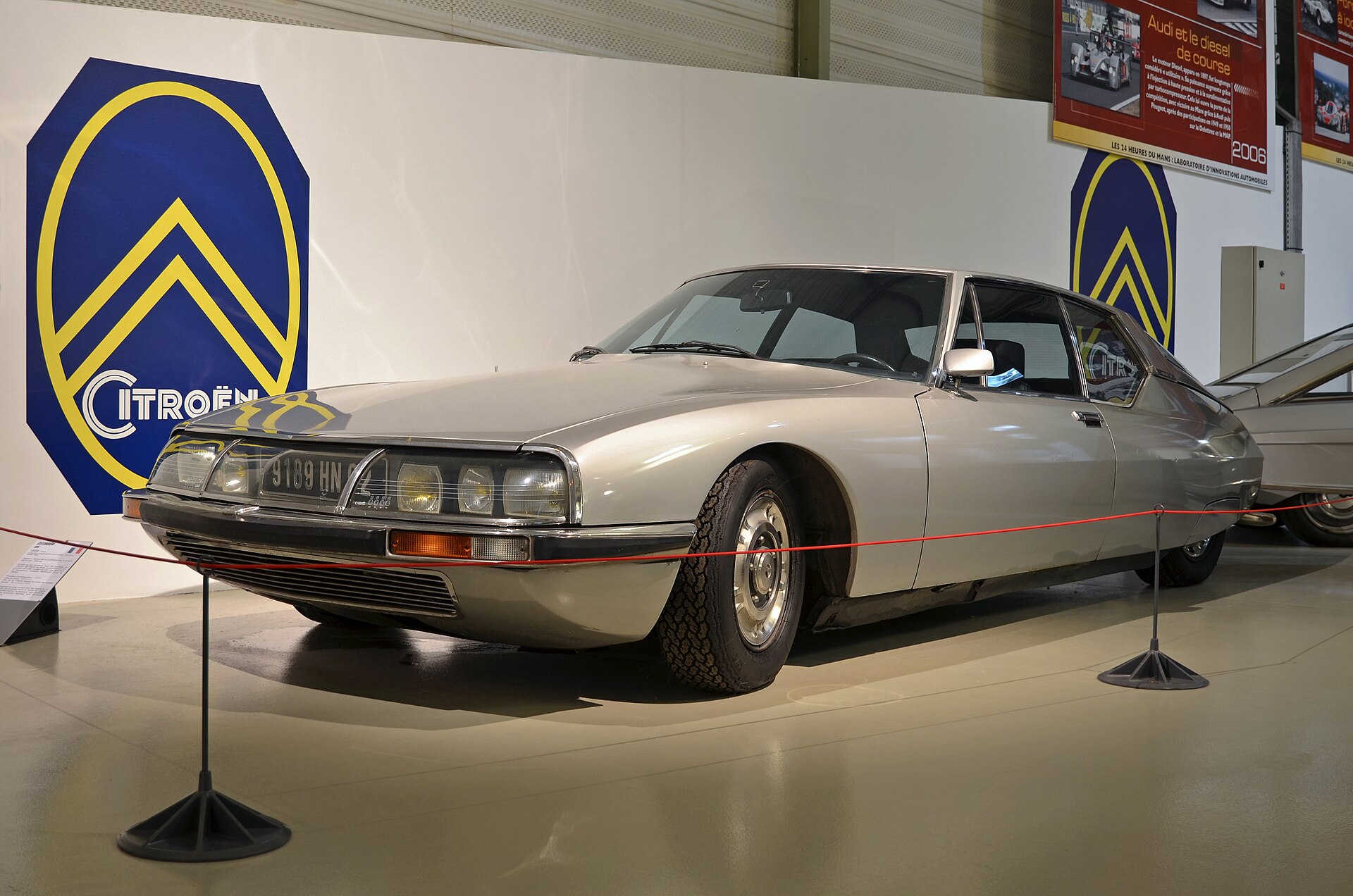
On European cars, six headlights sat behind a continuous glass panel; the innermost lights turned with the steering. American regulations required a different arrangement with four exposed, round headlights. The front end therefore offers a clue to the car’s origins, but imported and modified examples must be checked against their documentation.
Inside, the individuality continued with oval instruments and a single-spoke steering wheel. The seats were designed for long-distance travel, while the rear seat offered added practicality rather than limousine space. Leather was available, but is not in itself proof of original specification. Correct upholstery, instruments, controls, and market-specific details matter a great deal in a collector car.
The luxury was just as much beneath the bodywork. The hydropneumatic suspension maintained normal ride height even as the load changed. The engine supplied the drama; the suspension was there to ensure the journey did not.
Steering That Seeks the Center
The SM’s most unconventional technology was DIRAVI. This was not ordinary power steering that simply helped the driver turn the wheels. The hydraulics also controlled the return to straight ahead, and the centering force increased with speed. The steering wheel could return toward center even when the car was stationary with the system pressurized.
That explains why the system takes getting used to. The driver works against an engineered centering force rather than the usual mix of tire forces and jolts from the road surface. The steering was also very quick. Small hand movements were enough; anyone turning the wheel as they would in an older car with slow steering simply dialed in more input than intended.
The aim was stable long-distance driving and minimal disturbance from bumps, not maximum mechanical feedback through the steering wheel. The brakes’ short-travel pressure button also demanded a different touch than a conventional pedal. The SM thus asked its driver to relearn, but there was clear engineering logic behind its quirks. This is a description of the design, not the editorial team’s own driving impressions.
Buy the History, Not Just the Paint
Production stopped at 12 920 cars. Additions during the model’s life included fuel injection and a larger engine for automatic versions. Weak sales and Citroën’s financial reorganization contributed to its demise in 1975. Today, a valuation should therefore be based on the exact version, originality, and documented condition, not just the model name.
The Maserati engine needs knowledgeable attention. Ask for records of valve adjustments, timing-chain condition and tension, and cooling-system work. Invoices showing what was actually done carry more weight than the phrase “engine rebuilt.” Modifications and improvements should be identified, not hidden behind shiny covers.
Have a shop familiar with the SM check hydraulic pressure, leaks, suspension spheres, steering, and brakes. Also inspect the rocker panels, floor, and structural mounting points for rust and old repairs. Missing glass, trim, or interior parts can be difficult to replace. The best example is rarely the one that shines brightest in the listing photo, but rather the one whose owner can explain every major repair bill.
Sources
- Citroën Origins, SM
- Brian Long och Philippe Claverol, SM: Citroën's Maserati-Engined Supercar (2006)
- John Reynolds, Citroën: The Complete Story
Ask questions about “Citroën SM: French Luxury with a Maserati Heart”. Answers are based on the magazine's own articles.