Alfa Romeo Montreal: The Concept Dream That Got a Racing V8
Gandini’s show car became a grand tourer with an unusually distinguished pedigree under the hood.
The 1971 Alfa Romeo Montreal combines Bertone’s spectacular styling with a V8 rooted in the Tipo 33. But beneath the dream bodywork sits a considerably more ordinary rear axle. That very mix makes the Montreal fascinating—and places particular demands on today’s collectors.
 By Henrik SjöbergReporter · Special cars and classic cars
Translated from Swedish with the help of AI.
From World’s Fair to Open Road
The 1971 Alfa Romeo Montreal is a production grand tourer, but its story begins as a promise of the future. For the 1967 world’s fair in Montreal, Alfa Romeo created two show cars, designed by Marcello Gandini at Bertone. The brief was to embody an aspirational car, not to present a finished production model. The name came from the city where the public first encountered it.
Beneath the show cars’ low bodies were mechanical components from Alfa’s four-cylinder Giulia family. When the Montreal was developed for sale, the formula became considerably more lavish. The production version debuted in Geneva in 1970 and received a V8. Our 1971 model therefore belongs to the car’s early production years, when the show-car dream had acquired license plates and an entirely different engine bay.
Bertone was responsible for the bodywork, while Alfa Romeo handled the car’s mechanical components. The result was neither an out-and-out race car nor a practical family coupe. The Montreal was intended to be a fast, exclusive long-distance tourer, with two proper front seats and very limited space behind them. Anyone planning to bring the whole family first needed to negotiate over legroom.
A Racing V8 Learns Road Manners
The engine’s kinship with the Tipo 33 sports prototype is real, but the Montreal did not simply have a racing engine dropped between its front fenders. The V8 design was adapted for road use, with greater displacement and characteristics better suited to a grand tourer. Four overhead camshafts and dry-sump lubrication nevertheless testify to origins far removed from everyday transportation.
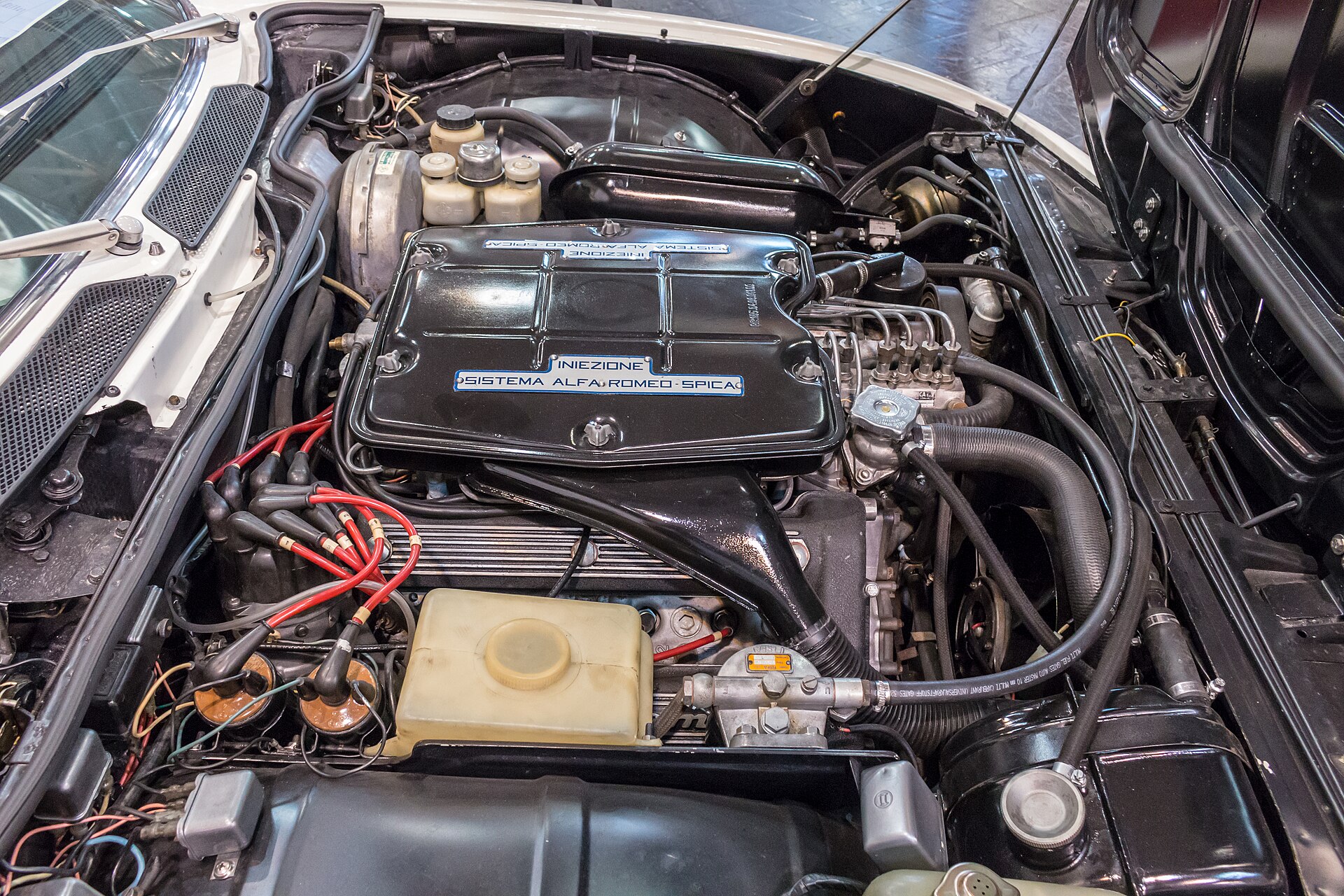
A dry sump means that most of the oil is stored in a separate tank, rather than in a deep oil pan beneath the crankshaft. Pumps scavenge oil from the engine and ensure that it returns under pressure to the lubrication points. This helps maintain the oil supply when the car is subjected to high lateral forces and allows a shallower oil pan. In a low-slung car, the engine’s overall height matters, too.
Fuel is metered by mechanical Spica injection. There is no modern electronic control unit here calculating fuel delivery: an engine-driven pump meters the fuel, with mechanical devices adjusting the quantity according to factors including load, engine speed, and temperature. This was sophisticated precision engineering, not a carburetor with extra ambitions.
For the owner, that distinction matters. The injection, ignition, and cold-start mechanism must work together. Incorrect settings can produce symptoms that tempt further adjustments, until the original fault is buried beneath several new ones. The right specialist knowledge is therefore more valuable than a shop that merely promises to “tweak it a little.”
Dream Bodywork on Proven Foundations
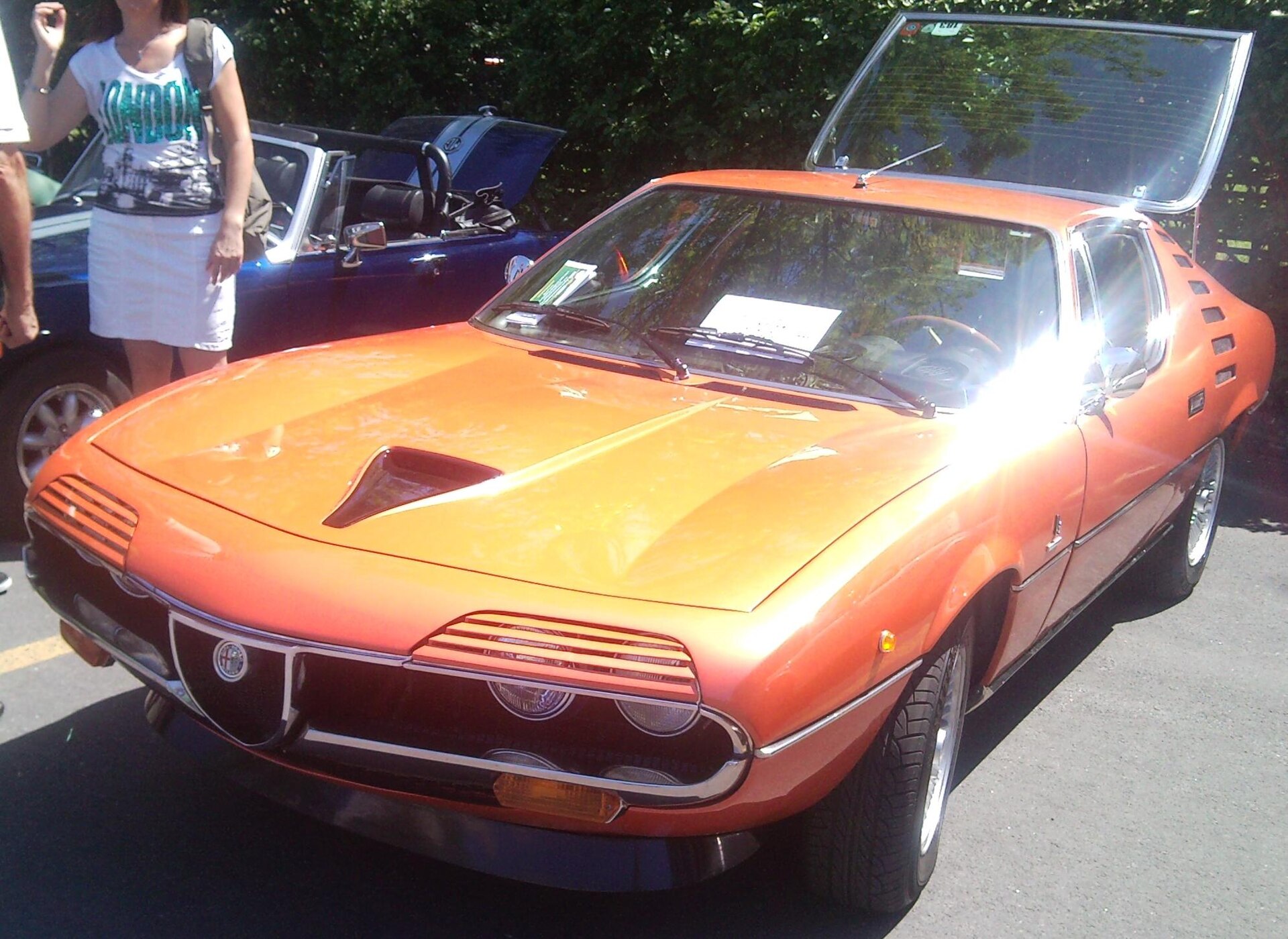
Gandini’s design language survived the transition to production, although proportions and details changed to accommodate the V8 and series production. The most unmistakable features are the slatted grilles covering the upper portions of the headlights. When the headlights are switched on, the grilles fold out of the way. The Montreal’s wink is hardly subtle.
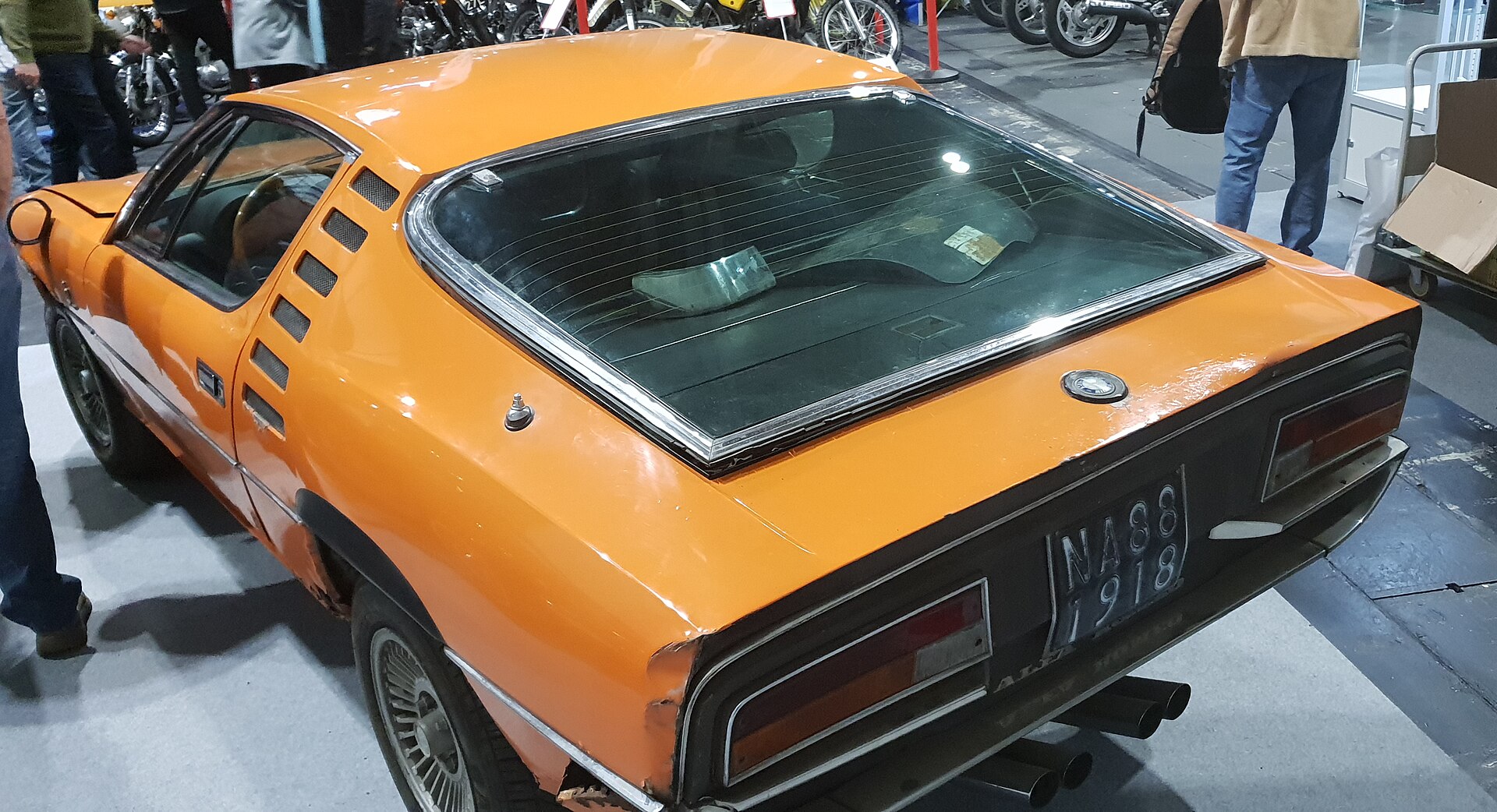
The openings behind the side windows strengthen the association with a mid-engine car, but the engine is up front. On the production car, those openings serve the cabin ventilation, rather than cooling some hidden engine behind the seats. They are a fine reminder of how body details can both serve a purpose and steer the viewer’s imagination.
Beneath the skin, the contrast is clear. There is independent suspension up front, but at the rear sits a coil-sprung solid axle rather than a design as exotic as the engine. The basic formula came from Alfa’s established chassis engineering. Disc brakes all around and a five-speed ZF gearbox completed the package.
A solid rear axle means that the rear wheels’ movements are linked, and that more mass follows the wheels over bumps than with many independent layouts. That does not automatically make the car bad, but it explains why the racing pedigree does not tell the Montreal’s whole story. It was built for fast road travel, not as a Tipo 33 with a luggage shelf.
A Collector Car That Demands Knowledge
For today’s buyer, documented maintenance matters more than a shiny engine cover. Checks for rust and previous body repairs should be combined with an inspection of the fuel injection, cooling system, and dry-sump lines. Even the oil level must be checked using the correct procedure; habits learned from a conventional wet-sump engine are not enough.
Original details carry considerable weight, too. Missing slatted grilles, an incorrect interior, or improvised mechanical solutions can be time-consuming to put right. A thorough restoration should therefore be backed up by photos, receipts, and details of who performed the specialist work.
No general current market price is given here: condition, originality, and documentation make a major difference. The Montreal rewards the buyer who investigates first and falls in love afterward. Preferably in that order, although Gandini did not make it easy.
Sources
- Bruce Taylor, Alfa Romeo Montreal: The Essential Companion (2008)
- Bruce Taylor, The Alfa Romeo Montreal Website
- Stellantis Heritage, Alfa Romeo Montreal
Ask questions about “Alfa Romeo Montreal: The Concept Dream That Got a Racing V8”. Answers are based on the magazine's own articles.